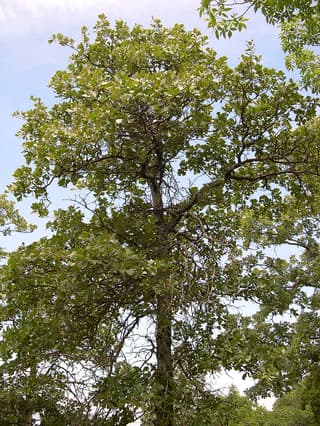
Blackjack Oak with Oak Leaf Blister: Prevention & Cure
Quercus marilandica
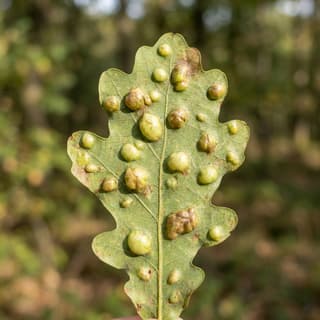
Oak Leaf Blister on Blackjack Oak: What to Know?
Oak Leaf Blister on Blackjack Oak (Quercus marilandica) is a fungal condition with moderate severity. Blackjack Oak has moderate susceptibility to this disease. Taphrina caerulescens is a fungal pathogen that primarily infects the foliage of various oak species (Quercus spp.). The fungus becomes active during cool, moist conditions as buds begin to swell and...
Blackjack Oak is a medium-care plant.
Unlike bacterial infections, Oak Leaf Blister on Blackjack Oak can be managed with organic fungicides. Without precautions, chemical treatments for Oak Leaf Blister can be harmful to pets. Use organic methods for Blackjack Oak in pet-friendly homes.
🛡️ How to Prevent Oak Leaf Blister on Blackjack Oak?
TLDR: Prevent Oak Leaf Blister on Blackjack Oak with 6 essential preventive care practices.
- ✓ Schedule preventive fungicide applications just prior to bud break when cool, wet spring weather is forecasted.
- ✓ Ensure adequate tree spacing and prune the canopy to improve airflow, facilitating rapid leaf drying.
- ✓ Sanitize the area by collecting and disposing of fallen leaf litter each autumn to reduce overwintering inoculum.
- ✓ Employ deep, infrequent irrigation at the base of the tree, avoiding any wetting of the foliage.
- ✓ Mitigate environmental stress through proper mulching and avoid excessive nitrogen fertilization in the spring.
- ✓ Select oak species or cultivars known for their resistance or lower susceptibility to leaf blister in your specific region.
🌱 How to Care for Blackjack Oak to Prevent Oak Leaf Blister?
💧 How to Water
Water deeply but infrequently, especially in the first two years. Once established, Blackjack Oak tolerates drought well and rarely needs supplemental irrigation except in extended dry spells.
☀️ Lighting
Plant in full sun — at least 6 hours of direct light daily. This species is shade-intolerant and will grow spindly or decline in shaded sites.
🪴 Ideal Soil
Choose sandy, gravelly, or clay soil that drains well; avoid heavy, poorly-drained or waterlogged sites. Acidic soil (pH below 6.0) is ideal — this oak actually thrives in poor, nutrient-scarce ground.