Psyllids: Pest Control | Identify & Treat
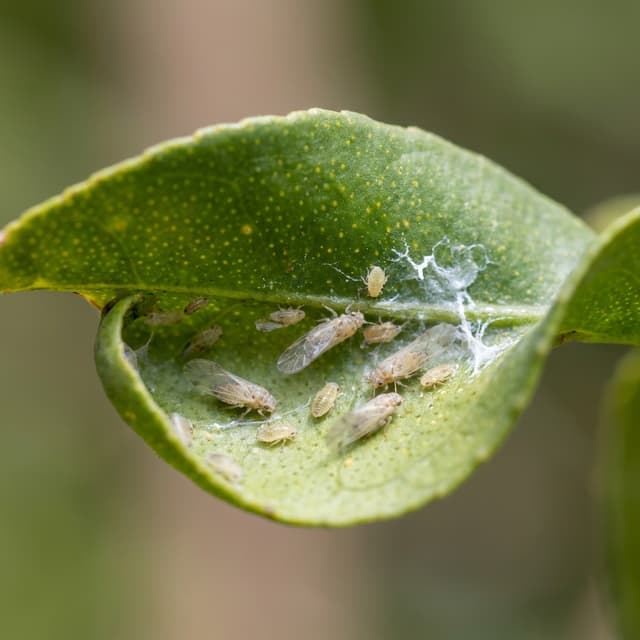
Triozidae (psyllids) are small sap-sucking insects that feed on the sap of tender shoots and leaves. They typically appear during spring and summer. They are identified by curled leaves or small galls and pits, yellow stippling, sticky honeydew, and sometimes sooty mold (black fungus) growing on the honeydew. Nymphs may leave waxy pellets or filaments on the underside of leaves. They frequently affect citrus trees (orange, lemon, etc.), pear trees (Pyrus communis), bay laurel (Laurus nobilis), and other ornamentals; in cool climates, they can also appear in carrot crops. In addition to weakening the plant, some psyllids can transmit diseases, so prompt action is recommended.
What is Psyllids?
Psyllids is a pest condition with moderate severity that affects plants. Triozidae (psyllids) are small sap-sucking insects that feed on the sap of tender shoots and leaves. They typically appear during spring and summer. They are identified by curled leaves or small galls and pits, yellow stippling, sticky honeydew, and sometimes sooty mold (black fungus) growing on the...
Psyllids is a pest disease with moderate severity. It affects 3 plant species in our database.
Unlike fungal diseases, Psyllids can be controlled quickly with integrated management. Without immediate action, the infestation spreads to nearby plants. Unlike many common diseases, Psyllids is not contagious between plants.
🧪 Natural vs Chemical: Which Treatment Works for Psyllids?
🌱 Natural Solutions
- ✓ Inspect and prune heavily infested shoots and dispose of them in the trash.
- ✓ Wash with pressurized water, thoroughly wetting the underside to dislodge nymphs and clean honeydew.
- ✓ Improve aeration and light, and avoid excess nitrogen which causes very tender shoots.
- ✓ Use yellow sticky traps for monitoring.
- ✓ Control ants that protect honeydew-producing insects using sticky bands on trunks or specific ant baits.
- ✓ Encourage beneficial fauna such as ladybugs, lacewings, and parasitoid wasps, for example, Tamarixia spp. when locally available.
- ✓ Cover vegetable gardens and seedlings with insect-proof netting to prevent adults from arriving.
💉 Chemical Solutions
- ✓ As a last resort, apply potassium soap, horticultural or paraffinic oils, or azadirachtin, ensuring thorough coverage of nymphs and the underside of leaves.
- ✓ When necessary, apply spinosad or authorized pyrethrins at dusk to minimize the impact on pollinators and beneficial insects.
- ✓ Do not apply oils during high temperatures or near sulfur treatments.
- ✓ Avoid prohibited ingredients and neonicotinoids.
🛡️ How to Prevent Psyllids?
TLDR: Prevent Psyllids with 8 essential care practices. Regular monitoring is key for early detection.
- ✓ Frequently inspect new shoots during spring and summer.
- ✓ Prune in a balanced manner to limit excessively tender new growth.
- ✓ Fertilize moderately and avoid over-fertilizing with nitrogen.
- ✓ Maintain regular watering and good drainage to reduce plant stress.
- ✓ Attract beneficial insects with flowers that provide nectar and pollen throughout the year.
- ✓ Quarantine and inspect new plants, especially citrus, pear, and bay laurel, checking the underside of the leaves.
- ✓ Clean honeydew and sooty mold to reduce pest attraction.
- ✓ Do not move plant material between gardens in areas with citrus issues and consult local phytosanitary alerts.
🔗Related Diseases
Whitefly
Whiteflies (family Aleyrodidae) are tiny, sap-sucking insects that thrive in warm, still air. They are common on houseplants, greenhouse crops, and garden plants such as tomatoes, peppers, cucumbers, fuchsias, hibiscus, poinsettias, citrus, and many herbs. You’ll often see small white adults flutter up when you touch the plant, sticky honeydew on leaves or nearby surfaces, black sooty mould growing on that honeydew, and leaves that yellow, curl, or drop. Check the undersides of leaves for pale, scale-like nymphs and tiny eggs laid in small arcs. Heavy infestations weaken plants and slow growth.

Woolly Beech Aphid
Phyllaphis is a genus of woolly aphids that primarily attack beech (Fagus), typically common beech and copper beech in hedges and as trees. They suck plant sap from young shoots and the undersides of leaves in spring and early summer. Signs of infestation include curled or rolled leaves, sticky honeydew, black sooty mold, and a white, cottony coating around the colonies. The plants usually survive, but heavy infestations can weaken new growth and make the hedge sticky and unsightly. The aphids often overwinter as eggs on thin twigs near buds.
Flea beetle damage
MediumFlea beetles are small, jumping insects that feed on the leaves of many vegetable crops. They chew numerous small, circular holes, creating a characteristic 'shothole' appearance. While established plants can often tolerate the damage, young seedlings are highly susceptible and can be stunted or killed if the infestation is severe.
Woolly Aphid
Prociphilus is a genus of woolly aphids that feed by sucking sap from plants. They produce a fluffy, white, cotton-like coating on leaves, shoots, or sometimes roots. Signs include sticky honeydew, black sooty mold growing on the honeydew, leaf curling or distortion, and clusters of tiny, soft-bodied insects hidden in the "wool." Ants are often active around them because they feed on the honeydew. These aphids commonly affect alder and maple (woolly alder aphid) and ash (woolly ash aphid). They rarely kill established trees, but they can stress young plants and create a messy, sticky problem.