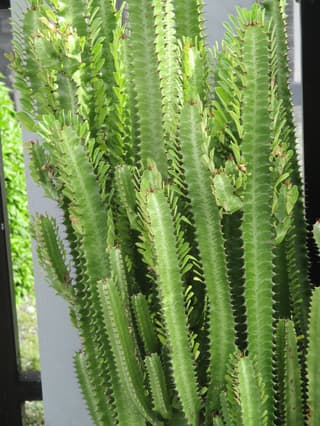
SOS African Milk Tree: Serious Problems & How to Fix Now
Euphorbia trigona
Is your African Milk Tree in trouble? Don't panic! We've gathered the most serious problems that can affect your plant and how to treat them quickly. The sooner you act, the better the chances of recovery.
🚨 Serious Problems (33)

Root Rot
Root rot is a serious fungal disease that affects the root system of plants, causing them to decay and die. It is primarily caused by overwatering, poor drainage, or soil-borne fungi such as Pythium, Phytophthora, Rhizoctonia, and Fusarium. The disease thrives in waterlogged conditions where roots are deprived of oxygen, making them susceptible to fungal infection.
Symptoms:
Wilting leaves despite moist soil • Yellowing or browning of leaves • Stunted growth and poor vigor
⚡ Quick Fixes:
Emergency unpotting: Remove plant immediately from wet soil. Speed is critical....
Mealybugs
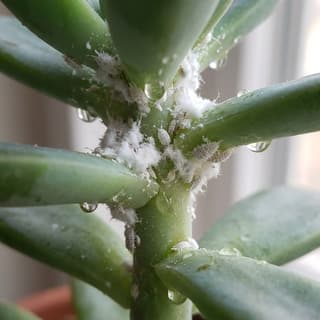
Mealybugs are small, soft-bodied insects covered with a white, waxy, cottony material. They are common pests of houseplants and outdoor plants in mild climates. These sap-sucking insects feed on plant tissue, causing damage, stunted growth, and can lead to plant death if left untreated. They produce sticky honeydew which attracts sooty mold.
Symptoms:
White cottony masses on leaves, stems, or fruit • Small pink or white soft-bodied insects (1/20 to 1/5 inch) • Sticky honeydew secretions on plant surfaces
⚡ Quick Fixes:
Step 1: Immediately spray visible mealybugs with 70% isopropyl alcohol for instant kill on contact...
Spider Mites
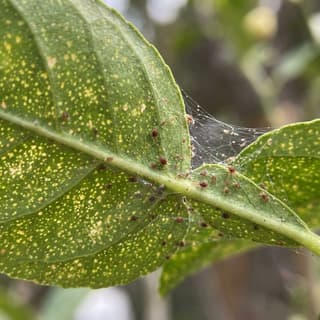
Spider mites are tiny arachnids (less than 1/20 inch long) related to spiders and ticks that feed on plant sap. They thrive in hot, dry conditions and can cause significant damage to ornamental and vegetable plants. During severe infestations, crop losses can reach 14% or higher as these pests disrupt vital plant processes including photosynthesis, carbon dioxide absorption, and transpiration.
Symptoms:
Pale discoloration spots on leaves • Fine silk webbing covering leaves and stems • Tiny yellow or white speckles on leaf surface (stippling)
⚡ Quick Fixes:
Step 1: Immediately spray all affected plants with rubbing alcohol (70% isopropyl) diluted 1:1 with water...
Underwatering
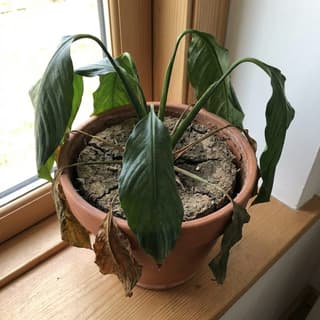
Underwatering or drought stress is a physiological disorder that occurs when the amount of water a plant loses through transpiration exceeds the amount its roots can absorb from the soil. This leads to cellular dehydration and various visible symptoms that can compromise plant health and productivity.
Symptoms:
Wilting leaves that feel dry and crispy to touch • Brown, crispy edges on leaves (marginal scorch) • Leaf curling or rolling inward
⚡ Quick Fixes:
Step 1: Water plant immediately with generous amount until soil is moist...
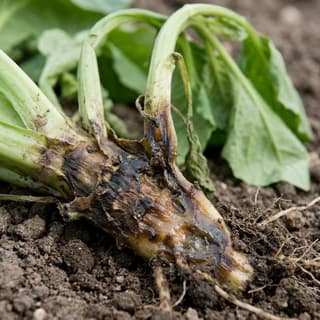
Crown Rot
Crown rot is a serious fungal disease that attacks the crown (base) of the plant where the stem meets the soil. It is caused by various fungal pathogens including Phytophthora, Fusarium, and Rhizoctonia. The disease thrives in waterlogged conditions and can quickly spread to kill the entire plant if not addressed promptly.
Symptoms:
Browning or blackening tissue at stem base • Soft, mushy crown that feels spongy to touch • Wilting leaves, especially during midday heat
⚡ Quick Fixes:
Immediate unpotting: Remove plant from soil immediately. Every minute counts with crown rot....
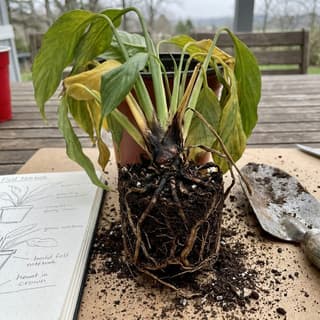
Phytophthora Root Rot
Disease caused by fungus-like organisms (oomycetes) that live in soil and can survive for years. It affects roots, stem, and crown of plants, being especially severe in waterlogged or poorly drained soils. It is the second most common cause of root rot in trees and shrubs.
Symptoms:
Leaf wilting despite moist soil • Yellowing or discolored foliage (dull green, yellow, red, purplish) • Sparse foliage and progressive branch dieback
⚡ Quick Fixes:
Expose plant base by removing soil to main roots: Allow area to dry completely...
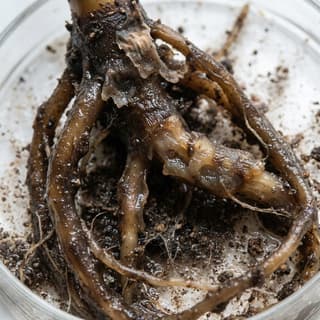
Pythium Root Rot
Pythium root rot is a serious fungal disease caused by various Pythium species including P. aphanidermatum, P. ultimum, and P. irregulare. These water molds are present in practically all cultivated soils and attack plant roots under wet conditions, causing rapid wet rot that can extend into the stem. The disease is favored by poor drainage, overwatering, and specific temperatures depending on the species.
Symptoms:
Dark brown to black wet rot of roots • Roots soften and disintegrate easily • Outer cortical tissue pulls off easily exposing vascular strand
⚡ Quick Fixes:
Step 1: ...
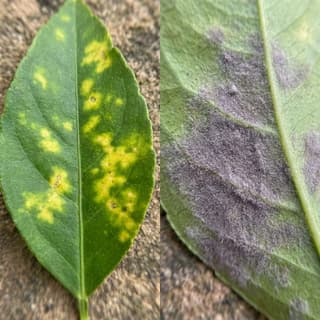
Downy Mildew
Downy mildew is a fungal-like disease caused by oomycetes (water molds) that thrives in cool, wet conditions. It affects a wide range of plants, causing yellowing leaves with fuzzy white-gray growth underneath, leading to defoliation and reduced yields if left untreated.
Symptoms:
Small green or yellow translucent spots on leaves • Yellow to brown irregular patches on upper leaf surfaces • White, gray, or purple fuzzy growth on leaf undersides
⚡ Quick Fixes:
Remove and destroy all infected plant parts. For severe infections, remove entire plant.: Remove and destroy all infected plant parts. For severe infections, remove entire plant....
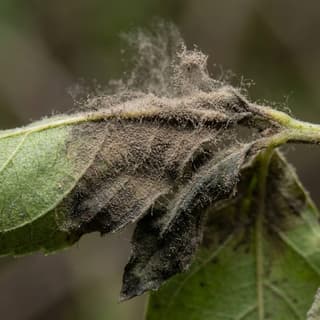
Gray Mold (Botrytis Blight)
Gray mold, caused by the fungus Botrytis cinerea, is a widespread necrotrophic pathogen affecting over 1,400 plant species. It thrives in cool, humid conditions and attacks weakened or aging plant tissues, causing soft rot and characteristic gray fuzzy growth.
Symptoms:
Gray, fuzzy mold coating on flowers, leaves, stems, or fruits • Soft, water-soaked brown lesions that rapidly expand • Wilting and browning of flower petals
⚡ Quick Fixes:
Step 1: Immediately remove all visibly infected plant parts...
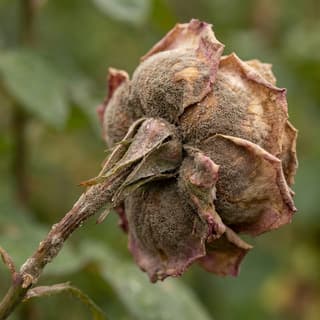
Gray Mold (Botrytis Blight)
Gray mold, caused by the fungus Botrytis cinerea, is one of the most common fungal diseases in plants. It affects over 200 plant species, including ornamentals, vegetables, fruits, and houseplants. The disease thrives in cool, humid conditions with poor air circulation, causing grayish spots and soft rot on infected tissues.
Symptoms:
Grayish colored soft, mushy spots on leaves, stems, and flowers • Gray fuzzy coating of fungal spores, especially in high humidity • Brown to gray circular spots on leaves and petals
⚡ Quick Fixes:
Remove and dispose of all visibly infected parts: Remove and dispose of all visibly infected parts...
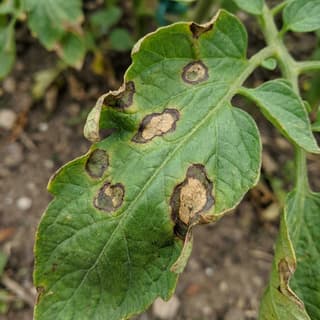
Anthracnose
Anthracnose is a fungal disease caused by fungi in the genus Colletotrichum that affects many plants, including vegetables, fruits, and trees. The disease thrives in cool, wet conditions, causing dark, sunken lesions on leaves, stems, flowers, and fruits.
Symptoms:
Small irregular yellow or brown spots on leaves • Dark sunken lesions on leaves, stems, flowers and fruits • Water-soaked lesions that darken as they age
⚡ Quick Fixes:
Remove and discard all visibly infected parts: Remove and discard all visibly infected parts...
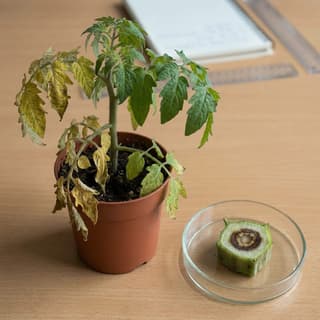
Fusarium Wilt
Fusarium wilt is a serious fungal disease caused by the soil-borne fungus Fusarium oxysporum. The fungus invades roots and blocks the water-conducting vessels (xylem) of the plant, causing progressive wilting and eventual death. Host-specific forms of the pathogen exist that attack different plant species.
Symptoms:
Wilting during the hottest part of the day with recovery at night (early stage) • Asymmetrical yellowing of leaves (one side of plant or leaflets) • Progressive upward wilting from the stem base
⚡ Quick Fixes:
Remove Plant: Immediately remove entire infected plant with roots. Dispose in sealed trash (DO NOT compost)....
Verticillium Wilt
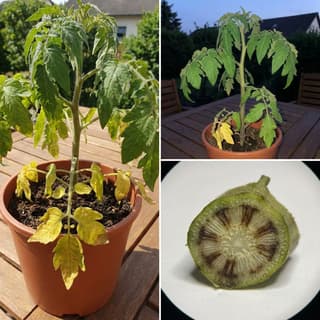
Verticillium wilt is a soil-borne fungal disease caused primarily by the fungi Verticillium dahliae and V. albo-atrum. These pathogens infect plant roots and grow within the vascular tissues, blocking water and nutrient transport, resulting in wilting and eventual plant death. The disease affects over 350 plant species including vegetables, fruits, ornamental flowers, and trees. The fungi can survive in soil for more than 10 years as resistant structures called microsclerotia.
Symptoms:
Sudden wilting of leaves and stems, especially in hot weather • Yellowing of leaves (chlorosis) starting from the margins • Asymmetric wilting pattern - only one side of plant affected
⚡ Quick Fixes:
Quick Assessment: Determine infection severity. If more than 50% of plant is affected, consider immediate removal....
Phytophthora Blight
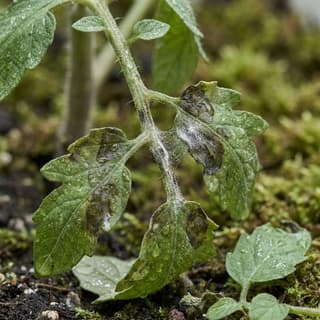
Devastating fungal disease caused by Phytophthora species (primarily P. capsici and P. infestans), famously responsible for the Irish Potato Famine in the 1840s. Affects all plant parts including roots, stems, leaves, and fruits in warm, wet conditions. The pathogen is technically an oomycete (water mold) that thrives in saturated soils and can survive in soil for 5+ years.
Symptoms:
Water-soaked lesions on leaves with vague borders and white fluffy fungal growth • White powdered sugar-like spores on infected tissue • Grey-brown centers with light-green edges on leaves
⚡ Quick Fixes:
Immediately apply systemic fungicide (mefenoxam) as soil drench: ...
Damping Off
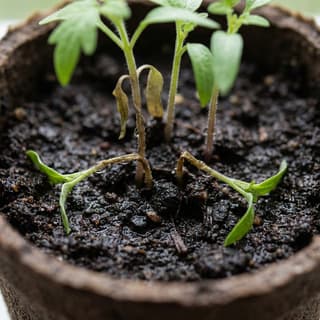
Damping off is a soil-borne fungal disease that affects seeds and young seedlings, causing rotting of stem and root tissues at and below the soil line. It is caused by several fungi including Pythium, Rhizoctonia, Fusarium, and Phytophthora. The disease thrives in cold, wet conditions with poor air circulation.
Symptoms:
Seedlings collapse and fall over at stem base • Water-soaked, thin, thread-like stems • White cobweb-like fungal growth on soil surface
⚡ Quick Fixes:
Immediate Discard: Remove and discard all infected seedlings immediately. Do not attempt to save - no cure available....
Alternaria Leaf Spot
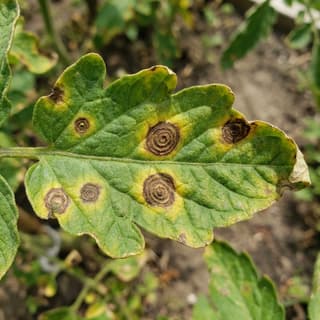
Alternaria leaf spot is a common fungal disease caused by Alternaria solani and Alternaria alternata that affects a wide range of plants including tomatoes, potatoes, brassicas, and ornamentals. The disease thrives in warm, humid conditions and can cause significant crop damage if left untreated. Spores overwinter on plant debris and can attach to seeds, making complete elimination difficult.
Symptoms:
Small dark circular spots (0.5-0.75 inches diameter) on leaves • Concentric rings forming target-like patterns • Spots change from black to tan/gray with yellow halos
⚡ Quick Fixes:
Step 1: Remove heavily infected leaves immediately...
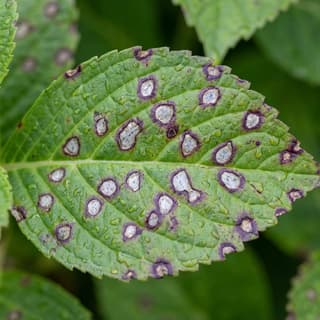
Cercospora Leaf Spot
Cercospora leaf spot is a common fungal disease caused by Cercospora species that affects many plant types, particularly beets, roses, and leafy vegetables. The disease thrives in warm, humid conditions and can cause significant defoliation, reducing plant vigor and yield. It spreads rapidly through water splash, wind, and contaminated tools.
Symptoms:
Small circular spots (0.02-0.2 inch) on leaves • Tan to gray centers with brownish-red to purple borders • Spots coalesce into larger necrotic lesions
⚡ Quick Fixes:
Step 1: Prune and destroy all infected foliage immediately...
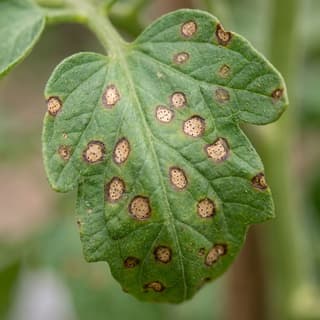
Septoria Leaf Spot
Septoria leaf spot is a destructive fungal disease caused by Septoria lycopersici, particularly devastating during seasons of moderate temperature and abundant rainfall. The disease starts on lower leaves and progresses upward, causing small circular spots with tan to gray centers and dark brown margins. If left untreated, it can dramatically reduce plant yields and cause complete leaf blight.
⚡ Quick Fixes:
Step 1: At first sign of symptoms, apply chlorothalonil-based fungicide...
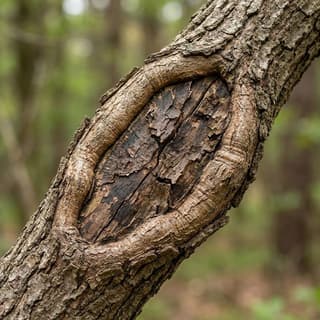
Canker
Canker is a disease caused by various fungi and bacteria that create necrotic, sunken areas on bark of branches, stems, and trunks. Pathogens enter through wounds and natural openings, especially when plants are stressed. Canker can gradually weaken or kill branches by disrupting water and nutrient flow.
Symptoms:
Sunken, discolored lesions on bark • Oval to elongate dark areas on stems and branches • Bark splitting and cracking
⚡ Quick Fixes:
Identify and mark all branches with canker: Use colored tape to mark affected areas...
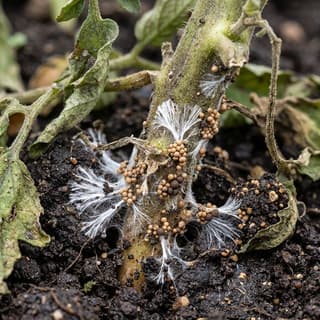
Southern Blight
Southern blight is a devastating soilborne fungal disease caused by Athelia rolfsii (formerly Sclerotium rolfsii), affecting over 500 plant species including vegetables, ornamentals, and fruit crops. The fungus survives in soil through resting structures called sclerotia that resemble mustard seeds and can remain viable for years.
Symptoms:
Brown to black lesions on stem near soil line • Water-soaked appearance on lower leaves • Sudden and permanent wilting of entire plant within days
⚡ Quick Fixes:
Step 1: Remove infected plants IMMEDIATELY with roots and soil...
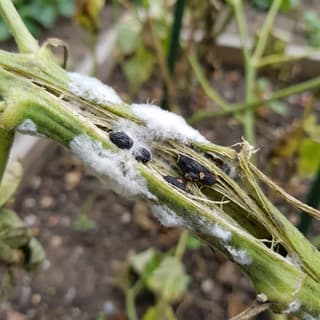
White Mold
White mold (Sclerotinia sclerotiorum) is a devastating fungal disease affecting over 400 plant species worldwide. The fungus produces black, seed-like structures (sclerotia) that can survive in soil for 5 or more years. The disease is favored by cool, moist weather (50-68°F/10-20°C), especially during flowering.
Symptoms:
Sudden wilting and yellowing of leaves • Fluffy white mold growth on stems and leaves • Water-soaked lesions expanding irregularly
⚡ Quick Fixes:
Immediate removal: Remove and completely destroy all infected plants. Burn or bag and dispose in trash....
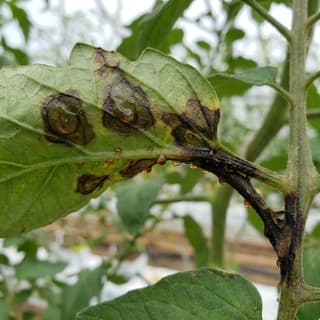
Bacterial Blight
Bacterial blight is a serious plant disease caused by pathogenic bacteria that enters plants through wounds or natural openings. It spreads rapidly in warm, wet conditions and can cause significant damage to leaves, stems, and flowers. The bacteria are transmitted by water splash, contaminated tools, and insects.
Symptoms:
Small water-soaked spots on upper leaf surfaces • Spots enlarge and turn brown to black • Yellow halos surrounding lesions
⚡ Quick Fixes:
Step 1: Remove and destroy all visibly infected plant parts immediately...
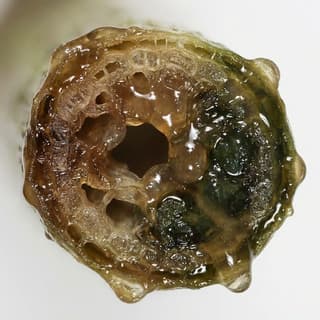
Bacterial Soft Rot
Bacterial soft rot is a destructive plant disease caused primarily by bacteria from the genera Pectobacterium (formerly Erwinia) and Dickeya. These bacteria produce enzymes that break down plant cell walls, causing rapid and foul-smelling tissue decomposition. It mainly affects succulent tissues such as tubers, fruits, stems, and bulbs, being especially problematic in warm and humid conditions.
Symptoms:
Water-soaked spots that progressively enlarge • Affected tissues become soft, wet, and slimy • Flesh discoloration in cream to dark brown tones
⚡ Quick Fixes:
Immediate Action - Isolation: NOW: Remove plant away from other plants immediately. Every minute counts....
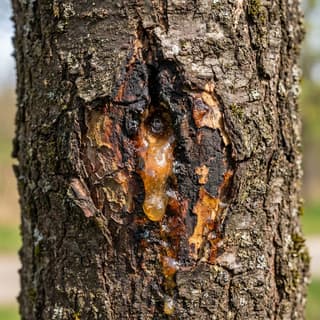
Bacterial Canker
Serious bacterial disease affecting stone fruits and tomatoes caused by Pseudomonas syringae or Clavibacter michiganensis. Creates sunken lesions that ooze sap.
Symptoms:
Sunken water-soaked lesions • Dark cankers with raised edges • Amber sap oozing
⚡ Quick Fixes:
Emergency pruning: Remove all infected branches immediately...
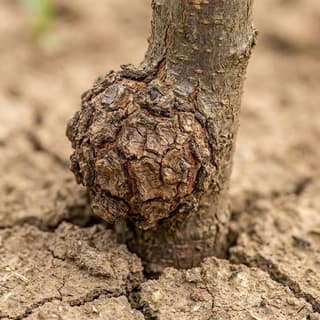
Crown Gall
Crown gall is a bacterial disease caused by Agrobacterium tumefaciens that affects over 140 species of plants. The bacteria insert DNA into plant cells, causing them to divide uncontrollably and form large tumor-like growths (galls) primarily on roots, stems, and at the soil line. These galls restrict water and nutrient flow, severely impacting plant health and potentially killing the plant.
Symptoms:
Large, rough, woody tumor-like growths (galls) at the base of stems • White masses of callus tissue on roots and crown • Galls appearing at or just below soil line
⚡ Quick Fixes:
Step 1: Identify and mark all visible galls on crown and roots...
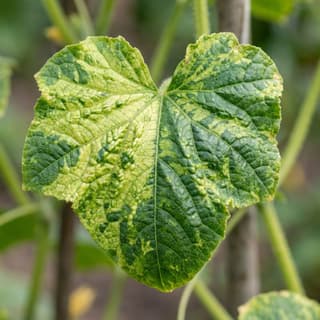
Mosaic Virus
Mosaic virus is a group of plant viruses that cause mottled, patchy patterns on leaves and can affect a wide variety of plants. The virus creates characteristic yellow, white, and green mosaic patterns, often accompanied by stunted growth and deformed plant parts. This highly contagious disease spreads rapidly through insect vectors and contaminated tools.
Symptoms:
Mottled or mosaic pattern of yellow, white, and green on leaves • Blistered, puckered, or distorted leaf surfaces • Crinkled, wavy, or twisted leaves
⚡ Quick Fixes:
Step 1: Isolate affected plants immediately to prevent spread...
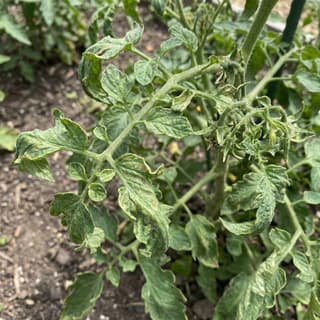
Leaf Curl Virus
Leaf curl virus is a serious viral disease caused by begomoviruses, transmitted by whiteflies (Bemisia tabaci). It affects various plants including tomatoes, peppers, and ornamentals, causing significant yield losses and plant decline. Once infected, plants cannot be cured and management focuses on prevention and vector control.
Symptoms:
Yellowing of young leaves • Severe upward and downward curling of leaves • Stunted plant growth and bushy appearance
⚡ Quick Fixes:
Step 1: Immediately isolate and remove all symptomatic plants from the garden...
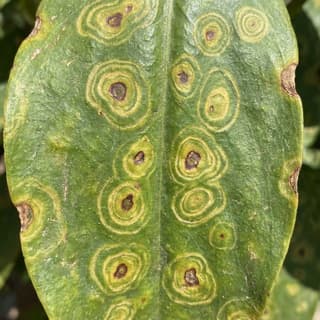
Ringspot Virus
Ringspot virus is a viral disease affecting various plant species, causing distinctive circular or ring-shaped chlorotic patterns on leaves and fruits. Transmitted primarily by aphids, nematodes, or through contaminated tools, this virus cannot be cured and infected plants must be managed carefully to prevent spread. The virus weakens plants, reduces yield, and can spread rapidly in gardens if not properly contained.
Symptoms:
Circular yellow or chlorotic rings on leaves (1/8" to 1/4" diameter) • Ring patterns that start pale yellow and may turn necrotic brown • Leaf distortion, puckering, rolling, or crinkling
⚡ Quick Fixes:
Emergency isolation NOW: Immediately move infected plant to isolated area at least 10 feet from other plants. Time is critica...
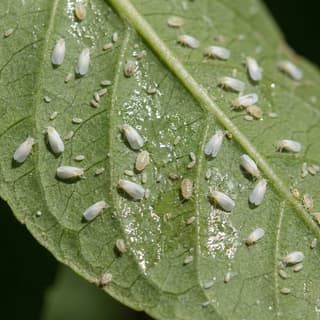
Whiteflies
Whiteflies are small, soft-bodied, winged insects closely related to aphids and mealybugs. They are moth-like in appearance, about 1/16 inch long, triangular in shape, and gray-white in color. These sap-sucking pests feed on plant tissue, causing yellowing, stunted growth, and wilting. They also excrete honeydew, which attracts ants and promotes sooty mold growth. Whiteflies can transmit serious plant viruses.
Symptoms:
Small white moth-like insects clustering on leaf undersides • Clouds of white insects fly up when plant is disturbed • Yellowing, wilting, and stunted growth of leaves
⚡ Quick Fixes:
Step 1: Spray water forcefully on plants to knock off whiteflies immediately...
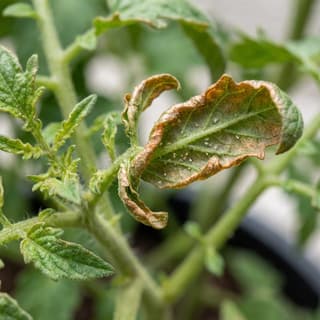
Broad Mites
Broad mites (Polyphagotarsonemus latus) are microscopic pests measuring only 0.25mm, making them nearly invisible to the naked eye. These arthropods feed on meristematic tissues at growing tips, injecting toxic saliva that severely damages new growth. They prefer warm, humid environments and reproduce rapidly, with females laying eggs every 2-3 days. The damage appears weeks after initial infestation, making early detection extremely difficult.
Symptoms:
Microscopic shiny amber or dark green mites (0.25mm) - nearly impossible to see without magnification • New leaves appear puckered, shriveled, or have abnormal strap-like shape • Leaf margins curl downward and become brittle or leathery
⚡ Quick Fixes:
Step 1: Isolate all affected plants immediately...
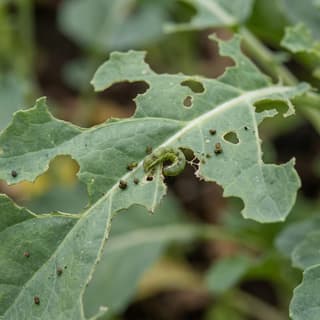
Caterpillars
Caterpillars are the larval stage of moths and butterflies that feed voraciously on plant foliage, stems, flowers, and fruits. Common species include cabbage loopers, tomato hornworms, armyworms, and cutworms. These pests can cause extensive damage by consuming large amounts of plant tissue in a short time. They vary in size from small (1/4 inch) to large (5 inches), with colors ranging from green to brown, often featuring stripes or spots. Caterpillars are highly mobile and can quickly spread throughout gardens, making them one of the most destructive common pests.
Symptoms:
Irregular holes and ragged edges on leaves • Large portions of foliage completely consumed • Dark cylindrical droppings (frass) on leaves and soil
⚡ Quick Fixes:
Step 1: Hand-pick all visible caterpillars immediately and destroy in soapy water...
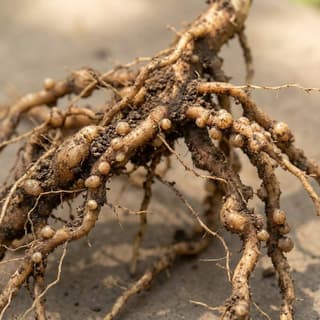
Root-Knot Nematodes
Root-knot nematodes (Meloidogyne species) are microscopic roundworms that parasitize plant roots, causing characteristic galls or knots. These soil-borne pests are among the most economically damaging plant pathogens worldwide, affecting a wide range of ornamental and edible plants. The nematodes inject enzymes into root cells, causing abnormal swelling and disrupting water and nutrient uptake.
Symptoms:
Characteristic galls or knots on roots (1-10mm in diameter) • Root swelling, distortion, and excessive branching • Yellowing of leaves (chlorosis), especially lower leaves
⚡ Quick Fixes:
Step 1: Remove and destroy all infected plants and roots...
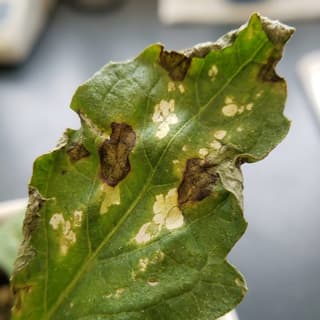
Chemical Burn
Chemical burn (phytotoxicity) occurs when plants are damaged by misapplication or misuse of pesticides, herbicides, fertilizers, or other chemicals. Environmental conditions like high temperatures, humidity, and plant stress increase vulnerability. Unlike diseases, chemical damage is not contagious but can severely harm or kill plants if not addressed promptly.
Symptoms:
Leaf spots, blotches, or irregular discolored areas • Browning or yellowing of leaf margins and tips • Scorched or burned appearance on foliage
⚡ Quick Fixes:
Step 1: Immediately flush entire plant with water for 5-10 minutes to wash off chemical residue...