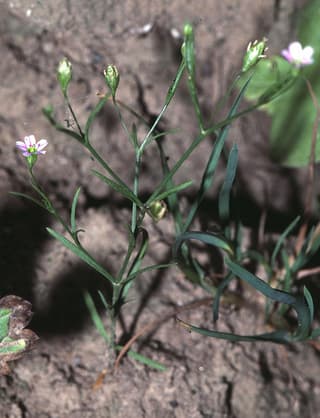
Annual Baby's Breath with Root Rot: Pet-Safe Treatment
Psammophiliella muralis
Annual Baby's Breath is a plant that needs bright light and moderate watering. When showing root rot, it may indicate issues related to its environment or care.
Is your Annual Baby's Breath showing root rot? Discover 5 possible causes and how to treat them.
🔍 Possible Causes (5)
Stem Necrosis
Stem necrosis is a condition characterized by the death of plant tissues on the stem, leading to browning, blackening, and eventual decay. It can weaken the plant, hinder nutrient and water transport, and in severe cases, lead to plant death. This condition can be caused by various pathogens, environmental stresses, or physical damage.
✓ Related symptoms:
- • Cracking or oozing of sap from necrotic areas.
⚡ Quick Fixes:
Fungicide Application
Pythium Root Rot
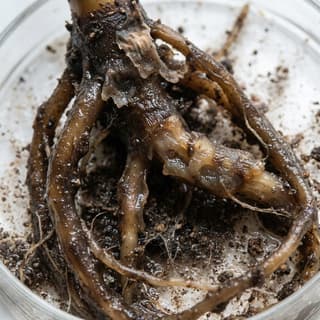
Pythium root rot is a serious fungal disease caused by various Pythium species including P. aphanidermatum, P. ultimum, and P. irregulare. These water molds are present in practically all cultivated soils and attack plant roots under wet conditions, causing rapid wet rot that can extend into the stem. The disease is favored by poor drainage, overwatering, and specific temperatures depending on the species.
✓ Related symptoms:
- • Dark brown to black wet rot of roots
- • Crown may turn brown-black with soft rot
⚡ Quick Fixes:
Step 1
Southern Blight
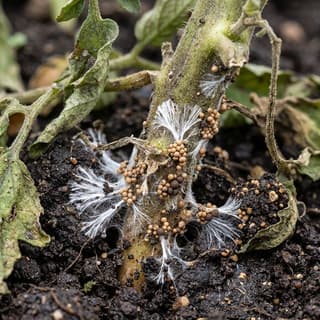
Southern blight is a devastating soilborne fungal disease caused by Athelia rolfsii (formerly Sclerotium rolfsii), affecting over 500 plant species including vegetables, ornamentals, and fruit crops. The fungus survives in soil through resting structures called sclerotia that resemble mustard seeds and can remain viable for years.
✓ Related symptoms:
- • Spherical tan to reddish-brown sclerotia (1-2mm)
- • Crown and root rot
⚡ Quick Fixes:
Step 1
White Mold
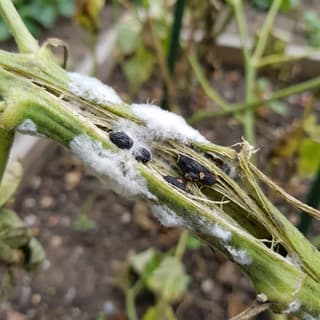
White mold (Sclerotinia sclerotiorum) is a devastating fungal disease affecting over 400 plant species worldwide. The fungus produces black, seed-like structures (sclerotia) that can survive in soil for 5 or more years. The disease is favored by cool, moist weather (50-68°F/10-20°C), especially during flowering.
✓ Related symptoms:
- • Soft, watery rot near soil level
- • Black sclerotia (0.5-1cm) in white fungal mass
⚡ Quick Fixes:
Immediate removal
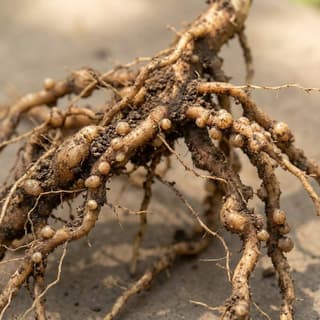
Root-Knot Nematodes
Root-knot nematodes (Meloidogyne species) are microscopic roundworms that parasitize plant roots, causing characteristic galls or knots. These soil-borne pests are among the most economically damaging plant pathogens worldwide, affecting a wide range of ornamental and edible plants. The nematodes inject enzymes into root cells, causing abnormal swelling and disrupting water and nutrient uptake.
✓ Related symptoms:
- • Discolored or necrotic root tips
⚡ Quick Fixes:
Step 1