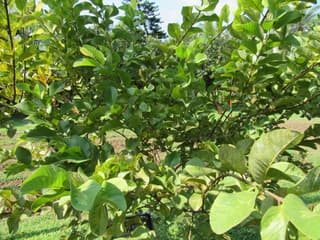
Guava with Yellow Leaves: Pet-Safe Treatment
Psidium
Guava is a plant that needs bright light and moderate watering. When showing yellow leaves, it may indicate issues related to its environment or care.
Is your Guava showing yellow leaves? Discover 8 possible causes and how to treat them.
🔍 Possible Causes (8)
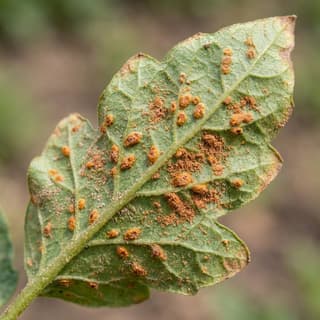
Rust
Rust is a common fungal disease caused by fungi in the order Pucciniales that affects a wide variety of plants. The disease gets its name from the characteristic orange, yellow, or reddish-brown pustules that appear on leaves, resembling metal rust. This obligate fungal parasite requires living plants to survive and can cause significant economic losses in agricultural crops.
✓ Related symptoms:
- • Raised orange, yellow, brown, or red pustules on leaf surfaces
- • Premature yellowing and leaf drop
⚡ Quick Fixes:
Immediate Pruning
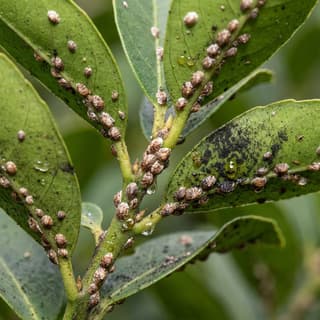
Scale Insects
Scale insects are small sap-sucking pests that appear as brown, shell-like bumps on plant stems and leaves. There are over 25 species, divided into armored (hard) and unarmored (soft) scales. They feed by piercing plant tissue and extracting sap, which weakens the plant and can lead to yellowing, stunted growth, and even death if left untreated. They also excrete honeydew, which attracts ants and promotes sooty mold growth.
✓ Related symptoms:
- • Yellowing or chlorotic (pale) leaves
⚡ Quick Fixes:
Step 1
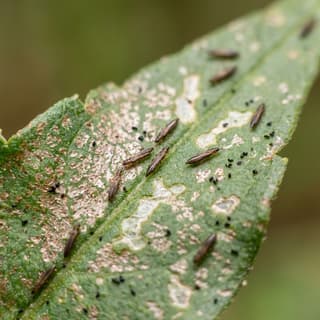
Thrips
Thrips are tiny cigar-shaped insects (1/25-inch long) that damage plants by sucking plant juices and scraping at fruits, flowers, and leaves. With over 6,000 species and rapid reproduction (lifecycle as short as 14 days), they can quickly infest plants and transmit viruses like tomato spotted wilt virus.
✓ Related symptoms:
- • Yellowing and eventual death of affected leaves
⚡ Quick Fixes:
Step 1
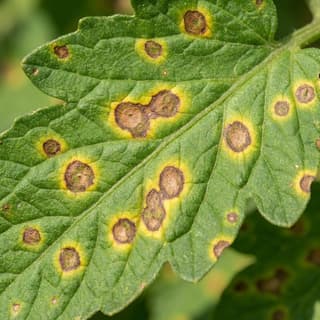
Leaf Spot
Leaf spot is a common fungal disease caused by various pathogens including Alternaria, Ascochyta, Colletotrichum, Septoria, and Venturia. It primarily affects leaves, causing discolored spots that can lead to premature leaf drop if left untreated.
✓ Related symptoms:
- • Circular brown, gray, black, or yellow spots on leaves
- • Yellow halo surrounding spots
⚡ Quick Fixes:
Remove all visibly infected leaves
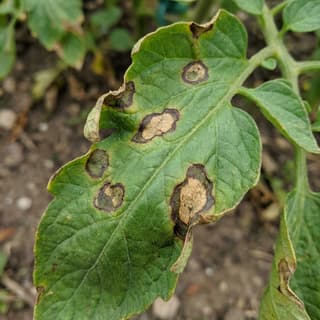
Anthracnose
Anthracnose is a fungal disease caused by fungi in the genus Colletotrichum that affects many plants, including vegetables, fruits, and trees. The disease thrives in cool, wet conditions, causing dark, sunken lesions on leaves, stems, flowers, and fruits.
✓ Related symptoms:
- • Small irregular yellow or brown spots on leaves
⚡ Quick Fixes:
Remove and discard all visibly infected parts
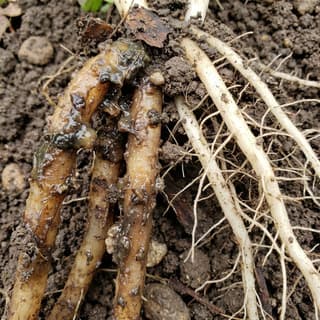
Root Rot
Root rot is a serious fungal disease that affects the root system of plants, causing them to decay and die. It is primarily caused by overwatering, poor drainage, or soil-borne fungi such as Pythium, Phytophthora, Rhizoctonia, and Fusarium. The disease thrives in waterlogged conditions where roots are deprived of oxygen, making them susceptible to fungal infection.
✓ Related symptoms:
- • Yellowing or browning of leaves
⚡ Quick Fixes:
Emergency unpotting
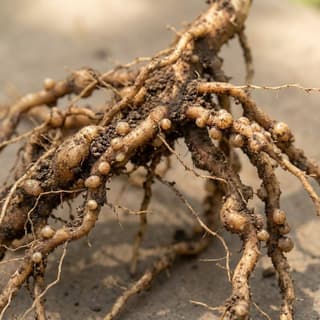
Root-Knot Nematodes
Root-knot nematodes (Meloidogyne species) are microscopic roundworms that parasitize plant roots, causing characteristic galls or knots. These soil-borne pests are among the most economically damaging plant pathogens worldwide, affecting a wide range of ornamental and edible plants. The nematodes inject enzymes into root cells, causing abnormal swelling and disrupting water and nutrient uptake.
✓ Related symptoms:
- • Yellowing of leaves (chlorosis), especially lower leaves
⚡ Quick Fixes:
Step 1
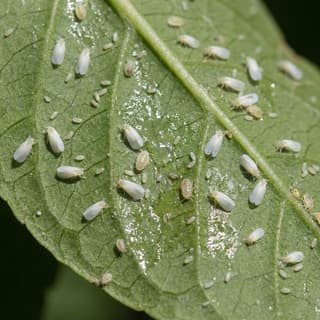
Whiteflies
Whiteflies are small, soft-bodied, winged insects closely related to aphids and mealybugs. They are moth-like in appearance, about 1/16 inch long, triangular in shape, and gray-white in color. These sap-sucking pests feed on plant tissue, causing yellowing, stunted growth, and wilting. They also excrete honeydew, which attracts ants and promotes sooty mold growth. Whiteflies can transmit serious plant viruses.
✓ Related symptoms:
- • Yellowing, wilting, and stunted growth of leaves
- • Transmission of plant viruses (tomato yellow leaf curl, cucumber mosaic)
⚡ Quick Fixes:
Step 1