
Flax with Slow Growth: Causes & Solutions
Linum usitatissimum
Flax is a plant that needs bright light and moderate watering. When showing slow growth, it may indicate issues related to its environment or care.
Is your Flax showing slow growth? Discover 3 possible causes and how to treat them.
🔍 Possible Causes (3)
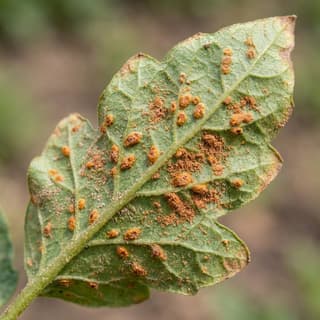
Rust
Rust is a common fungal disease caused by fungi in the order Pucciniales that affects a wide variety of plants. The disease gets its name from the characteristic orange, yellow, or reddish-brown pustules that appear on leaves, resembling metal rust. This obligate fungal parasite requires living plants to survive and can cause significant economic losses in agricultural crops.
✓ Related symptoms:
- • Stunted plant growth
⚡ Quick Fixes:
Immediate Pruning

Fusarium Wilt
Fusarium wilt is a serious fungal disease caused by the soil-borne fungus Fusarium oxysporum. The fungus invades roots and blocks the water-conducting vessels (xylem) of the plant, causing progressive wilting and eventual death. Host-specific forms of the pathogen exist that attack different plant species.
✓ Related symptoms:
- • Stunted growth and dwarfism
⚡ Quick Fixes:
Remove Plant

Root Rot
Root rot is a serious fungal disease that affects the root system of plants, causing them to decay and die. It is primarily caused by overwatering, poor drainage, or soil-borne fungi such as Pythium, Phytophthora, Rhizoctonia, and Fusarium. The disease thrives in waterlogged conditions where roots are deprived of oxygen, making them susceptible to fungal infection.
✓ Related symptoms:
- • Stunted growth and poor vigor
⚡ Quick Fixes:
Emergency unpotting