Linaceae
Flax: Edible Plant
Linum usitatissimum
Easy full-sun cultivation: requires at least 6 hours of direct light per day, moderate and consistent watering (without waterlogging) especially during flowering, and loose, organic-rich, well-drained soil. It is a short-cycle annual plant (90-110 days from sowing to seed) that tolerates drought well once established thanks to its deep taproot.
Every 6 days
Direct sun
10° - 27°C
40% - 60%
Categories
What is Flax?
Flax (Linum usitatissimum) is a easy-care plant from the Linaceae family. Flax (Linum usitatissimum) is an annual herbaceous plant in the Linaceae family, native to the Caucasus region and the Middle East, cultivated since antiquity for both its textile fiber (linen) and its oilseed. It features a slender, upright stem reaching up to 90 cm, alternate bluish-green lanceola...
Flax grows up to 90cm, spread of 30cm, watering every 6 days, 10°C – 27°C, 40–60% humidity. It is not suitable for indoor environments and not safe for pets.
Unlike many tropical plants, Flax tolerates watering mistakes. Best for beginners. Without precautions, ingestion can cause irritation in pets. Keep out of reach of cats and dogs.
How to Care for Flax?
TLDR: Flax needs Direct sun, watering every 6 days, and temperatures between 10-27°C with 40-60% humidity.
How Often Should You Water Flax?
Water when the top 2-3 cm of substrate are dry, increasing frequency just before and after flowering. Avoid waterlogging: excess moisture promotes root rot and damping-off in seedlings.
How Much Light Does Flax Need?
Requires direct full sun (minimum 6 hours daily); in partial shade, it grows weak and produces few flowers. It is ideal for south-facing balconies or gardens.
What Is the Best Soil for Flax?
Prefers loose, deep, organic-rich soils with good drainage and a pH between 5.5 and 7.5. Avoid compacted clay soils that retain excessive water.
What Pot Should You Use for Flax?
Use deep (minimum 30 cm) and wide pots with good drainage, as it develops a long taproot. Container cultivation works best outdoors on sunny balconies or terraces rather than as an indoor plant.
Care Schedule
Fertilize
Every 30 days
What Is Flax and Where Does It Come From?
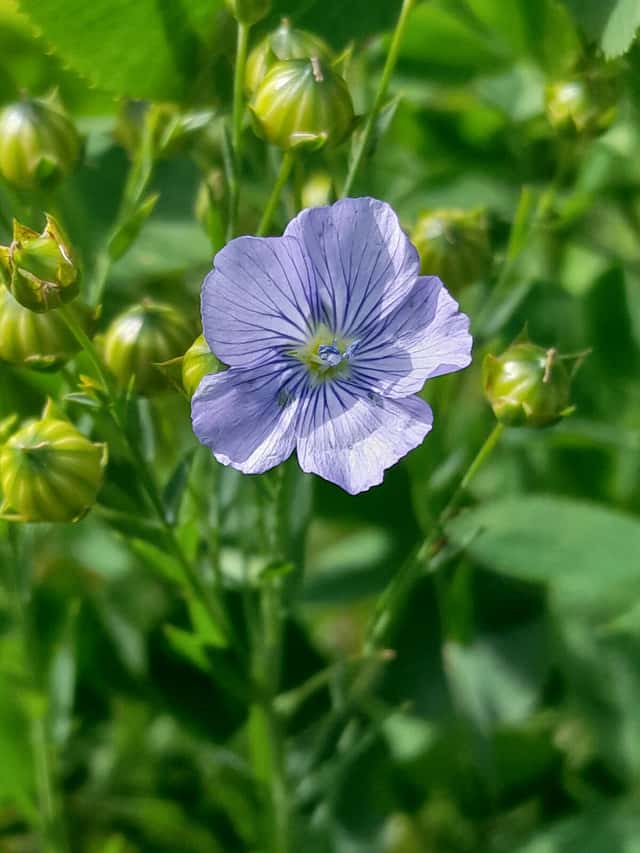
Flax (Linum usitatissimum) is an annual herbaceous plant in the Linaceae family, native to the Caucasus region and the Middle East, cultivated since antiquity for both its textile fiber (linen) and its oilseed. It features a slender, upright stem reaching up to 90 cm, alternate bluish-green lanceolate leaves, and delicate five-petaled flowers, typically sky-blue, which open during the morning in spring and summer. Its seeds, flattened and ranging from golden brown to light gold, are rich in omega-3 fatty acids, soluble fiber, and lignans, making it a highly valued food crop in addition to its ornamental use.
How Big Does Flax Grow?
TLDR: Flax can reach up to 90cm tall with Medium growth rate.
Max height
90cm
Spread
30cm
Growth rate
Medium
Foliage
Deciduous
Warning: Toxic Plant
This plant can be toxic if ingested. Keep out of reach of:
Plant Uses
Edible
Can be consumed
Medicinal
Medicinal properties
Ornamental
Great for decoration
Medicinal Uses
- Mild laxative due to its mucilage, promoting intestinal transit
- Expectorant in infusions for respiratory conditions
- Anti-inflammatory in poultices for skin irritations
- Source of lignans with antioxidant properties studied for their protective potential against certain hormone-dependent cancers
- Support in reducing cardiovascular risk factors due to its omega-3 fatty acid content
Culinary Uses
- Ground seeds added to breads, cereals, and smoothies as a source of fiber and omega-3
- Ground seeds mixed with water as a vegan egg substitute in baking
- Roasted seeds as a coffee substitute
- Cold-pressed flaxseed oil used as a dressing (never for high-temperature cooking)
Is your plant showing symptoms?
Click on the symptom to discover possible causes:
What Diseases Commonly Affect Flax?
TLDR: Flax is susceptible to 6 known diseases. Monitor regularly for early detection.
Fusarium Wilt
Fusarium wilt is a serious fungal disease caused by the soil-borne fungus Fusarium oxysporum. The fungus invades roots and blocks the water-conducting vessels (xylem) of the plant, causing progressive wilting and eventual death. Host-specific forms of the pathogen exist that attack different plant species.
Rust
Rust is a common fungal disease caused by fungi in the order Pucciniales that affects a wide variety of plants. The disease gets its name from the characteristic orange, yellow, or reddish-brown pustules that appear on leaves, resembling metal rust. This obligate fungal parasite requires living plants to survive and can cause significant economic losses in agricultural crops.
Septoria Leaf Spot
Septoria leaf spot is a destructive fungal disease caused by Septoria lycopersici, particularly devastating during seasons of moderate temperature and abundant rainfall. The disease starts on lower leaves and progresses upward, causing small circular spots with tan to gray centers and dark brown margins. If left untreated, it can dramatically reduce plant yields and cause complete leaf blight.
Damping Off
Damping off is a soil-borne fungal disease that affects seeds and young seedlings, causing rotting of stem and root tissues at and below the soil line. It is caused by several fungi including Pythium, Rhizoctonia, Fusarium, and Phytophthora. The disease thrives in cold, wet conditions with poor air circulation.
Meaning & Symbolism
In European folklore, flax symbolizes purity, destiny, and the thread of life: it was associated with the Norse goddess Frigg, the spinner of fate, and its sky-blue color evokes calm and clarity. It also represents domesticity and craftsmanship due to its historical use in textile production.
Compare with similar plants
| Attribute | Difficulty | Light | Watering | Pet Safe |
|---|---|---|---|---|
| Field Maple | Easy | Bright indirect | 14d | ✓ |
| Silver Birch | Easy | Direct sun | 14d | ✓ |
| Common Blanketflower | Easy | Direct sun | 10d | ✓ |
| Cushion Bush | Easy | Direct sun | 14d | ✓ |
Choose & Compare
Sources & References
- Linum usitatissimum (Common Flax) - NC State Extension Gardener Plant Toolbox
- Linum usitatissimum - Plants For A Future
- Overview and Management of the Most Common Eukaryotic Diseases of Flax (Linum usitatissimum)
- Flax (Linum spp.)-Rust - PNW Plant Disease Management Handbook
- Propiedades de la linaza - Botanical-online
- How to Grow Flax - Growing Flax in Containers





