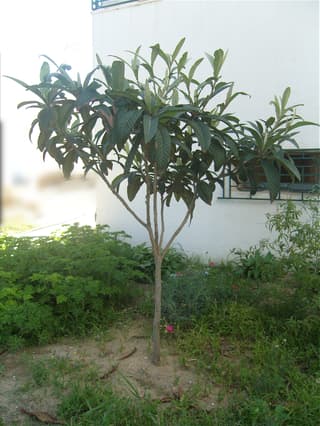
Loquat with Wilting Leaves: Causes & Solutions
Eriobotrya japonica
Loquat is a plant that needs bright light and infrequent watering. When showing wilting leaves, it may indicate issues related to its environment or care.
Is your Loquat showing wilting leaves? Discover 4 possible causes and how to treat them.
🔍 Possible Causes (4)
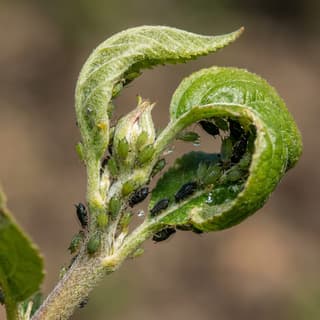
Aphids
Aphids are small, soft-bodied, pear-shaped insects (1/16 to 1/8 inch long) that feed by sucking nutrient-rich sap from plants. They reproduce rapidly and can quickly weaken plants, causing distorted growth and transmitting plant viruses. Aphids come in various colors including green, black, red, yellow, brown, and gray. They secrete honeydew, a sticky substance that attracts ants and encourages sooty mold growth.
✓ Related symptoms:
- • Wilting or weakened plants despite adequate watering
⚡ Quick Fixes:
Step 1
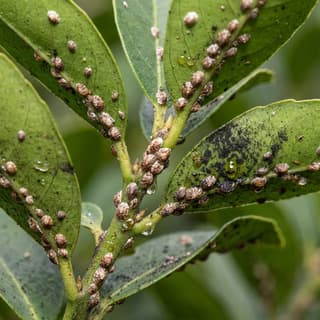
Scale Insects
Scale insects are small sap-sucking pests that appear as brown, shell-like bumps on plant stems and leaves. There are over 25 species, divided into armored (hard) and unarmored (soft) scales. They feed by piercing plant tissue and extracting sap, which weakens the plant and can lead to yellowing, stunted growth, and even death if left untreated. They also excrete honeydew, which attracts ants and promotes sooty mold growth.
✓ Related symptoms:
- • Drooping or wilting leaves
⚡ Quick Fixes:
Step 1
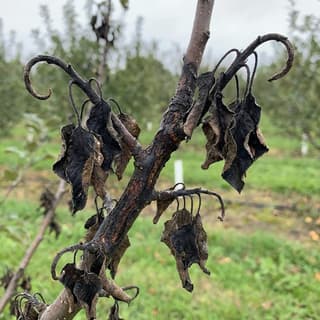
Fire Blight
Fire blight is a highly destructive and contagious bacterial disease caused by Erwinia amylovora. It primarily affects plants in the Rosaceae family, including apple, pear, quince trees, and various ornamental plants. The disease can destroy an entire orchard in a single growing season under ideal conditions, with the bacterium moving approximately 11 inches per week in new growth.
✓ Related symptoms:
- • Flowers and flower clusters appear water-soaked, then droop and shrivel, turning brown or black
- • Young shoots wilt forming the characteristic shepherd's crook hook shape
⚡ Quick Fixes:
Immediate Pruning
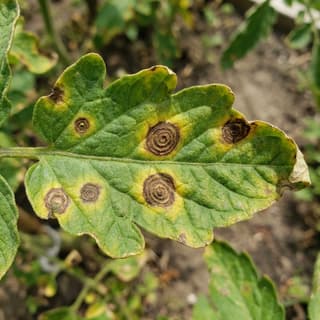
Alternaria Leaf Spot
Alternaria leaf spot is a common fungal disease caused by Alternaria solani and Alternaria alternata that affects a wide range of plants including tomatoes, potatoes, brassicas, and ornamentals. The disease thrives in warm, humid conditions and can cause significant crop damage if left untreated. Spores overwinter on plant debris and can attach to seeds, making complete elimination difficult.
✓ Related symptoms:
- • Premature leaf wilting and drop
⚡ Quick Fixes:
Step 1