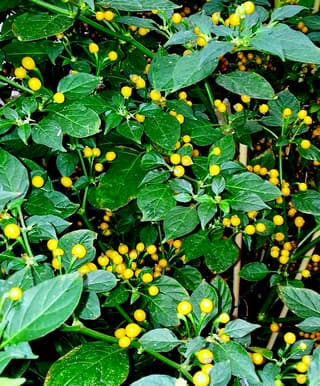
Habanero Pepper with Root Rot: Pet-Safe Treatment
Capsicum chinense
Habanero Pepper is a plant that needs bright light and frequent watering. When showing root rot, it may indicate issues related to its environment or care.
Is your Habanero Pepper showing root rot? Discover 5 possible causes and how to treat them.
🔍 Possible Causes (5)
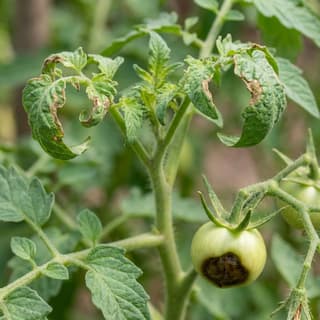
Calcium Deficiency
Calcium deficiency is a common plant disorder caused by insufficient bioavailable calcium in the growing medium or, more frequently, by low transpiration rates that prevent proper calcium transport to new growth. It manifests as necrotic leaf margins, curling of young leaves, stunted growth, and in severe cases, conditions like blossom end rot in fruits. The disorder primarily affects rapidly growing tissues where calcium demand is highest.
✓ Related symptoms:
- • Necrotic margins on young leaves
- • Blossom end rot on tomatoes, peppers, and eggplants
- • Cavity spot on carrots and root vegetables
⚡ Quick Fixes:
Step 1
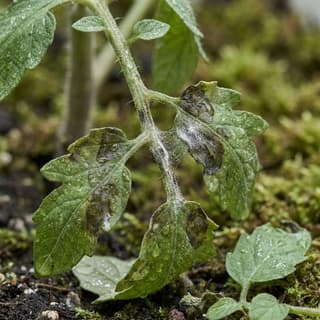
Phytophthora Blight
Devastating fungal disease caused by Phytophthora species (primarily P. capsici and P. infestans), famously responsible for the Irish Potato Famine in the 1840s. Affects all plant parts including roots, stems, leaves, and fruits in warm, wet conditions. The pathogen is technically an oomycete (water mold) that thrives in saturated soils and can survive in soil for 5+ years.
✓ Related symptoms:
- • Soft, water-soaked rot on fruit
- • Buckeye rot on tomatoes with concentric target-like pattern
⚡ Quick Fixes:
Immediately apply systemic fungicide (mefenoxam) as soil drench
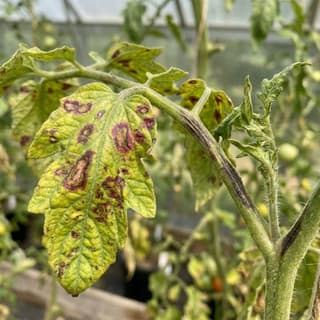
Tomato Spotted Wilt Virus (TSWV)
Tomato Spotted Wilt Virus (TSWV) is one of the most devastating viral diseases affecting over 1,000 plant species across 85 families. It is transmitted by thrips and cannot be cured once a plant is infected. The virus causes severe stunting, bronzing of leaves, necrotic spots, and significant yield losses. Early detection and removal of infected plants is critical to prevent spread.
✓ Related symptoms:
- • Small brown necrotic spots and lesions
- • Chlorotic yellow ring spots on foliage
- • Yellow ringspots and brown necrotic sunken areas on fruit
⚡ Quick Fixes:
Step 1

Root Rot
Root rot is a serious fungal disease that affects the root system of plants, causing them to decay and die. It is primarily caused by overwatering, poor drainage, or soil-borne fungi such as Pythium, Phytophthora, Rhizoctonia, and Fusarium. The disease thrives in waterlogged conditions where roots are deprived of oxygen, making them susceptible to fungal infection.
✓ Related symptoms:
- • Foul, rotting odor from the root zone
⚡ Quick Fixes:
Emergency unpotting
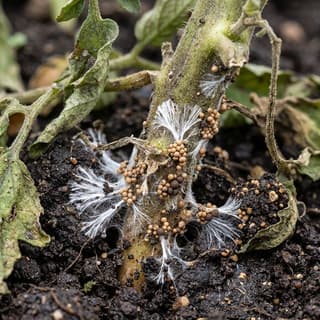
Southern Blight
Southern blight is a devastating soilborne fungal disease caused by Athelia rolfsii (formerly Sclerotium rolfsii), affecting over 500 plant species including vegetables, ornamentals, and fruit crops. The fungus survives in soil through resting structures called sclerotia that resemble mustard seeds and can remain viable for years.
✓ Related symptoms:
- • Spherical tan to reddish-brown sclerotia (1-2mm)
- • Crown and root rot
⚡ Quick Fixes:
Step 1