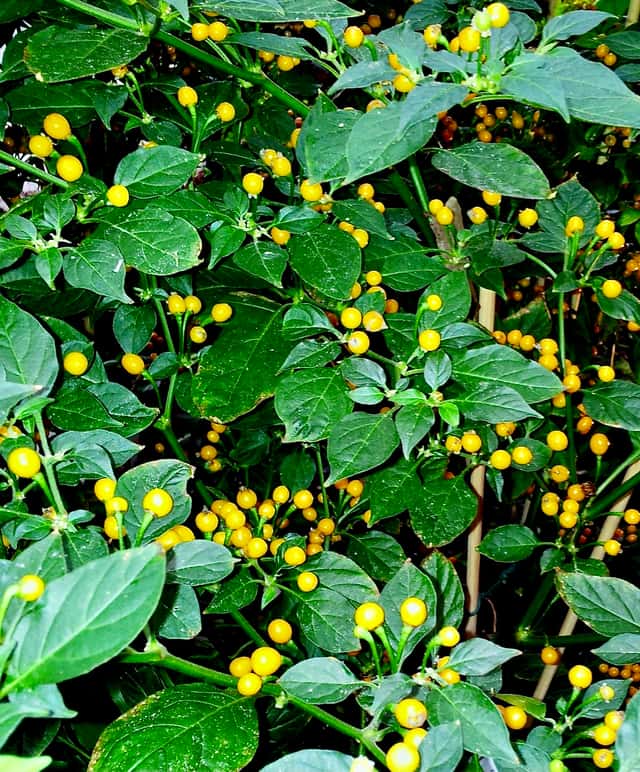
Solanaceae
How to Grow Capsicum chinense: Habanero, Carolina Reaper & the World's Hottest Peppers
Capsicum chinense
Plant in full sun, water regularly without waterlogging, fertilize every two weeks during the growing season, and protect from cold. Thrives in intense heat and produces abundant fruit in tropical climates.
Every 3 days
Direct sun
18° - 35°C
50% - 80%
Categories
What is Habanero Pepper?
Habanero Pepper (Capsicum chinense) is a medium-care plant from the Solanaceae family. Capsicum chinense is the species that unites the world's most iconic hot peppers — Habanero, Scotch Bonnet, Carolina Reaper, Bhut Jolokia (Ghost Pepper), and the mild Brazilian Biquinho pepper. Native to the tropical Americas, it has been cultivated by indigenous peoples for millennia. The species p...
Habanero Pepper grows up to 1.2m, spread of 60cm, watering every 3 days, 18°C – 35°C, 50–80% humidity. It is suitable for indoor environments and safe for pets.
Unlike many popular species, Habanero Pepper is safe to keep around pets. Without adequate drainage, root rot can develop within 7 days.
How to Care for Habanero Pepper?
TLDR: Habanero Pepper needs Direct sun, watering every 3 days, and temperatures between 18-35°C with 50-80% humidity.
How Often Should You Water Habanero Pepper?
Water when the top 1 inch (2-3 cm) of soil is dry — approximately every 3 days in summer, less frequently in winter. Avoid waterlogged soil; habanero peppers are sensitive to root rot.
How Much Light Does Habanero Pepper Need?
Requires full sun — at least 6 to 8 hours of direct sunlight per day. Indoors, place near south-facing windows or use full-spectrum grow lights.
What Is the Best Soil for Habanero Pepper?
Use well-draining potting mix enriched with organic compost. Ideal mix: garden soil + perlite + compost (1:1:1). pH 6.0–6.8. Avoid heavy clay soils that retain excess moisture.
What Pot Should You Use for Habanero Pepper?
Terracotta or ceramic pots are ideal for drainage and root aeration. Use containers with drainage holes, at least 12 inches (30 cm) in diameter. Larger pots (16-20 inches) will yield more fruit.
Care Schedule
Fertilize
Every 14 days
Rotate
Every 30 days
Repot
Every 365 days
What Is Habanero Pepper and Where Does It Come From?
Capsicum chinense is the species that unites the world's most iconic hot peppers — Habanero, Scotch Bonnet, Carolina Reaper, Bhut Jolokia (Ghost Pepper), and the mild Brazilian Biquinho pepper. Native to the tropical Americas, it has been cultivated by indigenous peoples for millennia. The species produces fruits with very high concentrations of capsaicin, ranging from mild (like Biquinho and Aji Dulce) to world-record hot (Carolina Reaper, over 2 million SHU). It is a robust, ornamental plant with exceptional culinary and medicinal value.
How to Propagate Habanero Pepper?
Seed propagation
Super-hot pepper seeds can take longer to germinate. Use a humidity dome or plastic wrap to retain moisture and warmth.
- 1 Soak seeds in warm water for 24 hours
- 2 Plant in moist, well-draining seed-starting mix at 0.5 cm depth
- 3 Keep in a warm location (25-30°C / 77-86°F) with good light
- 4 Germination occurs in 7 to 21 days
- 5 Transplant when seedlings reach 4-6 inches tall
Materials needed:
Stem cutting
Cover with a clear plastic bag to maintain humidity. Change water weekly if water-rooting.
- 1 Cut a healthy stem 4-6 inches long with 2-3 leaf nodes
- 2 Remove lower leaves, keeping only 2-3 at the top
- 3 Apply rooting hormone to the cut end
- 4 Plant in light moist mix or place in water
- 5 Keep in indirect light with high humidity until rooted
Materials needed:
How Big Does Habanero Pepper Grow?
TLDR: Habanero Pepper can reach up to 1.2m tall with Fast growth rate.
Max height
1.2m
Spread
60cm
Growth rate
Fast
Foliage
Evergreen
Plant Uses
Edible
Can be consumed
Ornamental
Great for decoration
Medicinal
Medicinal properties
Medicinal Uses
- Natural anti-inflammatory (capsaicin)
- Circulatory stimulant
- Topical analgesic
- Rich in vitamins C, A and B6
- Antioxidant properties
Culinary Uses
- Hot sauces and salsas
- Marinades and dry rubs
- Caribbean jerk seasoning
- Fermented pepper mashes
- Smoked and pickled preparations
- Habanero-based condiments
- Scotch Bonnet in Caribbean cuisine
- Ghost pepper for extreme heat applications
Is your plant showing symptoms?
Click on the symptom to discover possible causes:
What Diseases Commonly Affect Habanero Pepper?
TLDR: Habanero Pepper is susceptible to 14 known diseases. Monitor regularly for early detection.
Bacterial Wilt
Bacterial wilt is a fatal vascular disease caused by bacteria (Erwinia tracheiphila, Ralstonia solanacearum, Xanthomonas spp.) that infects the water-conducting tissue of plants. The bacteria multiply and block the flow of water and nutrients, causing rapid wilting and plant death within 1-2 weeks.
Anthracnose
Anthracnose is a fungal disease caused by fungi in the genus Colletotrichum that affects many plants, including vegetables, fruits, and trees. The disease thrives in cool, wet conditions, causing dark, sunken lesions on leaves, stems, flowers, and fruits.
Phytophthora Blight
Devastating fungal disease caused by Phytophthora species (primarily P. capsici and P. infestans), famously responsible for the Irish Potato Famine in the 1840s. Affects all plant parts including roots, stems, leaves, and fruits in warm, wet conditions. The pathogen is technically an oomycete (water mold) that thrives in saturated soils and can survive in soil for 5+ years.
Bacterial Leaf Spot
Bacterial leaf spot is a plant disease caused by bacteria in the Xanthomonas and Pseudomonas genera that affects various ornamental and edible plants. The bacteria infect leaves through wounds or natural openings, causing characteristic lesions that can lead to premature leaf drop and plant weakening.
Meaning & Symbolism
Symbol of courage, passion, and intensity. Capsicum chinense peppers are deeply rooted in Caribbean and Latin American culture, representing warmth, vibrancy, and strength.
Fun Facts
The Carolina Reaper, a Capsicum chinense cultivar, held the Guinness World Record for hottest pepper with over 2.2 million Scoville Heat Units
Despite being the same species as Habanero, the Brazilian Biquinho pepper has almost no heat and a unique sweet, smoky flavor
The Bhut Jolokia (Ghost Pepper) was weaponized by the Indian military in anti-riot grenades
In tropical climates, Capsicum chinense plants can live for several years, becoming productive woody shrubs
Frequently asked questions
How often should I water my Capsicum chinense pepper?
Does Capsicum chinense need full sun?
Is Capsicum chinense toxic to pets?
How long until Capsicum chinense produces fruit?
What is the difference between Habanero and Carolina Reaper?
Compare with similar plants
| Attribute | Difficulty | Light | Watering | Pet Safe |
|---|---|---|---|---|
| Dark Fieldcap | Medium | Low light | 2d | ⚠️ |
| Azalea | Medium | Partial shade | 3d | ⚠️ |
| Muriel's Bamboo | Medium | Partial shade | 3d | ✓ |
| Bougainvillea | Medium | Direct sun | 7d | ⚠️ |




