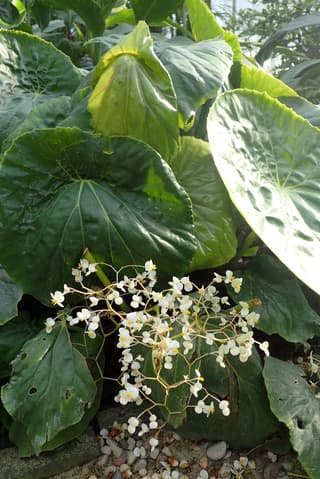
Lily pad begonia with Wilting Leaves: Causes & Solutions
Begonia nelumbiifolia
Lily pad begonia is a plant that needs indirect light and moderate watering. When showing wilting leaves, it may indicate issues related to its environment or care.
Is your Lily pad begonia showing wilting leaves? Discover 3 possible causes and how to treat them.
🔍 Possible Causes (3)
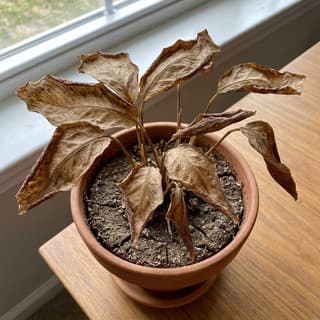
Low Humidity Stress
Low humidity stress occurs when indoor air becomes too dry, causing plants to lose moisture faster than they can absorb it through their roots. This is especially common during winter heating periods, near radiators and heating vents, or in air-conditioned spaces. Tropical plants are particularly susceptible to low humidity damage.
✓ Related symptoms:
- • Drooping or wilting leaves despite adequate soil moisture
⚡ Quick Fixes:
Step 1
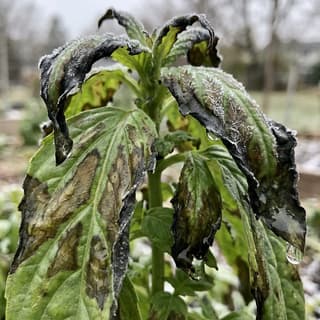
Cold Damage
Cold damage, also known as frost injury, occurs when plants are exposed to freezing or near-freezing temperatures. This environmental stress can cause cellular damage as ice crystals form within plant tissues, rupturing cells and disrupting normal plant functions. Chilling injury can also occur in sensitive species at temperatures between 32-55°F (0-10°C), even without actual freezing.
✓ Related symptoms:
- • Leaves become limp, wilted, and droopy
⚡ Quick Fixes:
Step 1
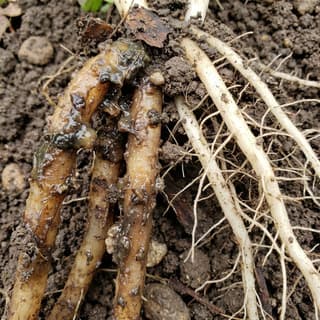
Root Rot
Root rot is a serious fungal disease that affects the root system of plants, causing them to decay and die. It is primarily caused by overwatering, poor drainage, or soil-borne fungi such as Pythium, Phytophthora, Rhizoctonia, and Fusarium. The disease thrives in waterlogged conditions where roots are deprived of oxygen, making them susceptible to fungal infection.
✓ Related symptoms:
- • Wilting leaves despite moist soil
⚡ Quick Fixes:
Emergency unpotting