Can Bougainvillea Tolerate Cold? Winter and Frost Care
Bougainvillea is not frost-tolerant. With nights at 10 °C (50 °F) or warmer it keeps its leaves; colder conditions cause leaf drop and dormancy, and frost kills stems from the tips down. See when to protect it, how to overwinter indoors, and how to save a frosted plant.
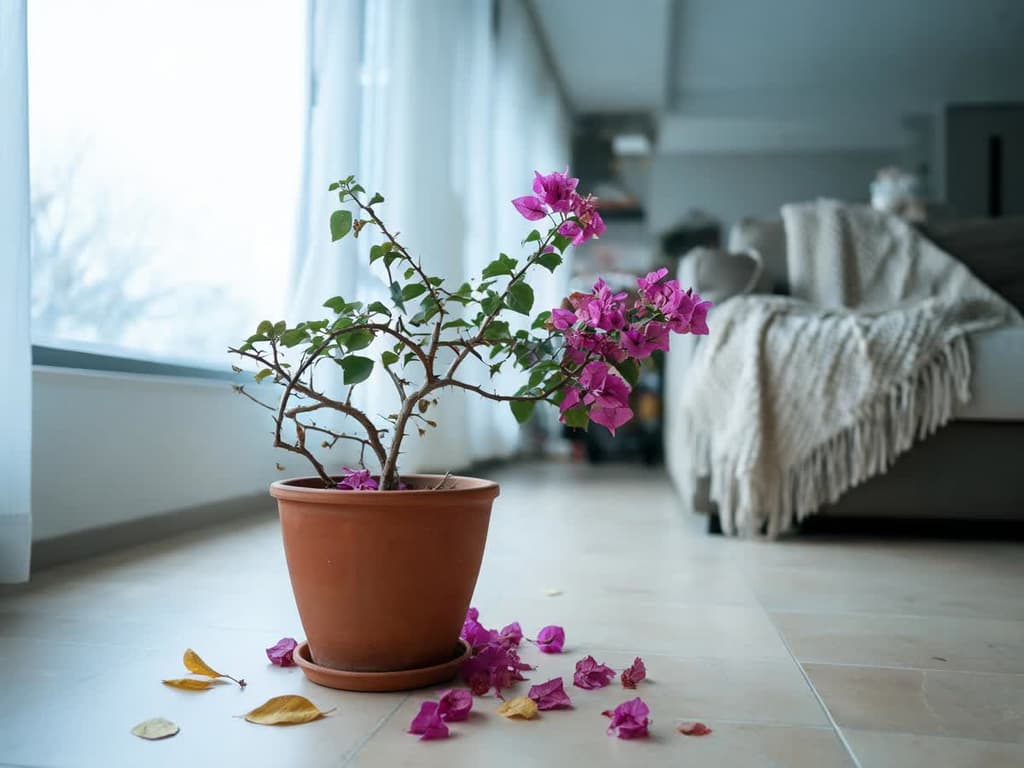
Bougainvillea is not frost-tolerant. It keeps its leaves with nights at 10 °C (50 °F) or warmer and tolerates brief dips down to 5 °C (41 °F). Both figures come from the Royal Horticultural Society (RHS). Below 10 °C (50 °F), the plant drops its leaves and enters dormancy (a pause in active growth). Frost kills the stems, starting from the tips.
In Brazil, bougainvillea stays outdoors in winter across most of the country. It only needs protection where overnight temperatures drop below 5 °C (41 °F). If your bougainvillea lost all of its leaves in the cold, it is probably alive: the section on dropping leaves shows how to check in 1 minute.
Quick summary:
Nights at 10 °C (50 °F) or warmer: bougainvillea keeps its foliage and needs no special care.
Nights between 0 and 10 °C (32–50 °F): it drops its leaves and enters dormancy. It survives as long as the potting mix dries out completely to the bottom between waterings.
Frost: exposed branches die back. Bring containers indoors; cover in-ground plants with frost cloth overnight.
Overnight low forecast | Potted bougainvillea | Bougainvillea in the ground or on a wall |
|---|---|---|
10 °C (50 °F) or higher | Keep it where it is, in full sun. | Needs nothing. |
Between 5 and 10 °C (41–50 °F) | Keep outdoors, pushed against a wall of the house and beneath an eave (the roof edge extending past the wall). Do not water on this day. | Leave as is. Leaf drop is expected. |
Below 5 °C (41 °F), no frost | Bring indoors for that night if you can. If left outdoors, keep the soil dry. | Cover with frost cloth overnight if the plant is small. |
Frost | Bring indoors. | Cover with cloth all the way to the ground overnight and remove in the morning. |
How much cold can bougainvillea handle
Bougainvillea tolerates temperatures above freezing, but the actual limit depends on your goal: keeping its leaves, surviving leafless, or escaping frost damage. Different sources cite different numbers because each measures one of these three thresholds.
To keep its leaves: nights of at least 10 °C (50 °F), with days a few degrees warmer. This is the minimum the RHS calls for to prevent winter leaf drop (RHS, growing guide).
To survive leafless: above 0 °C, with relatively dry potting soil. The RHS says you can store the plant this way, but it loses its leaves. The RHS page on the genus (the group of all bougainvilleas) says it tolerates brief periods down to 5 °C. Below 10 °C, it tends to enter dormancy (RHS, Bougainvillea). Both pages agree: between 0 and 10 °C the plant survives if it stops growing, loses its leaves, and stays in dry soil.
Frost: the University of Florida (UF/IFAS) classifies bougainvillea as frost-sensitive. In weather that is too cold, the stems die back starting from the tips (UF/IFAS, production guide).
German magazines, stores, and nurseries give ranges running from 0 °C to 15 °C (32–59 °F) for overwintering locations without citing sources. The higher ranges apply to keeping the plant in leaf. The lower ones apply to a dormant, dry plant. This guide follows the RHS figures, since it is the only source among them that separates both scenarios.
Bougainvillea is native to Brazil. Flora do Brasil, from the Rio de Janeiro Botanical Garden, records the two most cultivated species as native. They occur from the Northeast to Rio Grande do Sul, including in the Pampa (Bougainvillea glabra and Bougainvillea spectabilis).
Lesser bougainvillea (Bougainvillea glabra) and great bougainvillea (Bougainvillea spectabilis): which tolerates more cold
In this guide, the name bougainvillea applies to both species. Bougainvillea glabra (lesser bougainvillea) tolerates slightly more cold than Bougainvillea spectabilis. The North Carolina State University Extension (NC State) uses United States climate zones. It recommends B. glabra for zones 9a through 11b and B. spectabilis only starting in zone 9b (NC State, B. glabra; NC State, B. spectabilis). These zones classify locations by the coldest night of the year. In zone 9a, the coldest night of the year averages between −6.7 °C and −3.9 °C. In zone 9b, between −3.9 °C and −1.1 °C (USDA, plant hardiness zone map).
These numbers apply to plants established in the ground outdoors year after year, and they do not mean the plant emerges from frost undamaged. The root system of a container-grown plant remains far more exposed, because pots lose heat through their sides (UF/IFAS).
The RHS recommends B. glabra and the hybrid Bougainvillea × buttiana (a cross between B. glabra and B. peruviana) for containers, because both bloom while still young. In Brazil, B. glabra is called primavera or três-marias (see the profile for this species). NC State distinguishes the two by the flower. In B. glabra, the white tube has 5 angles and the bracts are short. In B. spectabilis, the tube is rounded and the bracts are longer. B. spectabilis has its own profile.
Two German guides suggest at least 12 °C (54 °F) for B. spectabilis, without citing a source. No university source consulted confirms this figure. If yours is B. spectabilis or you do not know the exact species, use 12 °C (54 °F) as an extra safety margin to keep the leaves intact.
Bougainvillea in Brazilian winter: where it freezes and what to do
In Brazil, winter runs from June to August, and bougainvillea spends the season outdoors in most of the country. According to the National Institute of Meteorology (INMET), frost occurs in the South, Southeast, and Mato Grosso do Sul (INMET, winter forecast). The risk is highest between southern Paraná and northern Rio Grande do Sul. In the higher-altitude cities of this belt, it increases even further (Wrege and colleagues, Brazilian Journal of Climatology).
Decide based on the forecast minimum temperature for your area, not the date on the calendar. Below 5 °C (41 °F), move pots inside if you can; whenever frost threatens, always bring them in. The table at the start of this guide lays out the other ranges, including care for in-ground specimens.
To protect bougainvillea from frost, follow the UF/IFAS cold protection guide (Cold Protection of Landscape Plants):
Plants in the ground or on walls: drape with horticultural frost cloth (the lightweight white fabric sold at garden centers) or a bedsheet. The cover must reach all the way down to the soil surface to trap heat radiating from the ground. Do not let the cloth press directly against the leaves, and remove it in the morning.
Pots staying outdoors: cluster the pots together before frost hits and pile straw or dry leaves around them. Grouped pots insulated with straw lose significantly less heat through their sides.
Do not fertilize once flowering ends: late-season feeding triggers tender new growth, and young shoots suffer the worst damage from cold.
Frost cloth protects against frost, but not against severe cold, the same publication notes. No source consulted measured how much heat a wall or roof eave actually traps for a bougainvillea. Because of that, bringing the pot indoors on freezing nights remains the safest option.
How to overwinter bougainvillea indoors
There are two approaches to overwintering indoors, and they require different setups.
1. With leaves, in a bright spot away from the cold. Nights need to stay at 10 °C (50 °F) or warmer (RHS). Bougainvillea needs at least 6 hours of sun per day. In Brazil, the window that gets the most sun faces north or west. The RHS warns that strong sun through glass can scorch the leaves. If dry, pale patches appear, move the pot away from the glass or hang a sheer curtain between the two.
2. Dormant, in a cool spot above 0 °C (32 °F). An unheated garage or utility room works, provided it has a window and temperatures stay above freezing. The plant drops its foliage and drinks very little water. German gardening magazine Mein schöner Garten notes that B. glabra, which loses all its leaves in winter, tolerates lower light levels, but not complete shade.
Before bringing the bougainvillea indoors, look under the leaves (if it still has any) and at the tips of the stems. The RHS lists whiteflies, mealybugs, aphids, and spider mites as bougainvillea pests, and indoors they spread to other plants. Signs of each one are on the bougainvillea pests page.
Move the plant back outdoors once nighttime lows stay consistently at 10 °C (50 °F) or higher. If it spent the winter leafless, warmth and sunshine will wake it up and spur fresh shoots.
Watering bougainvillea during cold weather
In cold weather, water bougainvillea only when the potting mix is dry all the way to the bottom of the pot, and always water in the morning. The RHS recommends keeping the mix relatively dry during winter, watering thoroughly but infrequently. UF/IFAS advises against watering bougainvillea on chilly nights and cautions that excess moisture causes root rot and leaf drop. Another UF/IFAS publication on cold protection suggests watering landscape plants before a frost because moist soil retains more heat. This guide follows the specific bougainvillea guidelines, as soggy soil in cold weather rots root systems. For container plants, never water right before a frost.
To check if the mix is dry down to the bottom, insert a wooden skewer to the base of the container and pull it out after 1 minute. If it comes out dry and clean, water until moisture drains freely from the drainage hole and discard any runoff collected in the saucer. If it comes up damp or with dark soil clinging to it, wait longer.
A dormant, leafless bougainvillea uses very little water. A plant kept in leaf in a warm, sunny room dries out much faster and demands more moisture. Use the wooden skewer test for both situations, rather than sticking to a set calendar schedule.
The RHS notes that bougainvillea does not tolerate poorly draining pots, because standing water rots the roots. The signs of root rot are on the bougainvillea rot page.
When to prune bougainvillea: before storing or at the end of winter
The primary pruning for bougainvillea takes place in late winter, right before new growth begins. The RHS explains that bougainvillea blooms on current-season wood. Pruning just ahead of this surge produces the best results. UF/IFAS advises against pruning in late summer and early autumn. Trimming at that time stimulates tender growth, which suffers far more cold damage.
Four out of six German guides consulted recommend heavy pruning before moving the plant indoors. This guide adheres to RHS and UF/IFAS recommendations. Before cold weather arrives, trim back only what is necessary to fit the pot into its winter quarters. Save hard pruning for late winter.
Wear thick gloves and long sleeves: bougainvillea stems carry sharp, sturdy thorns.
Bougainvillea losing leaves in winter: dormancy or a problem?
A bougainvillea that loses its leaves during a cold or dark period is, most of the time, dormant. The RHS states that it tends to drop its leaves below 10 °C. UF/IFAS lists four causes for leaf drop: overwatering, underwatering, low light, and cold. The University of Hawaii adds that indoors, lack of light alone is enough to cause leaf drop (CTAHR, Bougainvillea).
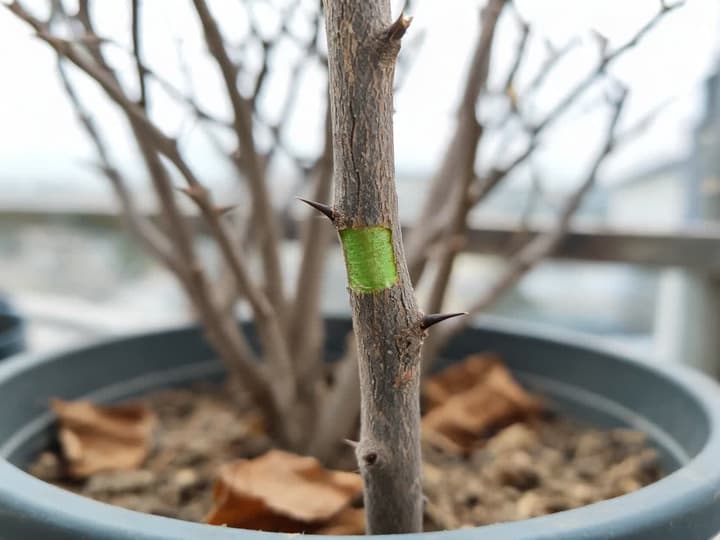
Try the scratch test recommended by UF/IFAS for cold-damaged plants. Gently scrape the surface of the bark with a fingernail. Green tissue underneath indicates the stem is alive; brown or black shows that section has died back. Repeat this on 3 or 4 stems. If the scraped spot looks brown or brittle, test again closer to the base of the plant until you encounter green wood.
These indicators distinguish natural dormancy from active issues:
Dormancy: leaf drop began as temperatures dropped or after moving the pot to a darker spot. Branch interiors show green and the potting mix is not waterlogged. Water only when a wooden skewer comes out completely dry, and wait. Leaves return as warmth builds.
Overwatering: the potting soil stays wet several days after watering. Stop watering and see the page on bougainvillea losing leaves.
Spider mites: leaves yellowing with pale stippling and fine webbing underneath. The two-spotted spider mite is on the RHS bougainvillea pest list. The causes of yellow leaves are on the yellow leaves on bougainvillea page.
Dead stems: the scratch test reveals brown or black tissue throughout. Prune away these dead branches at the end of winter, cutting back just above the point where healthy green tissue begins.
Not sure if your vine is a bougainvillea? Bloom (available for iOS) identifies the plant by photo. Other balcony vines also lose their leaves in the cold, such as mandevilla in winter, which struggles below 10 °C (50 °F).
Frost-damaged bougainvillea: can you save it?
A bougainvillea that catches a frost can sometimes resprout, though no source reviewed has measured the exact recovery rate for the species. UF/IFAS explains that, for landscape plants in general, freezing cold often kills thin branch tips while leaving older, thicker wood below alive. Established specimens can also regenerate from the root crown after frost. Perform a scratch test before writing the plant off.
Steps to take after frost, according to UF/IFAS:
Do not prune the very next day. Dead leaves and scorched stems insulate the interior parts from subsequent cold snaps. Hold off until active buds break.
Check moisture in the pot. Frozen soil cannot supply moisture to roots, and a windy freeze can dehydrate foliage. If the soil has dried out, water gently once morning arrives.
Once the shoots appear, prune dead branches. Remove the entire brown section and make the cut into the green tissue, close to where the brown ends.
Protect emerging shoots with frost cloth if another frost threatens.
Be patient. After severe cold, some plants take a long time to break dormancy and send out new growth, warns UF/IFAS. A branch that fails to push new growth by late spring was likely killed by the cold.
Frequently asked questions
Is there a frost-hardy bougainvillea?
None of the sources consulted lists a truly frost-hardy bougainvillea variety. Bougainvillea glabra tolerates slightly more cold than Bougainvillea spectabilis (NC State), but frost causes stem dieback on both. If you lack space to bring containers inside, cover plants with frost fabric extending to the ground on freezing nights, or choose a cold-hardy vine suited to your region's winter minimums.
Does bougainvillea bloom in winter?
Yes, where winters are warm. UF/IFAS notes that in Florida, bougainvillea blooms most during winter because short days stimulate flowering. The colorful parts are bracts (modified leaves), and the true flower is the small white or yellowish tube in the center (CTAHR). Below 10 °C (50 °F), it tends to enter dormancy and lose its leaves (RHS).
Can you fertilize bougainvillea during winter?
No. Stop fertilizing once flowering winds down and do not resume until active new growth resumes. The RHS advises cutting off fertilizer after blooming ahead of winter. UF/IFAS explains that late fertilizer applications stimulate soft new growth, and these tender shoots suffer the worst damage from cold.
Does an in-ground bougainvillea need special winter care without frost?
Hardly any. Where freezing temperatures never occur, in-ground bougainvilleas overwinter uncovered and may keep flowering. Water only when a wooden skewer inserted into the soil emerges dry and clean, and withhold fertilizer until spring growth begins. Drape with frost cloth on nights when freezing temperatures are forecast. Also cover small plants if temperatures drop below 5 °C (41 °F).
Conclusion
Bougainvillea is not frost-tolerant. With nights at 10 °C (50 °F) or warmer, it keeps its leaves; between 0 and 10 °C (32 and 50 °F), it enters dormancy, and frost kills the stems. In Brazil, the plant stays outdoors across most of the country and only needs protection on nights below 5 °C (41 °F), whether there is frost or not. If it dropped its leaves, do the scratch test before anything else: a stem that is green on the inside is a living stem.
Related articles
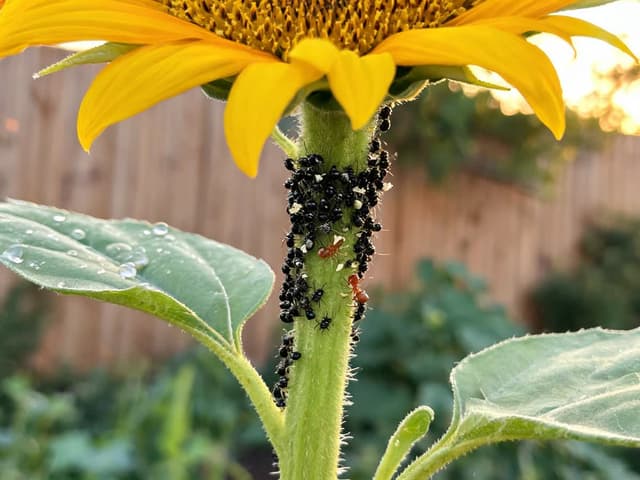
Bugs on Sunflowers: What They Are and What to Do
The bordered patch caterpillar is the main pest among the bugs on sunflowers in Brazil. Learn how to recognize this caterpillar, aphids, leaf beetles, stink bugs, and birds by the damage, when to treat, and when to let the plant finish its cycle.
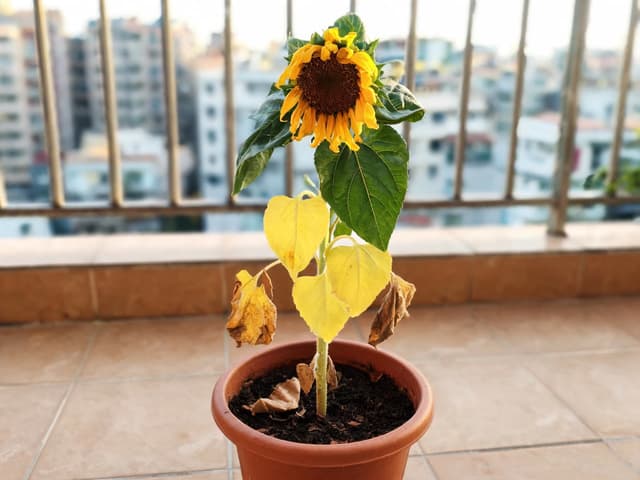
Yellow Leaves on Sunflowers: Causes and What to Do
Yellow leaves on sunflowers: use the plant's stage and where the yellow sits to tell end of life cycle, watering, low fertilizer, fungus or mites apart, plus the test that confirms each cause.
How to Prune Bougainvillea: When, How Much, and Where to Cut
How to prune bougainvillea: cut after flowering, right above a node, and save hard pruning for when the plant starts growing again. See how much to remove, the three types of pruning, and how to train potted bougainvillea.