Dipladenia in Winter: Cold Tolerance and How to Protect It
Dipladenia tolerates nights down to 50°F (10°C), but no colder. Below that, leaves suffer even without frost, and frost kills the stems. Learn when to protect your plant, how to overwinter it indoors, and what to do if it drops leaves or takes cold damage.
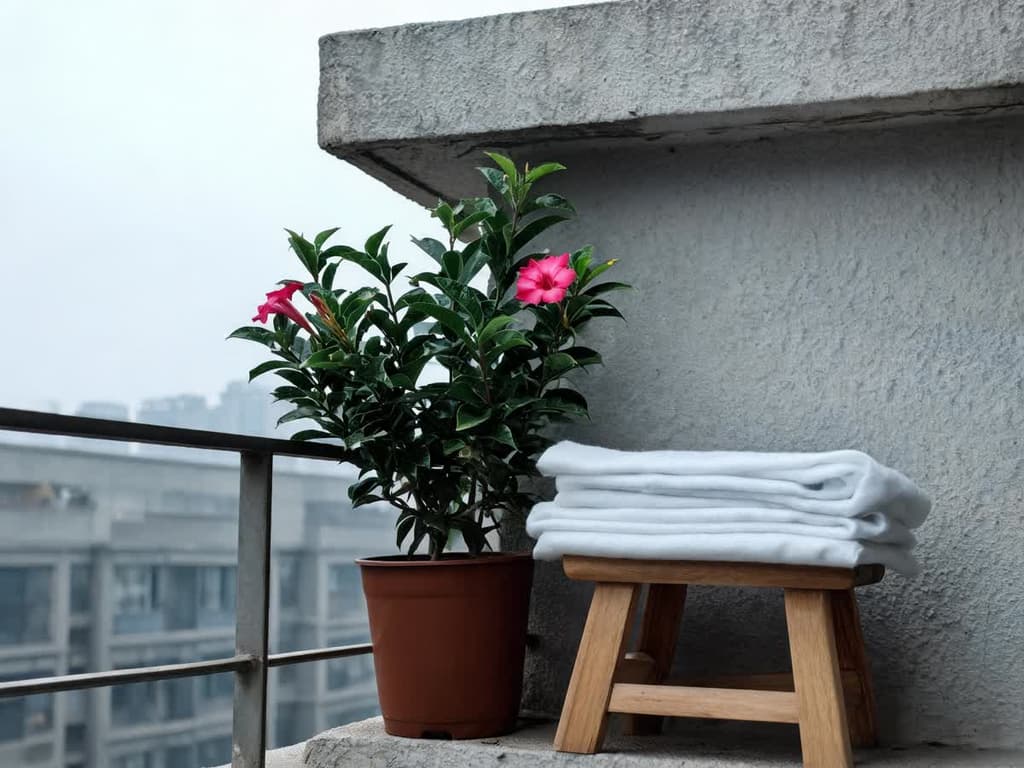
In winter, dipladenia tolerates nights down to 10 °C, but no colder. Below that temperature, the leaves suffer even without frost, and frost kills the stems. The Royal Horticultural Society (RHS), the British horticultural society, warns that nights below 10 °C can kill the plant. The Clemson University Extension service in the United States (the branch of the university that guides gardeners) places the minimum tolerated temperature between 7 and 10 °C.
In Brazil, dipladenia spends the winter outdoors in most of the country. It only needs protection during early mornings below 10 °C and on frosty nights. Dipladenia and mandevilla are names for the same plant: dipladenia once had its own botanical genus (Dipladenia) and is now part of the genus Mandevilla. Winter care applies to both.
Your situation | What to do in winter |
|---|---|
Overnight forecast above 50°F (10°C) | Leave the plant where it is. Water less and do not fertilize. |
Overnight forecast below 50°F (10°C), no frost | Bring the pot indoors if you can. If you cannot, push the pot against a wall, under an eave and sheltered from the wind. In-ground plant: cover with plant frost fabric (a thin white cloth) at night and remove it in the morning. |
Frost forecast | Bring the pot indoors near a bright window. In-ground plant: cover with frost fabric at night. |
Plant indoors | Choose between two ways: a bright window with the plant growing slowly, or a bright, cool spot between 50 and 59°F (10 and 15°C) with the plant dormant (not growing and producing no new leaves). |
Dark, soft leaves after a cold night | Do not cut anything yet. Wait at least 3 to 7 days and scratch the bark of a stem with your fingernail: green underneath is alive, brown is dead. Prune only after cold nights have passed. |
Yellow, sticky leaves | Check for pests under the leaves and where the leaves meet the stem. |
How much cold dipladenia can tolerate
Dipladenia can tolerate nights of 10 °C, but no colder. The RHS indicates keeping the plant above 15 °C on winter nights. Some plants survive slightly below that, provided they stay above 10 °C (RHS). Clemson Extension gives the minimum tolerated temperature between 7 and 10 °C (45 to 50 °F). In excessive cold, the plant drops its leaves (RHS).
The plant is tropical by origin. Mandevilla sanderi, one of the species sold as dipladenia, is native to the state of Rio de Janeiro and grows in a humid tropical climate. Its former name was Dipladenia sanderi (Royal Botanic Gardens, Kew). Many plants sold today are hybrids of more than one species, according to NC State Extension.
Chilling temperatures above freezing also cause harm
Tropical plants suffer chilling injury: this is damage caused by cold above 0 °C, without any ice. Between 0 and 10 °C, the cold disrupts photosynthesis, respiration, and plant cell membrane function, according to the University of Florida Extension (UF/IFAS). Below 0 °C, ice forms inside the cells and ruptures the tissues.
That is why dipladenia can wake up with dark leaves after a 41°F (5°C) night, even without frost. UF/IFAS explains that top growth dies back when the plant is exposed to freezing temperatures (32°F / 0°C or below).
Why this guide uses 50°F (10°C), not 46°F (8°C)
Some German garden stores and magazines suggest winter quarters between 46 and 54°F (8 and 12°C) and say to bring the plant in when nighttime temperatures drop below 46°F (8°C). They cite no sources. Clemson Extension accepts 45 to 50°F (7 to 10°C), and the RHS says the plant can die below 50°F (10°C). This guide follows the RHS and stays on the safer end of Clemson's range: that way, your plant stays protected even on a 48°F (9°C) night.
Is there a mandevilla that tolerates more cold?
Mandevilla laxa, known as Chilean jasmine, tolerates down to 41°F (5°C), according to the RHS. Clemson Extension says its roots tolerate about 5°F (−15°C). Laxa is a fragrant white-flowered vine, rarely sold in Brazil. The white color is not enough to identify laxa, because white dipladenias exist. If you bought the potted plant as a dipladenia, use the 50°F (10°C) limit.
Dipladenia in winter: when to protect it
In Brazil, winter runs from June to August. According to the National Institute of Meteorology (INMET), frost occurs in the South, Southeast, and Mato Grosso do Sul (INMET, winter forecast). The highest frost risk is between southern Paraná and northern Rio Grande do Sul. In the higher-elevation cities of this belt, the risk is higher (Wrege and colleagues, Revista Brasileira de Climatologia, 2018).
Frost is not the only warning sign. Check your local weather forecast and look at the overnight low temperature. A low below 50°F (10°C) already calls for protection, even without frost. None of the consulted sources measured exactly how much protection a wall, eave, or frost cloth provides to a dipladenia. Because of that, bringing the pot indoors is the safest option; a wall and frost cloth serve plants that cannot fit or cannot come inside.
To protect outdoor dipladenia:
Potted plant on a porch or patio: push the pot against a wall of your home, under an eave or covered roof, away from wind and cold rain.
In-ground plant or on a trellis: cover it with plant frost fabric late in the afternoon and remove it in the morning. Frost fabric is a thin white cloth sold at garden centers.
Frost forecast: bring the pot inside for that night. In-ground plants stay covered with frost fabric and may lose top growth, as explained in the section on cold-damaged plants.
Inherited the plant with your house and unsure whether it is really a dipladenia? Bloom (available for iOS) identifies plants from a photo. Another red-flowering vine might tolerate more or less cold.
How to overwinter dipladenia indoors
Indoors, dipladenia overwinters in two ways. The New York Botanical Garden (NYBG) describes both in a response by Sonia Uyterhoeven, the gardener responsible for public education at the garden (NYBG).
Method 1: plant growing slowly, near a bright window.
Cut back the vines before bringing the plant inside, down to a size that fits the room. NYBG suggests cutting back by about half its length.
Place the pot near the brightest window in the house. In Brazil, the window that gets the most sun in winter faces north. Indoors, the plant needs bright, indirect light, or sun filtered through a curtain (Clemson). If direct sun hits the leaves, put a sheer curtain between the plant and the glass.
Water when the surface soil feels dry to the touch. Do not fertilize.
For actively growing plants, the RHS recommends nights above 59°F (15°C) and, at a minimum, above 50°F (10°C). NC State notes that indoors, dipladenia needs humid air. The RHS suggests setting the pot on a tray filled with wet pebbles without letting the soil sit waterlogged.
Method 2: dormant plant in a cool, bright spot.
Cut the vines back hard, leaving the plant about 12 inches (30 cm) tall (NYBG).
Keep the pot in a location that stays between 50 and 59°F (10 and 15°C), the RHS winter range. NYBG mentions garages and basements. The RHS notes that dipladenia dislikes shade, so a cool room with a window is better than a windowless basement.
Water only enough to keep the soil from drying out completely. No source gives an exact watering interval for dormant plants: check the soil once a week and add a little water when it feels dry to the touch.
Choose method 1 if you have an extra bright window. Choose method 2 if the plant is too large for your living room and you have a cool, bright room available.
Before bringing any pot indoors, check for pests. Clemson Extension instructs checking under leaves, in the leaf axils along stems, and in every corner of the plant. A pest brought inside will spread to your other houseplants.
When the forecast for an entire week predicts lows above 50°F (10°C), the plant can go back outside. The RHS recommends gradually acclimating the plant to outdoor sun and wind rather than moving it all at once in a single day.
Watering and fertilizing dipladenia in the cold
In cold weather, dipladenia takes up less water because growth slows down. The RHS instructs reducing watering and keeping the soil only slightly moist, without letting it dry out completely. NC State advises letting the soil dry in winter. These two guidelines meet in the middle: water when the surface soil feels dry to the touch, and never let the pot dry completely to the bottom.
The RHS warns that dipladenia cannot tolerate excess water in winter. Cold, soggy soil rots roots. Empty the saucer under the pot after every watering.
Do not fertilize in winter. NYBG instructs resuming fertilizer once a month starting in late winter after pruning. UF/IFAS advises waiting for new growth before fertilizing a cold-damaged plant. This guide follows UF/IFAS, which is a university extension service: resume fertilizing once a month after the plant begins growing.
Dipladenia dropping leaves in the cold: when it is normal
A dipladenia that drops a few leaves in winter is usually just reacting to cold and lower light levels. The RHS explains that the plant sheds leaves when it gets too cold. Leaves that drop while leaving green, firm stems will grow back once temperatures rise.
What separates normal leaf drop from a serious problem is the condition of the stems, soil, and foliage:
A few yellow leaves dropping, stems green and firm, soil slightly moist: reaction to cold or low light. Move the plant to a brighter spot above 50°F (10°C).
Many leaves dropping and soil waterlogged for several days: suspect root problems. Unpot the plant and inspect the roots. Dark, mushy roots indicate root rot.
Dark, limp, water-soaked leaves overnight after a cold night: cold injury. Follow the next section.
Yellow, sticky leaves, or stippled with light specks: pests. See the section on sticky leaves.
Stem brown and dry inside during a scratch test: that stem is dead.
The guide on dipladenia dropping leaves covers other causes of leaf drop outside of winter.
Can you save a cold-damaged or frost-bitten dipladenia?
Often, yes. UF/IFAS notes that many tropical plants resprout from the roots even when top growth dies back. Clemson Extension states that dipladenia cut back almost to the ground still blooms the same summer on new stems.
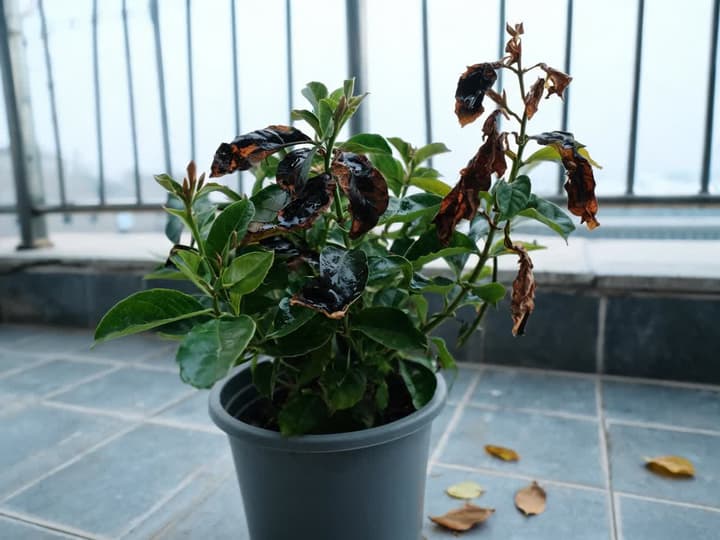
Follow this order, based on UF/IFAS recommendations:
Wait at least 3 to 7 days before evaluating. Cold damage looks worst right after the cold night.
Do not fertilize, do not prune heavily, and do not overwater during this period. These three actions stress the plant and force weak shoots.
Perform a scratch test. Lightly scratch the bark of a stem with your fingernail. Green beneath the bark means the stem is alive; brown or black means the stem is dead.
Leave damaged stems on the plant as long as the threat of another cold night remains. Dead tissue insulates the living growth underneath. Leaves that have turned completely brown can be removed.
Once cold nights have passed, cut back only to green tissue. Damage is often limited to tips. When in doubt, wait until the plant starts sprouting before pruning.
If the scratch test shows brown on every stem, do not throw the plant away yet. Keep the soil slightly moist without waterlogging it and wait until spring: new growth can emerge from the base.
Yellow, sticky leaves in winter: these are pests
Yellow and sticky leaves on indoor dipladenia are almost always pests. The sticky coating is honeydew: a sugary liquid that some insects excrete after sucking plant sap. The Iowa State University Extension explains that honeydew covers lower leaves, tables, and floors. Over time, it turns black because of a fungus called sooty mold.
The most common dipladenia pests, according to Clemson Extension and the RHS:
Mealybugs: white, cottony tufts in leaf axils and beneath leaves. They excrete honeydew.
Scale insects: small bumps attached along stems and leaf veins, mostly on the undersides of leaves (Iowa). They excrete honeydew.
Two-spotted spider mites: leaves stippled with pale dots, faded (RHS).
Whiteflies: tiny white flies that flutter when you disturb the plant.
To treat them, Iowa Extension advises:
Isolate the plant from others so the pest does not spread to nearby pots.
Wipe the foliage with a damp cloth to remove honeydew, sooty mold, and some insects.
Scrape off scale insects with your fingernail. If there are only a few, dab each one with a cotton swab dipped in rubbing alcohol.
Prune away heavily infested stems.
If an insecticidal product is needed, use insecticidal soap, neem oil, or horticultural oil, ensuring both the plant and the pest appear on the product label. Complete control requires weekly applications for 4 to 6 weeks.
If the plant is heavily infested, Iowa Extension notes it may be best to discard it before pests spread to other pots.
When to prune dipladenia
Prune dipladenia primarily in late winter, before new growth starts. The RHS and Clemson Extension point to this timing: remove old, weak, and tangled stems. Cut back side shoots to within 3 or 4 buds (the small nodes along the stem) of the main stem (RHS). Dipladenia blooms on current-year growth, so late-winter pruning will not sacrifice blooms for the coming season.
Sources differ on whether to prune before winter: NYBG cuts back before bringing plants inside and again in late winter, while NC State prunes before moving plants back outside. This guide follows the RHS and Clemson for the main pruning. Before winter, make only the cuts needed to fit the plant indoors: by about half for method 1 and down to 12 inches (30 cm) for method 2 (NYBG). Outdoor plants do not need this reduction. For cold-damaged plants, wait until cold nights pass and rely on the scratch test.
Wear gloves when pruning. Dipladenia's milky sap irritates skin (RHS) and can be toxic if ingested, according to UF/IFAS. Clean up fallen trimmings and keep them away from dogs and cats. If you have pets at home, review the toxic plants for pets list and check the rest of your houseplants.
Frequently asked questions
Can you keep dipladenia indoors as a houseplant?
Yes, near a bright window. The RHS says dipladenia grows as a houseplant if provided warmth, humid air, bright indirect light, and room to climb. Light is the limiting factor. The RHS warns that the plant dislikes shade, and without bright light, it can drop leaves or stop blooming. The RHS also notes that keeping it indoors for many years is difficult because the plant grows quite large.
How many degrees below freezing can dipladenia tolerate?
None. Common dipladenia suffers chilling injury below 50°F (10°C), and freezing temperatures kill top growth (UF/IFAS). Only Mandevilla laxa tolerates colder temperatures. The RHS lists 41°F (5°C) for the plant, and Clemson Extension notes that its roots survive down to around 5°F (−15°C). In a freezing winter, protect common dipladenia every night.
When does dipladenia start blooming again after winter?
Dipladenia blooms on new wood, so flowers return once new shoots push out. The plant needs warm spring temperatures to produce flowering stems. The RHS recommends around 70°F (21°C) during the day and 64°F (18°C) at night. German manufacturer Compo and magazine Mein schöner Garten note that overwintered plants usually flower several weeks later than newly purchased nursery plants already in bloom.
Do vining mandevillas and compact dipladenias require different winter care?
None of the consulted sources list different temperature limits for the two: the boundary is around 50°F (10°C) for both. The difference is size. A large vine tied to a wall or trellis cannot come indoors: protect it with frost cloth. A compact potted dipladenia can come inside on nights below 50°F (10°C) and must come inside on frosty nights.
Before the next cold night
On the eve of an overnight low below 50°F (10°C), check four things. The pot is inside, or sheltered against a wall under an eave. The saucer has no standing water. Frost fabric for in-ground plants is ready. Undersides of leaves are pest-free.
If the plant wakes up with dark leaves, wait at least 3 to 7 days and use the scratch test. Once cold nights pass, prune only tissue that is brown inside.
Related articles
Cyclamen with Yellow Leaves: Causes and What to Do
A cyclamen with yellow leaves might just be going dormant. Learn how the tuber and the time of year tell dormancy apart from rot, heat, thirst, and mites, and what to do in each case.
How to Water Cyclamen: Bottom Watering, Edge Watering, and the Wilt Test
How to water cyclamen without rotting the tuber: when the soil surface dries out, from below for 15 minutes or around the edge, never in the center. Plus the test to tell wilting from thirst apart from rot.
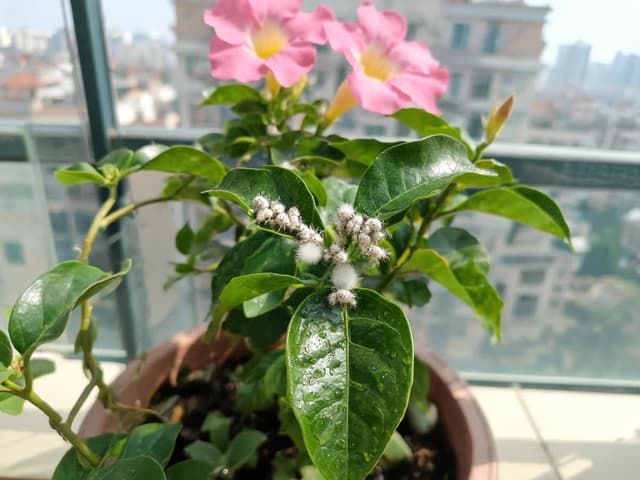
Dipladenia with Sticky White Dots: Which Pest Is It?
A sticky white dot on a dipladenia is almost always a mealybug, but whiteflies, aphids, spider mites, and the plant's own sap leave similar marks. See the test that separates each one and the source-backed treatment.