Calla Lily: How to Care for White and Colored Varieties
How to care for calla lilies: bright light with morning sun, consistently moist soil, fertilizer during new growth, and rest after flowering. The white calla lily tolerates waterlogged soil; colored callas rot in it and need a dry dormant period.
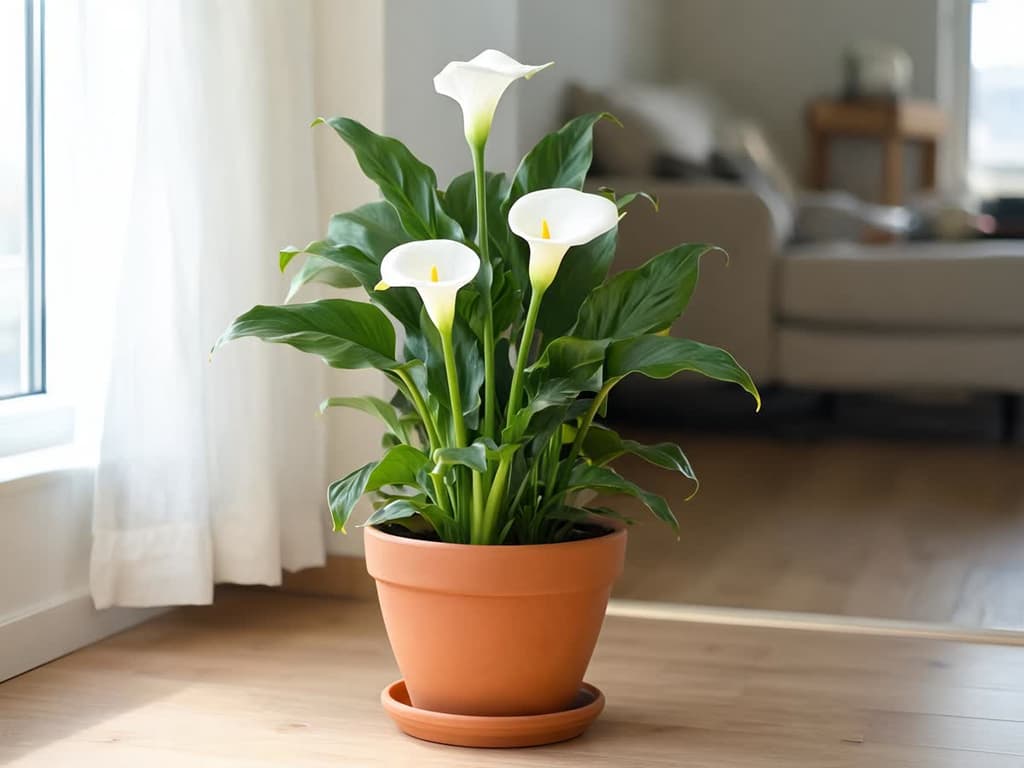
How to care for a calla lily: give it morning sun, keep the soil consistently moist, and let the plant rest after flowering. In poor soil, fertilize from the start of new growth until flowering. The white calla lily (Zantedeschia aethiopica) tolerates waterlogged soil. Colored callas, with pink, yellow, orange, or purple flowers, rot with that same excess water and need a dormancy period with almost no watering.
If your calla lily turned yellow or flopped over, squeeze the base of the stems before deciding anything. A firm stem at the base means the plant is alive. On colored callas, yellow leaves after flowering are usually the start of dormancy. A soft, dark base with a bad smell means rot. The symptoms section shows what can be saved from the rhizome, the thick stem that sits underground.
Quick summary (months for Brazil, southern hemisphere):
Feature | White calla lily | Colored calla |
|---|---|---|
Light | Full sun to partial shade; afternoon shade in hot weather (NC State, EPAMIG) | Full sun to partial shade (NC State, RHS) |
Watering | Consistently moist soil; tolerates waterlogged soil (RHS, NC State) | Moist soil in a well-draining pot; almost no water during dormancy (RHS) |
Flowering in Brazil | From May to September, during the cool months (EPAMIG) | Late spring and summer, after planting the rhizome (RHS) |
Dormancy | Not mandatory; loses its leaves with prolonged drought or severe cold (NC State) | Mandatory: a few months with almost no water after the leaves dry up (RHS) |
Cold tolerance | Survives with a minimum of 4 °C (RBAS) | Most do not survive below 5 °C (RHS) |
Height | Up to 90 cm (RHS) | From 30 to 75 cm (RHS) |
Dogs and cats | Toxic (ASPCA) | Toxic (NC State) |
Which calla lily you have: the white or the colored calla
The white calla lily is Zantedeschia aethiopica, a riverbank and marsh plant from southern Africa. In Brazil, it is the white garden and bouquet flower. It reaches 90 cm in height and has large, smooth, dark green, arrow-shaped leaves (RHS). NC State notes that it lives on pond margins and can survive with up to 30 cm of water covering the base.
The colored calla is another group within the same genus: hybrids of Zantedeschia elliottiana, Zantedeschia rehmannii, and other species. The RHS describes these plants as more compact, from 30 to 75 cm. They require less water and better-draining soil than the white calla lily. Flower color ranges from yellow to nearly black purple. On several of them, the leaves have light, translucent spots (NC State).
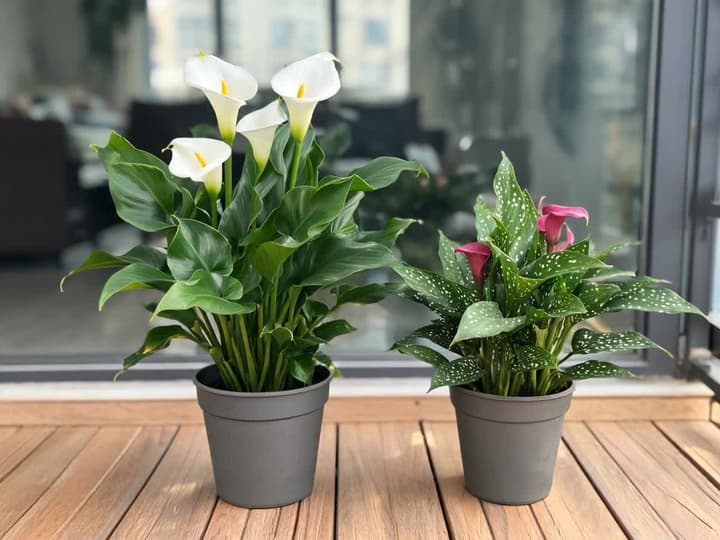
A study published in Horticulture Research in 2020 showed that the white calla lily is much more resistant to bacterial soft rot than colored callas. The colored calla comes from cooler mountains and loses all its leaves in winter. The white calla lily comes from warm, flooded areas. Because of this, the excess water that the white variety tolerates rots the colored one.
The common name calla lily leads to two misunderstandings. The calla lily is not a true lily from the genus Lilium. It is also not the peace lily (Spathiphyllum), which belongs to the same botanical family (Araceae), has a similar white flower, and lives in shade indoors. The peace lily has long, pointed leaves without an arrow-shaped base, and a flatter flower.
If your plant came without a tag, confirm the species before following watering rules. Bloom (available for iOS) identifies the plant from a photo, and the free version gives you 2 identifications per month. The calla lily profile shows the growth habit and the most common symptoms for the white species.
Light for calla lilies: morning sun and afternoon shade
Calla lilies grow in full sun (6 or more hours of direct sun per day) to partial shade (2 to 6 hours of direct sun per day). NC State recommends partial shade in hot climates, because strong sun burns the leaves and flowers. EPAMIG, the agricultural research agency of Minas Gerais, grows the white calla lily under shade cloth that filters 25% to 50% of the sun. In warmer regions, it uses more shade.
In the garden, choose a bed with morning sun. In hot regions, choose one that gets shade after midday. Indoors, place the pot near an east-facing window: it provides morning sun, which scorches less. In Brazil, a north-facing window provides direct sun for more hours in the winter.
NC State warns that, in partial shade, flowering may decrease. If your calla lily produces plenty of foliage and no flowers, the first thing to check is the light.
How to water white calla lilies and colored callas
Water calla lilies based on soil moisture. Before watering, stick your finger about 3 cm into the soil to feel if it is damp. Both plants want moist soil while they have green leaves. The white one tolerates excess water; the colored one rots with it.
White calla lily: keep the soil consistently moist, without letting it dry out between waterings. The RHS lists the white calla lily for pond edges, in shallow water up to 30 cm deep. It is the only species in the genus they recommend for this. None of the sources measured standing water in the drainage saucer. For safety, empty the saucer after watering; in intense heat, the white variety tolerates a little water there.
Colored calla: water when the soil surface starts to dry out, and use a pot with drainage holes. Right after planting the rhizome, water lightly until leaves appear: the RHS warns that the rhizome can rot with too much water during this stage. Never leave standing water in the saucer of a colored calla.
Sources disagree on waterlogged soil for the white calla lily. The RHS and NC State say it tolerates standing water. EPAMIG, which grows the plant for cut flowers in Brazil, recommends well-drained soil that holds moisture, with generous watering and raised beds. In a pot, follow EPAMIG: it is research done in Brazil, and the RHS's 30 cm of water applies to pond edges. Consistently moist soil and a drainage hole satisfy both sides. Waterlogging is what the white variety can handle, not what it needs.
Underwatered plants show dried leaf edges. Overwatering a colored calla leads to stems softening at the base and flopping over. If the leaf dries out at one point and the stem softens at another, the pot probably does not drain: change the soil before altering the amount of water.
Soil, pot, and planting the rhizome
Use soil rich in organic matter (decomposed plant matter and aged manure), such as compost or well-rotted manure. This soil holds moisture without turning to mud. EPAMIG cites a pH around 6 for the white calla lily. For the colored calla, Iowa State recommends well-draining potting soil.
Plant the rhizome with the growth points facing up. In a pot, cover the colored calla rhizome with 2.5 to 5 cm of soil, as Iowa State indicates. The RHS accepts the top of the rhizome sitting barely covered, which is also shallow. In the garden, NC State indicates a depth of 10 cm for the white calla lily.
In Brazil, plant the colored calla rhizome in spring, from September to November, after the cold weather. Divide and replant the white calla lily in early spring (RHS), in September in Brazil, when flowering ends. Choose a pot with a drainage hole, wide enough for the rhizome to grow sideways.
Fertilizer for calla lilies
Mix fertilizer into the soil at planting time. After that, fertilize only if the soil is poor. EPAMIG uses 10-10-10 NPK, a fertilizer with equal parts nitrogen, phosphorus, and potassium, along with well-rotted manure when planting the white calla lily. In a pot, use the package dosage.
The RHS states that white calla lilies planted in fertile soil do not need extra fertilizer. In poor soil, they recommend a balanced liquid fertilizer, with equal parts nitrogen, phosphorus, and potassium, every 15 days until the flowers fade. The same rule applies to colored callas in pots.
Avoid fertilizer where the first number in the NPK ratio, the nitrogen, is much higher than the other two. A production guide from the University of Georgia, published by NC State, notes that excess nitrogen produces leaves instead of flowers.
Flowering and what to do after flowering
The white calla lily blooms in the cold months in Brazil. EPAMIG measured abundant flowering from May to September. A new seedling starts to bloom about 90 days after planting and only produces commercial-sized flowers around 6 months. The colored calla blooms in late spring and summer.
After the flower fades, remove the entire stem at the base. EPAMIG harvests the flower by gently pulling the stem, so as not to injure the plant, and you can do the same with an old flower. The RHS recommends deadheading old flowers throughout the blooming season, so the plant does not expend energy forming seeds.
When a flower turns green, that is the spathe, the trumpet-shaped modified leaf, returning to green. A thesis from Massey University in New Zealand studied the white calla lily and a yellow colored calla. In both, the spathe started turning green a few days after maturing, even without pollination. It is a sign of an aging flower, not disease.
Calla lily dormancy: the phase that looks like death
Dormancy is the phase where the plant loses its leaves and lives solely off the rhizome underground. White calla lilies and colored callas rest differently.
White calla lily: with water and mild temperatures, it stays green year-round. NC State notes that it loses its leaves during severe cold or prolonged drought. If that happens, keep the soil lightly moist: the rhizome will sprout again once temperature and water return.
Colored calla: after flowering, the leaves turn yellow and dry up, and that is a normal part of the cycle. The RHS advises letting the leaves die back and storing the pot in a dry, dark place, with little to no water. The rest period lasts until spring, from September to November in Brazil. To store the rhizome out of the pot, Iowa State recommends letting the rhizome dry for 1 to 2 weeks in a warm place. After that, keep it stored dry between 10 and 16 °C. Resume watering when new growth appears in spring.
The RHS states that most colored callas do not survive below 5 °C. In Brazil, during the frost months (from June to August, in the South and in the mountains of the Southeast), bring the colored calla pot indoors. The white calla lily planted in the garden can stay, with a layer of at least 15 cm of straw or compost over the root (RHS).
Calla lilies in pots, indoors, or in the garden
The RHS describes the colored calla as a container plant: it stays indoors and moves to the garden only in summer. While blooming, it sits close to a bright window. After flowering, the colored calla needs a dry, dark dormant rest; once it sprouts again, bring the pot back to the window.
The white calla lily grows best in the garden, in a moist bed, at the edge of a pond, or in a large container on a patio. The RHS notes that it forms clumps, groups of stems sprouting together from the same rhizome, up to 90 cm wide. In a pot, the soil dries out faster (RHS): in hot weather, do the finger test on the white calla lily every day.
An overcrowded clump also flowers less (RHS). Every few years, divide the rhizome into pieces with at least one growth bud each. NC State recommends letting the cut surfaces dry for 1 to 2 days before replanting.
Yellow leaves, soft stems, and other calla lily symptoms
Start by checking the base of the stems and the soil. The table breaks down the most common signs:
What you see | Probable cause | What to do |
|---|---|---|
Leaves yellowing after flowering, base is firm | Start of dormancy, in colored callas | Gradually reduce watering and let the leaves dry up |
Yellow leaves with consistently waterlogged soil, on a colored calla | Excess water suffocating the roots | Stop watering until the surface dries, and check that the pot drain hole works |
Base of the stem is soft, dark, and foul-smelling | Bacterial soft rot | Follow the rhizome rescue steps below |
Wilting leaves with dry soil | Underwatering | Water until moisture drains out of the pot hole |
Leaf edges dry and scorched, under intense afternoon sun | Sunburn | Move the pot to a spot with afternoon shade |
Leaf edges dry, with dry soil | Soil that dried out too much | Water until moisture drains out of the pot hole |
Yellow leaves on a white calla lily, base is firm | Severe cold or soil left dry for too long | Keep the soil lightly moist and protect from cold; the rhizome will sprout again |
Lots of foliage and no flowers | Low light, excess nitrogen, or lack of dormancy | See the flowering section below |
Yellow leaves have causes beyond watering, such as pests and fungal spots. The page on calla lilies with yellow leaves lists the causes one by one. Wilting leaves with wet soil point to rot in the rhizome and roots. The page on calla lilies with wilting leaves separates that cause from the others.
A soft base with a strong odor is the hallmark of bacterial soft rot, caused by the bacterium Pectobacterium carotovorum. A master's thesis from UFRRJ describes the condition in calla lilies: the leaf base softens and emits a strong, foul odor. Overwatering increases soft rot, and handling the rhizome without causing wounds helps prevent it (University of Georgia, via NC State).
To rescue a rhizome with soft rot:
Remove the plant from the pot and wash the rhizome under running water.
Using a clean knife, cut away all soft or dark parts until only firm, pale tissue remains.
Let the rhizome dry in the shade for 1 to 2 days so the cut calluses over.
Repot in fresh soil and a cleaned pot with a drainage hole at the bottom.
Water lightly until the first new leaf appears.
If the entire rhizome is soft, discard the plant along with the soil. The page on calla lily rot covers the other causes of rotting tissue on the plant.
Why your calla lily is not blooming
The most common causes are low light, too much nitrogen, and, for colored callas, skipping the dry dormant rest. An overgrown clump of white calla lilies also blooms less (RHS). A small or newly divided rhizome may need another growing season to build up reserves and bloom, according to University of Florida Extension (UF/IFAS).
Check these in order: does the pot get morning sun? Is the fertilizer high in nitrogen? Did the colored calla spend a few months with almost no water after its last blooming cycle? Does the white calla lily clump fill the entire pot?
Are calla lilies toxic to cats and dogs?
Yes. The ASPCA, an American animal welfare organization, lists the calla lily as toxic to dogs and cats. The plant contains insoluble calcium oxalate crystals, which injure the mouth when an animal bites into the leaf. Symptoms include severe irritation and burning of the mouth, tongue, and lips, excessive drooling, vomiting, and difficulty swallowing.
True lilies from the genus Lilium are a different story: in cats, they can cause kidney failure. The guide on how to care for lilies details that risk. The calla lily does not cause kidney damage, but it is still toxic. If an animal bit into the plant, call your veterinarian and bring a photo of it.
The calla lily toxicity profile in Bloom lists the record for dogs and cats:
Frequently asked questions
How often should I water the calla lily?
Water when the soil begins to lose moisture, not on a set schedule of days. The white calla lily wants consistently moist soil in a pot with drainage holes. The colored calla wants moist soil in a pot that drains well. During its rest period, the colored calla goes with little to no water for a few months.
What to do with a potted calla lily after the flower wilts?
Remove the old flower stem at the base and keep watering while the leaves stay green. If it is a colored calla, the leaves will yellow over the following weeks. At that point, reduce water, let the leaves dry out, and store the pot dry and in the dark until spring. The white calla lily stays green with regular watering.
How long does a potted calla lily last?
The calla lily is a perennial plant: the rhizome sprouts again for many years (RHS). A potted colored calla bought in bloom drops its leaves after flowering and looks dead during that period. If the rhizome is firm, the plant will sprout again after its rest.
How to care for a potted calla lily in winter?
The white calla lily survives with a minimum temperature of 4 °C (RBAS) and stays in its usual spot with moist soil; if frost hits, bring the pot inside. The colored calla rests in a dry, dark place, ideally between 10 and 16 °C (Iowa State). Never let it sit below 5 °C, the minimum threshold most varieties can tolerate (RHS).
How to care for a calla lily: what to do today
Find out which one you have: white flowers and smooth leaves mean a white calla lily; colorful blooms, often paired with spotted leaves, mean a colored calla.
Squeeze the base of the stems: firm means a living plant, soft and foul-smelling indicates rot.
Place the pot where it receives morning sun; in hot regions, provide afternoon shade.
Water according to soil moisture: consistently moist for the white calla lily, moist and well-draining for the colored calla.
After a colored calla finishes blooming, prepare it for a few months of dry dormancy.
If your plant arrived without a tag, a quick photo in the app will clear up whether it is a white or colored variety.
Sources
Figueiredo, Almeida et al. (2014). Brazilian Journal of Sustainable Agriculture
Iowa State University Extension: When can I start calla lilies indoors?
Iowa State University Extension: Overwintering tender perennials
Horticulture Research (2020): resistance of Zantedeschia to Pectobacterium
Garner. Calla lily production, University of Georgia, via NC State Extension
Related articles
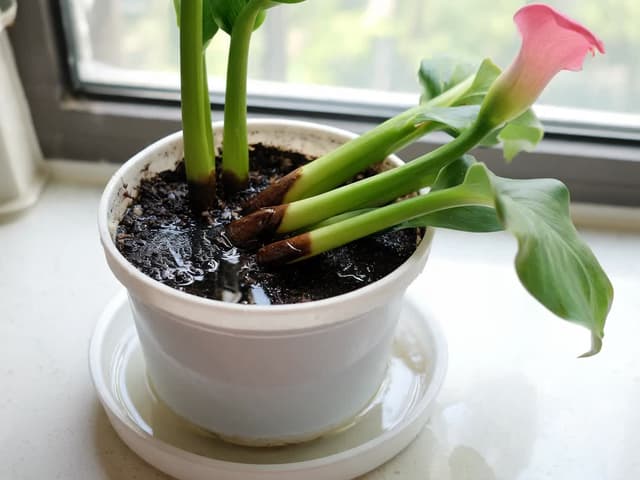
Dying Calla Lily with a Mushy Base: Save or Discard
A mushy stem base overnight on a calla lily is almost always bacterial soft rot, not dormancy. The rhizome decides: firm and light can be saved; soft, dark, and foul-smelling goes in the trash.
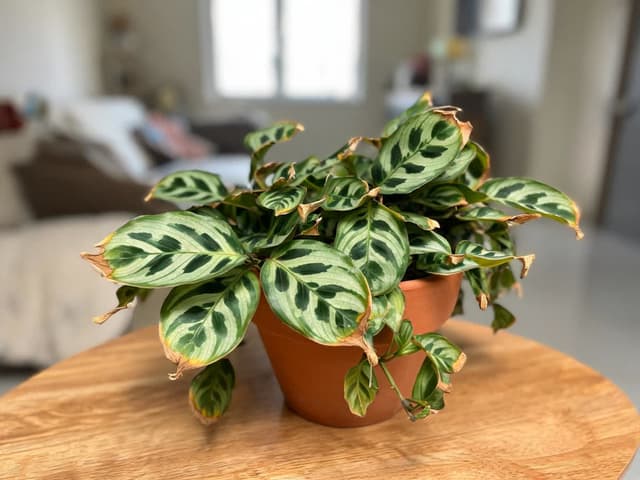
Prayer Plant Brown Tips: Causes, Water, and How to Trim
A prayer plant develops brown tips from tap water fluoride and chlorine, dry air, soil that dries out too much, or fertilizer salts. Brown tips will not turn green again: trim the dry part following the leaf's shape and check new leaves to confirm the fix.
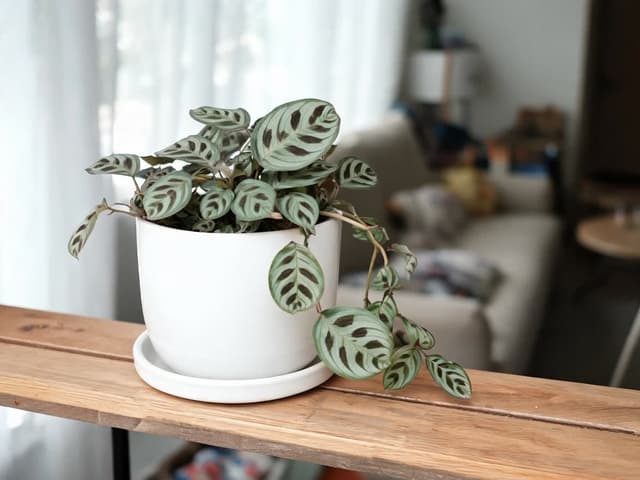
How to Care for a Prayer Plant: Light, Water, Humidity, and Closing Leaves
To care for a prayer plant, provide bright indirect light, keep the soil moist without waterlogging, and maintain air humidity above 50%. Water with fluoride-free water. Leaves that rise and fold at night are the plant's normal movement.