How to Care for Lilies: From Potted Flower to Reblooming Bulb
How to care for potted lilies while in bloom and after the flowers fade: why keep green foliage and how much chilling time the bulb needs to bloom again.
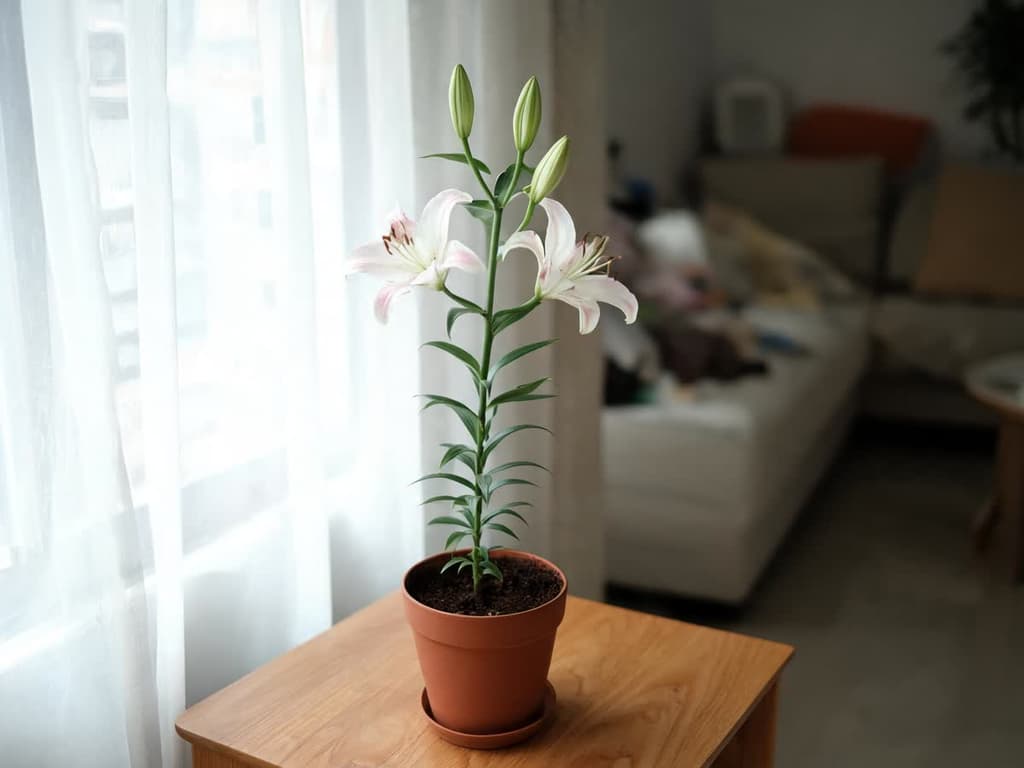
To care for a potted lily, keep the plant in a bright, cool spot away from intense afternoon sun. Water when the soil surface feels dry to the touch. Remove the anthers (the tips covered in orange pollen) as soon as each flower opens. After the last flower wilts, keep the stem and leaves green until they turn yellow on their own. They recharge the bulb for the next bloom cycle.
Lilies are extremely toxic to cats, including their pollen and vase water. If you have a cat, read the toxicity section before anything else.
Quick summary:
Easter lilies stay in bloom for 2 to 3 weeks indoors, according to Iowa State University (Iowa State).
The green leaves remaining after flowering feed the bulb. Cutting the plant down while it is still green deprives the bulb of reserves for the next bloom cycle.
To bloom again, the bulb needs cold temperatures. In a study by the Federal University of Santa Maria, only bulbs that spent 6 to 8 weeks at 4 °C or 10 °C flowered.
This guide covers true bulb lilies of the genus Lilium: Asiatic lilies, Oriental lilies, and Easter lilies. The peace lily is a different plant with broad leaves and no bulb, and its care is entirely different. If your plant has a white leaf wrapping around a central spike, see how to care for peace lilies. Calla lilies are also not true lilies.
Which lily do you have: Asiatic, Oriental, or Easter lily
All three types sold in pots grow from a bulb and follow the same life cycle. What differs among them is fragrance, bloom time, and soil acidity. The data in this table come from North Carolina State University Extension (NC State) and the Royal Horticultural Society (RHS).
Type | Fragrance | Flower | Garden bloom time | Soil |
|---|---|---|---|---|
Asiatic lily | Unscented | 10–15 cm, wide range of colors | First to bloom, from spring to summer | Slightly alkaline, according to the RHS |
Oriental lily | Strong fragrance | Larger, outward-facing | Last to bloom, mid-to-late summer; some into fall | Acidic; cannot tolerate alkaline soil |
Easter lily (Lilium longiflorum) | Fragrant | Long, white trumpet | Sources vary between summer and fall | pH between 6.5 and 7.0, according to Clemson University (Clemson) |
Easter lilies sold in bloom are forced in greenhouses with strictly regulated temperatures and chilling cycles. Iowa State explains that growers force them to bloom weeks or months ahead of their natural season. Consequently, their initial indoor bloom schedule does not reflect when they will bloom in the garden.
If you are unsure which lily you received, or whether it is actually a lily, Bloom identifies the species from a single plant photo.
Lilies are toxic to cats
All parts of the lily are toxic to cats: stem, leaves, flowers, pollen, and even the vase water. The FDA, the health agency of the United States, states that very little is needed. Eating a small piece of a leaf or petal can cause fatal kidney failure in a cat in less than 3 days. Licking a few grains of pollen off their fur or drinking the vase water can also cause it. The FDA list includes Asiatic lilies, Oriental lilies, Easter lilies, and tiger lilies.
The first signs appear 0 to 12 hours after ingestion: the cat becomes lethargic, drools, vomits, and loses its appetite. The FDA warns that with a treatment delay of 18 hours or more, kidney damage usually becomes permanent. If the cat chewed the plant, licked pollen, or drank water from the vase, call the veterinarian immediately without waiting for symptoms. Bring the plant or a photo of it.
The ASPCA, the American animal protection organization, notes that cats are the only known species with this kidney condition. In dogs, the FDA describes at most an upset stomach. Peace lilies and calla lilies cause a different issue: mouth irritation from calcium oxalate crystals. Daylilies, which are also called lilies, are on the FDA's list of lilies that are highly toxic to cats.
Each of these plants has a profile in Bloom detailing toxicity for dogs and cats:
In homes with cats, lilies should never be brought inside, not even in bouquets. Keeping the pot up high does not solve the problem, because the pollen drops and the cat can lick the pollen off its own fur, as the FDA describes.
How long potted lilies stay in bloom
An Easter lily typically stays in bloom for 2 to 3 weeks indoors, according to Iowa State. The flowers do not open simultaneously. The University of Illinois Extension reports that after the first blossom opens, subsequent buds unfurl over the course of 1 to 2 weeks.
Three care practices help lily blooms last longer:
Keep the pot in a cool room. The University of Minnesota recommends daytime temperatures between 15 °C and 18 °C, away from ovens, heaters, and windows with direct afternoon sun.
De-anther the flowers early. Iowa State notes that removing anthers before pollen sheds extends flower longevity.
Select plants with tight buds. Clemson recommends purchasing a pot that features 1 or 2 open flowers and at least 3 unopened buds.
How to remove anthers from a lily
The anthers are the 6 elongated tips in the center of the blossom, suspended on slender filaments. They bear orange pollen that easily stains petals, clothing, and skin. On true lilies, this pollen is also highly toxic to cats.
Wait for the flower to open. The best moment to remove the anther is while it is still closed, firm, and before it turns powdery.
Cover your fingers with a paper tissue, as recommended by Illinois Extension.
Hold each anther and gently twist it until it pulls free from the filament.
Throw the tissue away in a trash can with a lid.
Repeat for each new flower that opens.
Double-flowered lilies have no pollen, according to the RHS. In these flowers, the anthers have turned into extra petals.
If pollen has already dropped onto fabric, do not rub or wash it immediately. The National Gardening Association community recommends pressing adhesive tape lightly over the stain and lifting it away, using a fresh piece of tape each time. Afterwards, set the fabric in direct sunlight so the stain can break down.
Where to place potted lilies: sun or shade
A blooming lily indoors does best in bright, indirect light near a window. Keep hot afternoon sunlight off the petals. The University of Minnesota explains that direct afternoon exposure shortens flower life. Light requirements shift once blooming concludes.
After flowering, the foliage needs direct sunlight to recharge the subterranean bulb. NC State recommends full sun on the foliage while keeping the root zone cool. Clemson sums this up with the classic gardening rule: "feet in the shade, head in the sun." Move the pot to a sunny patio or balcony, and cover the soil surface with mulch or companion plants to shield the roots from heat.
These two light recommendations match two different life stages. Indirect light preserves open flowers. Direct sun powers photosynthesis while the plant stores resources for the following year. Bloom's care card for Asiatic lilies advises at least 6 hours of direct sun daily during active vegetative growth.
How to water potted lilies
Water the lily when the soil surface feels dry to the touch, until water drains from the bottom of the pot, as Iowa State advises. The University of Minnesota specifies: allow the top inch to dry out slightly between waterings. Discard any water that collects in the saucer.
Waterlogged soil causes bulb rot. The University of Illinois Extension warns that saturated potting mix turns bulbs soft and mushy. Because of this, lily containers must always have drainage holes. A decorative cachepot without holes should only ever serve as an outer cover for a standard nursery pot.
Rules of thumb like "water 2 to 3 times a week during summer" track calendar days instead of checking the soil. In warm weather and bright sunlight, soil dries quickly. In a cooler indoor environment, that same soil holds moisture much longer. Bloom's care card for Asiatic lilies suggests "every 7 days" as a baseline check frequency, alongside temperature targets, humidity ranges, and seasonal care schedules:
How to care for lilies after flowering
When a blossom wilts, snip off only the individual flower head just below its base, as recommended by the RHS. This stops the plant from expending energy on seed production. Do not trim back green stems or foliage. The University of Illinois Extension points out that green foliage produces the energy stored by the bulb.
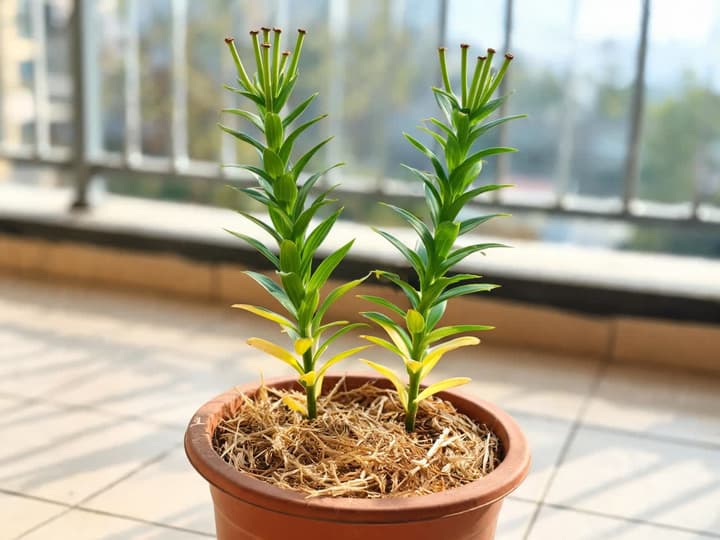
Over the following weeks, carry out these steps:
Move the pot to a spot where the foliage gets direct sunlight, keeping the soil shaded and cool.
Water whenever the soil surface feels dry to the touch.
Every 2 weeks, feed with a liquid fertilizer high in potassium, such as tomato fertilizer, applied at label strength. This is recommended by the RHS for potted lilies.
Once the leaves turn yellow and the main stem dries completely, cut the stem back flush with the soil, following Iowa State guidelines.
Yellowing that begins on lower leaves a few weeks after blooming is normal senescence. It indicates that the bulb is entering dormancy, its resting period below ground. The plant is not dying.
Why lilies fail to rebloom: bulbs require a cold period
Lilies need weeks of cold exposure to initiate flower buds. This process is called vernalization: sustained cold signals to the bulb that winter has passed and it is safe to bloom. Without this cold period, the plant produces foliage but no blossoms.
The Federal University of Santa Maria (UFSM) tested this with Easter lilies in a study published in the journal Bragantia in 2005. Bulbs spent 2, 4, 6, or 8 weeks at −0.5 °C, 4 °C, or 10 °C. Only those kept for 6 or 8 weeks at 4 °C or 10 °C flowered during the study period. At −0.5 °C, near freezing, and with only 2 or 4 weeks of cold, the plants produced only foliage. For commercial Easter lily production, Greenhouse Management magazine cites the same formula: 6 weeks between 4 °C and 7 °C.
With the bulb dry and the stem cut back, you have three paths:
Refrigerator storage. This method relies on verified research parameters and is recommended here for anyone attempting indoor reblooming. Step-by-step instructions follow below.
Outdoor garden bed or deep patio pot. Natural winter conditions provide necessary vernalization only in climates that sustain weeks near 10 °C or lower. In the UFSM study, chilling temperatures remained constant day and night.
Composting the plant. The University of Minnesota notes that many home gardeners simply enjoy the initial blooms and compost the lily once leaves turn yellow. For homes with cats, this is the safest route.
To store the bulb in your refrigerator:
Remove the bulb from its container once the top stem has completely dried, then brush away loose potting mix.
Place the bulb in a perforated plastic bag filled with lightly moistened perlite.
Store the bag in the crisper drawer of your refrigerator for 6 to 8 weeks. Never place it in the freezer.
Check the bag every 2 weeks. The perlite should remain slightly damp, and the bulb should stay firm.
Repot the bulb following the instructions in the next section.
The storage method comes from the florist Latinflores, which suggests about 4 months in the refrigerator. The timeframe this guide uses comes from the UFSM study, which measured flowering at 6 to 8 weeks. No one has measured whether leaving it longer causes problems.
Even with proper chilling, the timing of the next bloom cycle is not guaranteed. The University of Wisconsin notes that forced potted lilies often skip blooming the following year, returning to their natural outdoor cycle later. US extension services offer differing timelines, neither accompanied by controlled measurements. The University of Illinois Extension mentions new flowers appearing within months after planting outside, whereas Clemson notes reblooming within the same calendar year is unlikely. To avoid disappointment, do not expect a second bloom within the same year.
Repotting the bulb: deep pots or garden beds
Plant the bulb with about 15 cm of soil on top, the depth recommended by Iowa State and Clemson for Easter lilies. In pots, the Asiatic lily care sheet from Bloom calls for a minimum depth of 30 cm. The RHS recommends 3 bulbs in a 35 cm pot.
The soil needs to drain well, because the bulb rots in waterlogged soil. Mix potting soil with coarse sand or perlite. Research disagrees on the layer of gravel at the bottom of the pot. Washington State University concluded that it hinders water drainage. A 2025 study in the journal PLOS ONE measured the opposite. What works in both cases is the drainage hole at the bottom and the pot elevated on feet.
Soil pH preferences vary by lily group. Oriental lilies require acidic soil and cannot tolerate alkaline conditions, according to NC State. Asiatic lilies perform well in slightly alkaline soil, according to the RHS.
The RHS recommends planting bulbs in early autumn so root systems establish before winter. In the Southern Hemisphere, autumn spans from March to June. The RHS also approves spring planting when dormant bulbs arrive in garden centers. Where winters bring hard frosts, Iowa State advises moving potted lilies outdoors only after all danger of frost has passed.
Common problems with lilies
In potted lilies, waterlogged soil causes bulb rot, while leaves left wet for hours invite fungal infection. These are the primary issues described by agricultural extension offices:
Lower leaves yellowing upward, weeks after flowering. This is the normal end of the growth cycle; the plant is not diseased. Let the foliage wither naturally.
Leaves yellowing rapidly, with constantly damp soil. The RHS links this rapid yellowing to brown, rotten bulbs infected by soil-borne fungi. The Connecticut Agricultural Experiment Station adds that affected bulbs turn soft and give off a sour odor. Unpot the bulb and inspect it gently. If it feels mushy, discard the bulb along with its soil.
Brown teardrop-shaped spots on foliage and gray mold on flowers. This is botrytis blight, caused by the fungus Botrytis. According to the Pacific Northwest Pest Management Handbooks, infection develops readily when leaves stay wet for 6 to 12 hours. The prime risk window sits between 10 °C and 18 °C. Always direct water to the soil, never over the foliage.
Leaf tip burn on newly purchased blooming lilies. The Connecticut Experiment Station identifies this tip burn as a physiological disorder rather than an insect or fungal pest. It commonly occurs on forced lilies held in overly wet potting mix.
Aphids beneath foliage. NC State warns that aphids vector lily symptomless virus and lily mosaic virus. There is no cure once a plant is infected.
Before reaching for chemical sprays, inspect the bulb and review your watering routine. The RHS notes that there are no recommended chemical controls for lily diseases in home gardens. Yellow foliage can signal normal dormancy or root rot; checking which leaves yellow first alongside soil moisture distinguishes the two. The guide on yellow leaves explores each specific cause step by step. For other issues, learn how to identify plant problems in three diagnostic questions.
Frequently asked questions
How do I keep my lily alive?
Avoid waterlogging the soil and never cut away green leaves after blooms fade. Stagnant moisture in the pot rots the bulb. Green leaves are what recharge the bulb for its next flowering cycle. Once the final flower withers, move the container into the sun and continue watering until the foliage turns yellow naturally.
Can lilies stay indoors?
Yes, while they are actively flowering. Keep the container in bright, indirect light away from hot afternoon sun, maintaining daytime temperatures between 15 °C and 18 °C. Once blooming ends, the foliage requires direct sunlight to rebuild the bulb. In homes with cats, lilies should never be kept inside because the entire plant is toxic to felines.
Do lilies come back every year?
They can rebloom annually if the bulb recharges and receives adequate cold exposure. Leaves must stay green until they naturally die back, and the bulb requires 6 to 8 weeks between 4 °C and 10 °C. Without this winter chill, the plant produces only foliage. Forced potted lilies purchased in bloom sometimes skip a year before resuming regular flowering.
Can I store lily bulbs in the refrigerator?
Yes. Once the top stem has dried completely, place the bulb inside a perforated plastic bag filled with lightly moistened perlite and store it in your vegetable crisper. Keep it there for 6 to 8 weeks, the duration proven to initiate flowering in the UFSM study. Never use the freezer: at −0.5 °C, bulbs failed to produce flowers.
Helping your lily bloom again
What you should do today depends on your lily's current growth stage. If it is currently in bloom, remove anthers as each flower opens. If blooming has just finished, snip off only the spent blossoms, leave the green stem intact, and move the container into direct sunlight.
Related articles
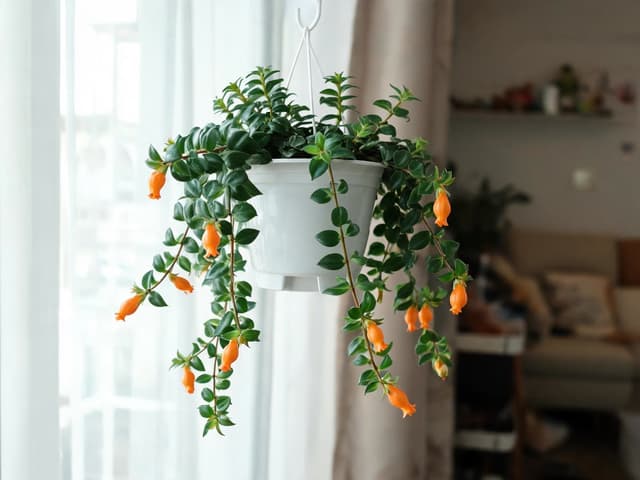
How to Care for a Goldfish Plant: Light, Watering, and Blooms
How to care for a goldfish plant: bright light without strong sun, water when the soil surface dries, and humid air. Learn how to tell a Nematanthus from a Columnea, why it drops leaves, and how to get it to bloom again.
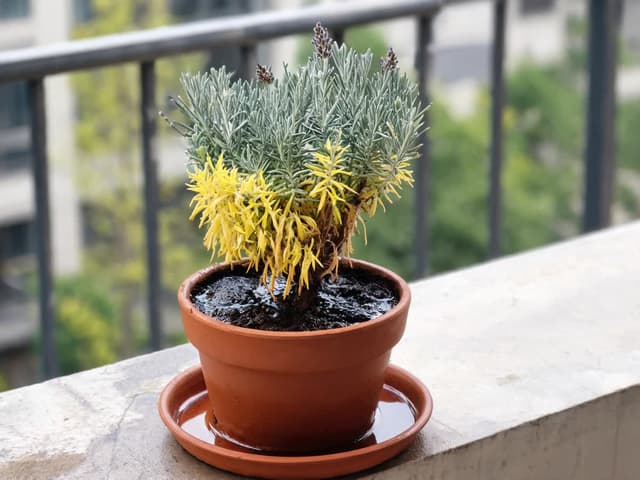
Lavender Leaves Turning Yellow: Where the Yellowing Starts Shows the Cause
Lower leaves turning yellow with moist soil means overwatered roots, the most common cause. Old leaves drying one by one on woody stems is normal. Take the stem and root test, see if your plant can still be saved, and find out what to do today.
How to Propagate Lavender: Where to Cut and Why Cuttings Rot
A lavender cutting comes from a non-flowering branch tip, about 4 inches long, planted in sandy soil that never stays soggy. Learn where to cut, rooting times, seasonality in Brazil, and what to do if the base turns black.