How to Care for a Peace Lily: Watering, Light, and Why It Stops Blooming
Indoor peace lilies rarely die of thirst. Learn how to tell a underwatered plant from root rot, get the light right without burning the leaves, and find out why it stops blooming like it did at the store.

How to care for a peace lily, in one sentence: water when the soil is dry 1 inch deep, keep the plant in bright indirect light, and always take the plastic pot out of its decorative planter before watering. Indoor peace lilies rarely die of thirst. They drown, with their roots rotting at the bottom of a pot that has no drainage holes.
This guide is for anyone who bought or received a blooming peace lily, watched the white flowers dry up, and is now staring at a droopy plant, unsure whether to water it or stop watering entirely. Both issues cause the exact same wilted leaves. That is why so many people get it wrong.
Quick summary:
Your finger decides, not the calendar. Dry soil 1 inch deep means it is time to water. Wet soil with droopy leaves means the opposite: the roots are rotting, and watering now will only speed up the plant's death.
It survives in the shade, but only blooms in bright light. Strong indirect light from an east- or north-facing window is ideal. Direct sunlight burns the leaves in just a few hours.
The plant you bought in bloom was induced to flower in the greenhouse. Spathiphyllum growers use a gibberellic acid spray to force off-season blooming (UF/IFAS Extension, ENH1047). At home, without the hormone, it returns to its natural rhythm: one bloom cycle per year.
Peace lily care at a glance
Caring for a peace lily comes down to getting six things right and leaving the rest alone:
Water: only when the top inch of soil feels dry to the touch.
Light: bright and indirect, with no direct sun hitting the leaves.
Pot: always use a pot with drainage holes, and never let water sit in the saucer or decorative planter.
Temperature: between 65°F and 80°F (18°C to 27°C); prolonged exposure below 55°F (13°C) will kill the plant.
Fertilizer: diluted, once a month, only during spring and summer.
Pruning: cut yellow leaves and spent flowers at the base, close to the soil.
What is a peace lily (and why it is not a true lily)
The peace lily is Spathiphyllum wallisii, a plant in the Araceae family, the same as the anthurium, the calla lily, and the Swiss cheese plant. It is native to the humid tropical rainforest ranging from Colombia to Venezuela (Plants of the World Online, Kew), where it lives on the forest floor, in the shade under tall trees, and receives water already filtered by the canopies. This explains almost everything it requires indoors: little direct light, humid air, and soil that never dries out completely.
It is not related to true lilies, which belong to the genera Lilium and Hemerocallis. The common name stuck because of the white flower-like appearance, but this confusion has real consequences for cat owners: the two plants are toxic in completely different ways, as detailed in the toxicity section of this guide.
Another point of confusion: that white "flower" is not actually a flower. It is a spathe, which is a modified leaf that wraps around and protects the inflorescence. The actual flowers are on the yellowish spike in the middle, called a spadix. That is why the spathe turning green over time is not a disease: it is just the leaf returning to producing chlorophyll after the tiny flowers on the spadix have been pollinated or dried up.
Watering: stop counting days
You should never water a peace lily on a fixed schedule. Instead, measure how dry the soil is. No calendar-based routine can account for changes in pot size, light, and season, which is why most general guides fail. A 5-inch pot near a window in July might dry out in three days. That same peace lily in a 10-inch pot, sitting in a dim hallway in January, might take two weeks. A rigid schedule will get one of these right and drown the other.
The test takes five seconds: push your finger into the soil up to your second knuckle, about 1 inch deep. If it feels dry and clean, water it. If it feels damp or soil sticks to your skin, wait and check again tomorrow. Over time, you can swap the finger test for the weight test: lift the pot right after watering and then again when it is dry. The difference in weight will become your guide.
What to expect before you check the soil, just as a general reference:
Situation | Typical watering interval |
|---|---|
Small pot (up to 6 inches), summer, near a window | every 3–5 days |
Medium pot (6–8 inches), partial shade, year-round | every 5–8 days |
Large pot (over 8 inches) or cool, dark room | every 8–14 days |
Winter, regardless of pot size | space out watering by 30% to 50% |
When you do water, do it thoroughly: pour water until it runs out of the drainage holes at the bottom. Adding just half a glass of water only wets the surface, leaving the lower roots dry and creating a chronically thirsty plant in a pot that looks damp on top.
The decorative planter is the number one killer
Peace lilies are often sold in supermarkets and garden centers beautifully staged inside a decorative ceramic or fiber planter with no drainage holes at the bottom. Nobody warns you about this. You water the plant, water drains from the plastic inner pot and pools at the bottom of the outer planter, leaving the roots submerged for days without you noticing.
The rule is simple: take the plastic pot out of the decorative planter, water it in the sink, let it drain completely, and only then put it back. If you prefer not to move it, empty the decorative planter 30 minutes after every watering. Standing water at the bottom for more than a few hours is the fast track to root rot.
Tap water matters more for this plant than others
Spathiphyllum is sensitive to two common components of tap water. Chlorine, which evaporates on its own: you only need to let the water sit in an open watering can overnight, as recommended by the South Dakota State University extension in the species factsheet, published in April 2024. And fluoride, which does not evaporate. Fluoride enters through the root, moves up in the transpiration stream, and accumulates at the leaf margin and tip, where it causes necrosis (Pacific Northwest Plant Disease Management Handbook). That burned tissue does not recover.

In practice: if your city fluoridates its tap water and your peace lily keeps getting brown tips despite proper watering, switch to rainwater or distilled water and watch the new growth. The old leaves will remain scarred, but new leaves will grow in clean. Always use room-temperature water; cold water poured directly onto the soil shocks the roots.
Light: surviving is not the same as thriving
The peace lily earned its reputation as a low-light plant because it can tolerate dark corners without dying right away. In deep shade, it will keep its leaves but stop blooming. After a year, you might assume your plant "just does not bloom anymore" when it is actually starving for light.
The ideal spot is near an east-facing window, which gets gentle morning sun, or a north-facing window. A west- or south-facing window works too, as long as you have a sheer curtain filtering the light. Use the shadow test to check: if your hand casts a sharp, clear shadow where the plant sits, the light is too direct and the leaves will burn. You want a soft, blurry shadow.
The leaves will tell you when the light is wrong. Dry, bleached, or light-brown patches in the middle of the leaf, always on the side facing the window, indicate sunburn. On the other hand, large, dark-green, healthy-looking leaves with zero flowers for over a year mean the plant needs more light.
Rotate the pot a quarter turn every two weeks. Otherwise, the plant will lean toward the window and grow lopsided.
Soil, pots, and repotting
Peace lily soil needs to retain moisture without becoming soggy. A reliable mix is two parts indoor potting soil, one part perlite or pumice, and one part coco coir. Perlite keeps the soil airy, and a lack of air in the soil is exactly what causes roots to rot.
Never use straight garden soil in indoor pots: it compacts, holds too much water, and suffocates the roots within a few weeks.
When it comes to pots, this species is the exception to the "bigger is better" rule. It actually prefers to be slightly root-bound. A pot that is too large holds onto a volume of wet soil that the roots cannot fully drink, which is a recipe for rot. When repotting, only go up one pot size, about 1 to 2 inches larger in diameter.
Repot when you see roots growing out of the drainage holes, when the plant wilts faster and faster after watering (a sign that there are more roots than soil left in the pot), or every one to two years. Spring is the best time to do this. If the plant has grown very large, this is also the perfect time to divide it: gently separate the clumps with their own roots and pot them up individually.
Fertilizer: use less, dilute it, and only in season
The peace lily is sensitive to excess fertilizer, and salt buildup in the soil produces the same brown tips as fluoride. The South Dakota State University extension (April 2024) recommends fertilizing only in spring and summer, and preferring organic fertilizer, because the plant is sensitive to concentrated chemicals.
Use a balanced liquid houseplant fertilizer diluted to half the strength recommended on the label, once a month, from spring through summer. Hold off entirely during fall and winter. Never fertilize a plant in dry soil as this can burn the roots: always water first, then apply fertilizer.
If you notice a white crust forming on the soil surface or the rim of the pot, it is a sign of salt buildup. Flush the soil thoroughly with running water in the sink for a minute or two, let it drain completely, and skip fertilizing until the following month.
Why it never bloomed like it did at the store
A peace lily bought in full bloom was almost certainly forced to flower in a greenhouse using hormones, rather than blooming naturally from perfect home care. The reason lies in commercial production, not your parenting.
Since the early 1980s, Spathiphyllum growers have induced blooming with a single foliar spray of gibberellic acid, GA3. The plant flowers 70 to 110 days after application, which allows the sale of small, already blooming pots at any time of the year. The work of Richard Henny and Jianjun Chen for the University of Florida Extension also records the side effects: some of the flowers come out distorted, some varieties stretch too much, and new leaves can come out narrow, in a ribbon-like shape.
Without the hormone, the species returns to its natural rhythm, which is seasonal: one bloom per year, with buds starting a few months prior. In the Northern Hemisphere, this means flowers in the spring and early summer, starting in December or January. In Brazil, the calendar reverses, and the natural bloom falls between spring and early summer there.
A plant covered in white blooms in the middle of winter was under the influence of a greenhouse hormone, not some magical care routine you failed to replicate. If your peace lily now produces only one or two flowers a year but its leaves remain firm and green, it is perfectly healthy. To encourage more blooms, offer more indirect light, keep watering consistent, and use a potassium-rich fertilizer in the spring.
Troubleshooting: same symptoms, opposite causes
Peace lily symptoms can be confusing because opposite problems look identical: wilted leaves and yellowing leaves can be caused by either too much or too little water. Watering or fertilizing should never be your first reaction. Always check the soil first.
Symptom | How to diagnose the cause | What to do |
|---|---|---|
Drooping, wilted leaves | Check the soil. Dry 1 inch deep: thirsty. Damp or soggy: root rot. | Thirsty: water thoroughly until it drains; the plant will perk up in a few hours. Rot: remove from pot, trim mushy brown roots, repot in fresh, dry soil, and only water when dry. |
Single yellow leaf at the bottom | It is an old leaf, and the plant is still growing new leaves. | Nothing. Snip it off at the base; this is just normal aging. |
Multiple leaves turning yellow at once | The soil has been soggy for days and smells sour. | Overwatering. Stop watering, empty the decorative planter, and let the soil dry out more between waterings. |
Brown, dry leaf tips and edges | Inconsistent watering, fluoridated tap water, or fertilizer burn. Look for white crust on the soil. | Water consistently, switch to rainwater or distilled water, and flush the soil if you see salt crust. |
Dry, light patches in the center of the leaves | Sharp, distinct shadows cast where the plant sits. | Sunburn. Move the plant further from the window or filter the light with a sheer curtain. |
White, cottony spots in the leaf joints | Check under the leaves and where they meet the stems. | Mealybugs. Wipe them away with a cotton swab dipped in rubbing alcohol, then treat with neem oil weekly. |
Tiny black gnats flying around the soil | The top of the soil is constantly wet. | Fungus gnats. Let the soil dry out more between waterings and use yellow sticky traps. |
No flowers for over a year, leaves are dark green and healthy | Insufficient light, not a lack of fertilizer. | Move the plant closer to a window and read the blooming section above. |
Wilting with dry soil is thirst. Wilting with wet soil is root rot. Keep in mind that chronic wilting takes a toll even if you water right away: every episode of extreme dehydration damages the fine root tips, which eventually shows up as brown leaf tips two or three weeks later. Letting the plant wilt completely before watering because "it tells you when it is thirsty" damages the root system over time.
If you are not sure what you are looking at, taking a photo of the leaf helps more than describing it. Bloom identifies the plant by photo and, in the Premium version, also diagnoses disease from the image of the symptom. For the most common case of all, yellowing leaves, it is worth reading the general guide on yellow leaves on indoor plants and the page on yellow leaves on the peace lily.
Peace lilies and pets: toxic, but not the lily that kills cats
Peace lilies are toxic to cats, dogs, and children, so they should be kept out of reach. However, they are not the true lilies that are deadly to cats. The warnings about acute kidney failure and death within three days refer to plants from a completely different botanical family. A peace lily will cause oral irritation but does not damage the kidneys.
The toxic principle of Spathiphyllum is insoluble calcium oxalates, needle-shaped crystals located inside the plant tissue. When chewing the leaf, the animal releases these crystals into the mouth's mucous membrane. According to the ASPCA, the signs are intense irritation and burning of the mouth, tongue, and lips, excessive drooling, vomiting, and difficulty swallowing. It is painful and unpleasant, but it is a local mechanical irritation, and the discomfort itself usually makes the animal stop chewing quickly.
With true lilies, the situation is different. Plants of the genera Lilium and Hemerocallis, which include the tiger lily, the Easter lily, and the daylily, cause acute kidney failure in cats. Licking a few grains of pollen from their fur or drinking the water from the vase can be enough, and the condition can be fatal in less than three days (ASPCA).
Same common name, different plant families, completely different levels of danger. If your cat chewed on a peace lily, rinse their mouth with water, offer something cold to eat, and call your vet if the drooling does not stop. If your cat came into contact with a true Lilium, that is an immediate veterinary emergency.
Do peace lilies really purify the air?
You will read almost everywhere that peace lilies remove formaldehyde, benzene, and xylene from indoor air. This claim originated from a 1989 NASA clean air study, which was conducted in small, sealed chambers. That math does not hold up in a real-world living space.
In 2020, Bryan Cummings and Michael Waring, from Drexel University, reanalyzed 12 chamber studies and 196 experimental results, converting everything to the metric used in air purifiers, the clean air delivery rate. The median was 0.023 m³ per hour per plant. To match the removal of volatile compounds that a home's own air exchange already does on its own, through cracks and windows, you would need 10 to 1,000 plants per square meter of floor space (Journal of Exposure Science & Environmental Epidemiology, 30:253–261).
Opening your window for ten minutes does more for your indoor air quality than any number of houseplants ever could. But that does not make the peace lily any less wonderful. It remains one of the most shade-tolerant, easy-to-keep-alive houseplants, and one of the few that will actually bloom indoors. Just do not buy one expecting it to replace an air filter.
Five common tips that do not work
Adding sugar to the water to encourage blooms. Green plants make their own sugar through photosynthesis. Pouring sugar into the soil feeds soil microbes, not the roots. The excess carbon causes these microbes to pull nitrogen from the soil for their own growth, leaving less nitrogen for your plant. All you get is sweet, wet soil that attracts mold and fungus gnats.
Putting ice cubes on the soil. In addition to delivering very little water, ice chills the roots of a tropical plant that suffers when temperatures drop below 55°F (13°C).
Misting the leaves daily. This only raises humidity for a few minutes before it evaporates. What remains is water trapped in the leaf joints, which can lead to crown rot. If your air is very dry, use a pebble tray: fill a wide tray with pebbles and water, then set the pot on top of the stones so the bottom of the pot stays above the water line.
Using commercial leaf shine, milk, or beer to clean leaves. These products clog the stomata, which are the pores the leaves use to breathe. A damp cloth and plain water are all you need to clear away dust.
Repotting in a much larger pot so it has room to grow. This is the fastest way to get root rot with this species. Always increase the pot size gradually, one step at a time.
Frequently asked questions
How many times a week should I water my peace lily?
There is no set number of times per week. The actual interval ranges from 3 to 14 days depending on pot size, light, and season. Test the soil with your finger: if the top inch is dry, water thoroughly until it runs out the bottom. If it is still damp, wait.
Why is my peace lily wilting even though the soil is wet?
It is likely not thirsty. Wilting in wet soil points to root rot from overwatering. Damaged roots cannot absorb water, even when surrounded by it. Take the plant out of its pot, trim away mushy brown roots, repot in fresh soil, and water less frequently.
Where is the best place to put a peace lily?
Near an east- or north-facing window in bright, indirect light, making sure direct sun does not touch the leaves. Bathrooms and kitchens with windows work beautifully because of the higher humidity. Avoid windowless hallways where the plant might survive but will never bloom, and avoid hot afternoon sun.
What should I do when a peace lily flower turns brown and dies?
Cut the entire flower stem off at the base, close to the soil, using clean scissors. Leaving spent flowers on the plant drains its energy. If the white spathe turns green before drying out, that is completely normal: it is just the modified leaf returning to producing chlorophyll.
How long do peace lilies live in pots?
With proper watering, repotting every one to two years, and dividing the plant when it outgrows its pot, a peace lily can renew itself indefinitely. Individual leaves and shoots will age and die, but the overall clump will live on. Grocery store pots often die within a few months simply because they are left sitting in decorative planters without drainage.
Conclusion
Go check on your plant right now and push your finger about an inch into the soil. If it feels dry, your droopy peace lily is just thirsty and will perk right back up a few hours after a thorough watering. If the soil is wet, stop watering immediately: your plant has a root issue, and your next step is to pull it out of the pot to check the roots.
If you want to track your watering schedule and get an instant diagnosis from a photo of a leaf, Bloom can help you manage it all from your phone (currently available for iPhone).
Related articles
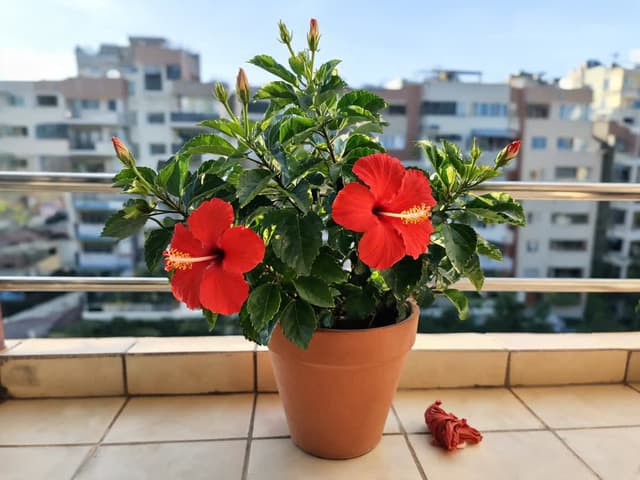
How to Care for Hibiscus: Sun, Watering, Fertilizer, and Pruning for Flowers
How to care for hibiscus: 6 hours of direct sun, evenly moist soil without waterlogging, half-strength fertilizer in spring and summer, and pruning in early spring. Find out why the flower lasts one day and why buds drop before opening.
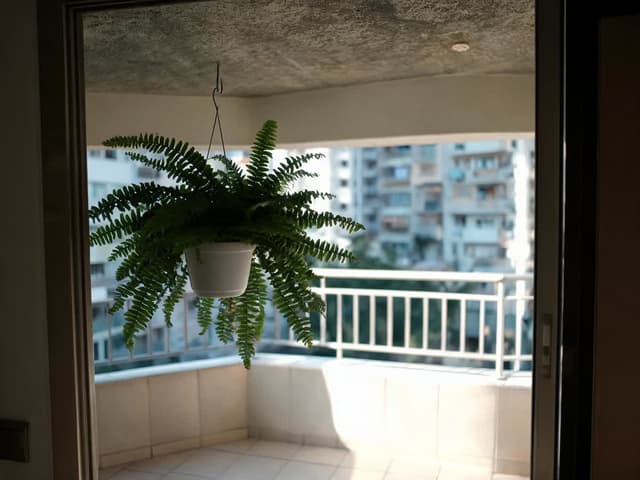
Do Ferns Like Sun or Shade? It Depends on the Type
Ferns prefer bright shade: plenty of light, but no direct sun on their fronds. Tuberous sword fern is the exception that handles sun. Here is the ideal light for each type, where to place pots, and how fronds show too much or too little light.
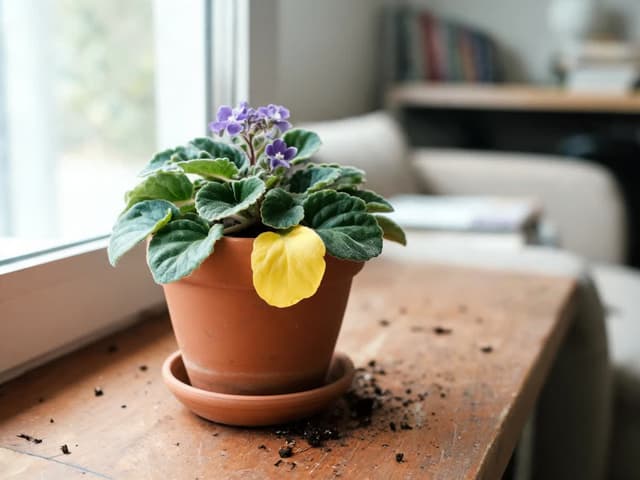
African Violet Yellow Leaves: Causes and What to Do
Yellow leaves on an African violet usually stem from overwatering, and the first place to check is the center of the plant. Losing one lower leaf at a time is normal. Identify whether age, watering, cold water, sunlight, cold drafts, or fertilizer is the culprit based on the yellowing pattern, and see what to do today.