How to Water Potted Bougainvillea: Test, Frequency, and Signs
How to water potted bougainvillea: water until water drains from the hole when the soil surface dries, and wait for it to dry again. See what changes watering frequency, how water affects blooming, and how to tell overwatering from underwatering.
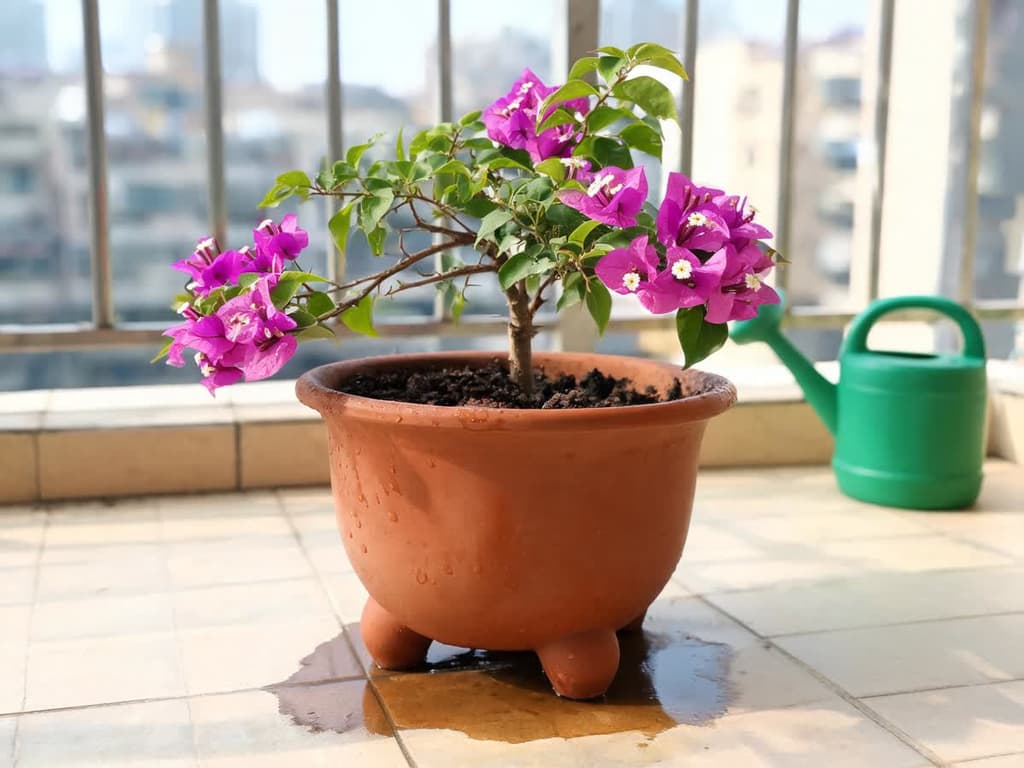
To water potted bougainvillea, touch the soil and only water when the surface is dry. Pour water slowly until it drains from the bottom hole and empty the saucer. Then, wait for the soil to dry out again before the next watering. In hot weather, a small pot can dry out in a day; in cold weather, the same soil takes much longer.
If your bougainvillea (also called paper flower) is losing leaves, touch the soil before changing your watering routine. Leaf drop has four common causes, and only two of them involve water. Wet soil requires you to stop watering; dry soil calls for a deep watering.
How often to water potted bougainvillea
Potted bougainvillea does not have a set watering schedule. The University of Hawaii (CTAHR) explains that the amount of water depends on the potting soil and the weather. It also depends on the size of the plant and the pot. The same publication instructs to water when the soil surface dries out. It also warns that the plant uses up water in a pot quickly.
Illinois Extension recommends checking pots every day in the summer. Checking means touching the soil and only watering if it is dry. Six conditions change the watering routine:
Pot condition | What changes in watering |
|---|---|
Small pot, in full sun, in the summer heat | The soil dries out faster: check it every day, and watering can be daily. |
Clay, fabric, or unglazed ceramic pot | The soil dries out faster than in a plastic or glazed pot, according to Illinois Extension. |
Tight roots, occupying almost the entire pot | There is less soil to hold water, so the soil dries out faster. According to the Illinois Extension, being root-bound helps the plant bloom. |
Right after a bloom | NC State (North Carolina State University, in the US) instructs to reduce water and fertilizer after blooming: space out waterings. |
Cold nights (below 10 °C) | The soil takes longer to dry out. Water less often, in the morning, and never at the start of a cold night. |
Bougainvillea planted in the ground, already established | NC State states that an established plant (with roots already firm in the ground) resists drought. Water deeply and only when the soil dries out. |
The test before watering bougainvillea: surface, weight, and skewer
The simplest test is to touch the surface of the soil with your finger: dry and loose, water; moist, wait another day. Illinois Extension adds a second sign: the pot gets lighter when the soil dries out. Lift the pot right after watering to feel its weight when full, and compare it in the following days.
In a deep pot, the surface dries out before the bottom. Before watering, stick a wooden skewer all the way into the soil and pull it out. A clean, dry skewer means the soil is dry at the bottom: water. A skewer with soil sticking to it means the soil is still moist: wait.
Slightly wilted upper leaves, along with dry soil, also signal when to water. UF/IFAS (University of Florida Extension), in the production guide ENH 874, instructs to water at the first sign of wilting. Do not wait for severe wilting. A commercial bougainvillea production guide (Wisnewski and Koths) warns that severe wilting can drop all the flower buds.
How to water: deeply, in the morning, and with an empty saucer
Water deeply each time and wait for the soil to dry out between waterings, instead of giving a little water every day. CTAHR states that watering thoroughly and less often is better than light, frequent waterings. Pour water slowly around the stem until it drains from the bottom hole, as Illinois Extension instructs.
Empty the saucer as soon as water stops draining. Iowa State University Extension says to never leave the plant in a saucer or cachepot (outer pot without drainage holes) with standing water. Standing water at the bottom keeps the soil underneath waterlogged, and that is where the bougainvillea roots rot.
On cold days, water in the morning so the soil does not stay wet at night. The UF/IFAS ENH 874 guide says not to water on cold nights and warns that too much water promotes root rot.
Sometimes water drains straight through the hole because the soil dried out too much. In this case, the root ball (the block of soil with the roots) began to repel water. Texas A&M AgriLife Extension instructs to submerge the pot in a bucket of water until the bubbles stop rising. Then, let it drain thoroughly before returning the pot to its place.
Watering and blooming: why a little drought helps bougainvillea
Slightly dry soil between waterings helps bougainvillea bloom. UF/IFAS says that the plant thrives best when the soil is kept a little dry. The same page warns that too much nitrogen produces leaves instead of flowers. Growers in Florida and Hawaii let the plant dry until it starts to wilt to induce blooming (ENH 874 and CTAHR).
Drought has a greater effect on flowering when days are long. Bougainvillea produces flowers on its own during short days, with 12 hours of light or less, according to a 1962 study from the University of Florida. In Brazil, these days run from late March to late September. UF/IFAS researchers summarize it this way: with long days, the lack of water partially replaces the short-day signal (Chng and Moore, 2018).
A test by the same researchers found a result that contradicts the rule. In 35 seedlings in a grow chamber, those kept constantly waterlogged bloomed first and produced more flowers in 6 weeks (Chng and Moore, ASHS 2015). Among the seedlings that went through drought, those under moderate drought produced more flowers than those under mild or severe drought. The abstract itself calls the result preliminary.
The RHS (Royal Horticultural Society, from the United Kingdom), which discusses bougainvillea in greenhouses, advises watering heavily when the plant grows vigorously. This guide follows the warm-climate extensions (UF/IFAS, CTAHR, and NC State): moderate drying between deep waterings. The trial lasted only 6 weeks, and UF/IFAS notes that too much water rots roots and drops leaves. For the other flowering factors (sun, pruning, and fertilizer), see how to make bougainvillea bloom.
Overwatering or underwatering: how to tell the difference in bougainvillea
Leaf drop alone does not tell you what the mistake is. The UF/IFAS ENH 874 guide lists four causes: overwatering, underwatering, low light, and cold. What separates the two water-related causes is the condition of the soil in the pot.
Sign | With excess water | Under drought stress |
|---|---|---|
Potting soil | Wet and heavy several days after watering | Dry on the surface and on the stick, with a light pot |
Leaves | They turn yellow and fall; wilting starts from the lower leaves and moves up, according to Iowa State | They wilt and fall off when the soil is dry |
Flowers | Fewer flowers: UF/IFAS states that bougainvillea blooms better when the soil is slightly dry | Severe wilting can drop all the flower buds. |
Root | Dark and mushy when you pull the plant out of the pot | Without signs of rot, with dry soil around it |
Soft leaves with wet soil are the most deceiving case: it looks like thirst, and watering makes the problem worse. If the soil is wet, do not water and empty the saucer. If the soil dried out and the plant wilts, water deeply. If it stays wilted after watering, remove it from the pot and look at the roots.
Root rot is the disease that comes from waterlogged pots:
Iowa State describes diseased roots as dark and mushy, and instructs to space out waterings when there is rot. For other cases of leaf drop, see the page on bougainvillea losing leaves and the article on bougainvillea with yellow leaves.
Not all leaf drop is a watering mistake. UF/IFAS Charlotte County says that bougainvillea usually drops leaves after a bloom and quickly sprouts new growth again. Moving the plant to a cooler spot also leaves the leaves wilted and drooping for a few days. The RHS instructs to water less frequently until it adapts.
Dry branches after intense heat: can you save the bougainvillea?
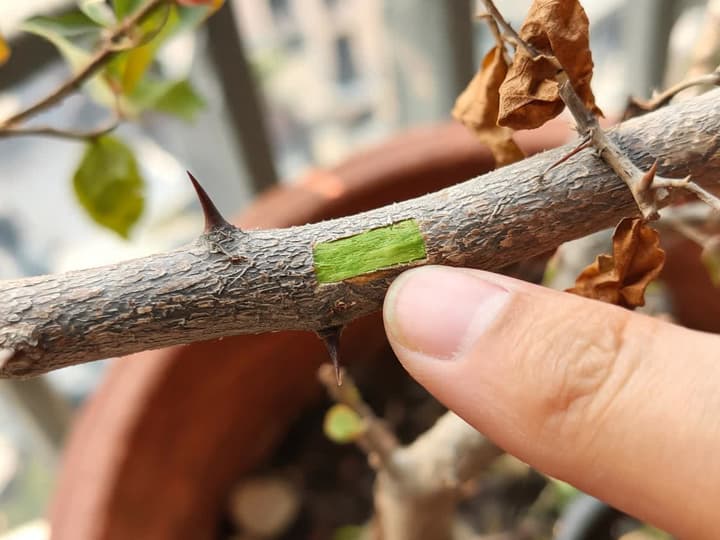
A dry branch after a heat wave can be alive on the inside. To find out, scratch the bark of the branch with your fingernail: green underneath means alive, brown means dead at that spot. The test comes from the American extension service, on Ask Extension, and works for any woody branch.
Ask Extension warns that a dead branch can still bend without breaking, so rely on the color under the bark. Test 3 or 4 spots along the branch, from the tip to the base.
In a pot, the first suspect is soil that dried out all the way to the bottom during hot weather. Do the chopstick test and, if the soil is dry, give it a deep watering until it drains. Then return to the normal routine of the surface test, without overwatering to compensate.
Cut only the brown part and stop at the first point where scraping shows green. For the rest of the pruning, see how to prune bougainvillea. None of the consulted sources describe sunburn on bougainvillea: NC State and UF/IFAS treat it as a full-sun plant. Therefore, check the pot's soil first.
Pot, soil, and drainage: what changes bougainvillea watering
Bougainvillea blooms best when root-bound in a pot. The Illinois Extension says not to repot often and not to damage the roots. When root-bound, there is less soil to hold water, and the soil dries out faster.
Potting soil needs to drain water. UF/IFAS (ENH 874) describes bougainvillea roots as extremely fine. The same guide advises avoiding mixes with a lot of peat (dark, fluffy plant material), which hold too much water and promote rot.
The layer of gravel or clay at the bottom of the pot has studies supporting both sides. Washington State University (WSU) says the layer hinders water movement downward. A 2025 trial in the journal PLOS ONE measured the opposite, with no plant growing in the pot. Without consensus, the safest approach is to ensure the drainage hole at the bottom drains well. Fill the pot only with free-draining soil, without too much peat.
Watering bougainvillea in cold weather and indoors
During the Brazilian winter (June to August), the soil takes longer to dry out: water the bougainvillea less often and only after touching the soil. After flowering, the RHS directs you to space out waterings and let the soil dry out more between waterings. Below 10 °C at night, the same source states that the plant loses leaves. More details in bougainvillea winter care.
Indoors, lack of light causes bougainvillea leaves to drop. CTAHR states that the plant needs high light and that, in a low-light indoor environment, the leaves fall off. Watering more in this case only waterlogs the pot: move the plant close to the brightest window in the house. In Brazil, a north-facing window gets the most sun.
If you received the plant as a gift and do not know its name, confirm that it is bougainvillea before following these rules: other purple-flowered plants may require different watering. Bloom (available for iOS) identifies the plant from a photo.
How to water bougainvillea during vacations
CTAHR describes bougainvillea as drought-tolerant and sensitive to overwatering. No source has measured how many days it survives without water in a pot. For travel, UF/IFAS provides four measures for outdoor containers:
Group the pots together: in a group, they lose less water than scattered across the porch.
Move the pots into the shade during the trip.
Cover the soil with a layer of bark or straw to retain moisture.
For longer trips, set up a drip system with a faucet timer and test it a week before you leave.
Before leaving, do the chopstick test and give it a deep watering only if the soil is dry. On a long trip, the safest option is to ask someone to check the pot. Do not leave the pot sitting in a saucer full of water: the roots stay waterlogged for days.
Frequently asked questions about watering bougainvillea
Does bougainvillea need a lot of water?
No. Bougainvillea grows best with slightly dry soil between waterings, according to UF/IFAS. In a pot, it needs deep watering whenever the soil surface dries out. In hot weather, this can happen every day; in cold weather, much less often. Too much water rots the roots and drops leaves.
Does bougainvillea planted in the ground need to be watered?
It does need water, but less often than in a pot. Once established (with its roots firm in the ground), it resists drought, according to NC State. The same source instructs to water deeply and let the soil dry out between waterings. A newly planted young plant does not have this resistance yet: water whenever the soil surface dries out.
Can I leave bougainvillea in a saucer with pebbles and water?
Only as a short-trip solution, with the pot resting on the pebbles, without sitting in the water. UF/IFAS mentions this tray for indoor plants during 1 to 2-week trips. Day to day, Iowa State instructs never to leave the pot in a saucer with standing water, because the soil at the bottom becomes waterlogged.
Summary: how to water potted bougainvillea
Water when the soil surface dries out, until water drains from the bottom hole.
Empty the saucer as soon as the water stops draining.
In the summer, check the pot every day; in cold weather, water less often and only in the morning.
A little dry spell between waterings helps it bloom; severe wilting drops the buds.
Wilted leaves with wet soil mean overwatering: stop watering and empty the saucer. If the wilting continues after the soil dries out and is watered, check the roots.
Dry branch after the heat: scratch the bark and cut only the brown part.
For the plant's other care needs (sun, pruning, fertilizer, and cold), see the guide on how to care for bougainvillea.
Related articles
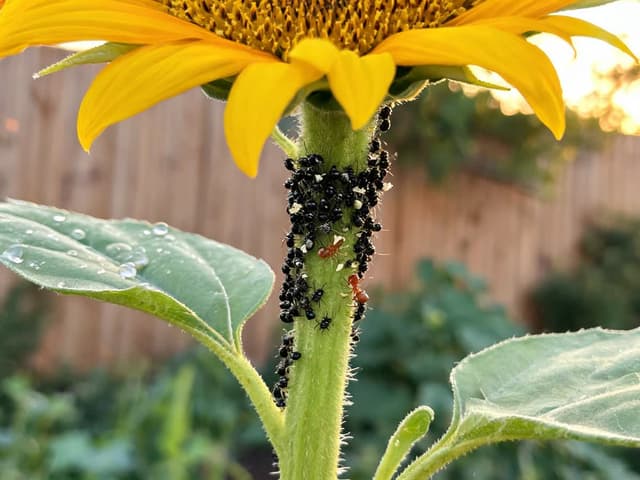
Bugs on Sunflowers: What They Are and What to Do
The bordered patch caterpillar is the main pest among the bugs on sunflowers in Brazil. Learn how to recognize this caterpillar, aphids, leaf beetles, stink bugs, and birds by the damage, when to treat, and when to let the plant finish its cycle.
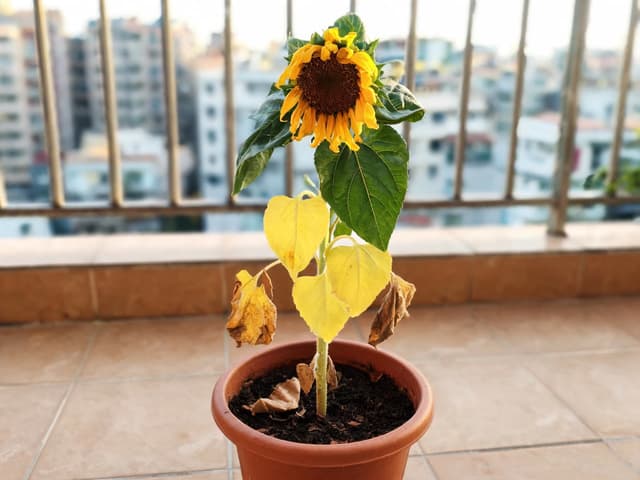
Yellow Leaves on Sunflowers: Causes and What to Do
Yellow leaves on sunflowers: use the plant's stage and where the yellow sits to tell end of life cycle, watering, low fertilizer, fungus or mites apart, plus the test that confirms each cause.
How to Prune Bougainvillea: When, How Much, and Where to Cut
How to prune bougainvillea: cut after flowering, right above a node, and save hard pruning for when the plant starts growing again. See how much to remove, the three types of pruning, and how to train potted bougainvillea.