Toxic plants: 12 species ranked by severity for cats, dogs, and children
A lily can kill a cat from its pollen, sago palm attacks a dog's liver, and oleander affects anyone's heart. See 12 toxic plants in order of severity, with sources for every fact, and what to do if one was eaten.
Toxic plants are those that contain some substance capable of harming whoever eats, chews, or touches them. Hundreds of species make the list of toxic plants, but few cause serious harm. The ones that can kill are lilies for cats and sago palm for dogs. Oleander and castor bean are dangerous for children and pets, and angel's trumpet for children.
The most common living room plants, like pothos, peace lily, and dumb cane, are also toxic. They burn the mouth the moment they are bitten. It is a sharp pain and nowhere near the danger of the first five. This list separates the two groups, plant by plant, with the source for each fact.
If someone just ate a plant: remove the rest from their mouth and save a piece of the plant. Call the Poison Control Hotline, 0800 722 6001 (Anvisa, toll-free, 24 hours). For pets, call the vet. Details are in the last section.
List summary:
# | Plant | Who is most at risk | Most dangerous part | What can happen |
|---|---|---|---|---|
1 | Lily and daylily | cat | the whole plant, including pollen | kidney failure in less than 3 days |
2 | Sago palm | dog, cat, child | the seed | liver damage, death |
3 | Oleander | child, dog, cat | the whole plant, fresh or dried | heart rhythm changes |
4 | Castor bean | child, dog, cat | the chewed seed | vomiting, bloody diarrhea, seizures |
5 | Angel's trumpet | child | the whole plant | hallucinations, fever, rapid heart rate |
6 | Desert rose | dog, cat | the sap and the whole plant | irregular heartbeat, death in pets |
7 | Azalea | dog, cat | the leaf | vomiting, weakness, drop in blood pressure |
8 | Kalanchoe | dog, cat | the whole plant | vomiting, diarrhea, rare arrhythmia |
9 | Amaryllis and daffodil | dog, cat, child | the bulb | vomiting, tremors, drop in blood pressure |
10 | Dumb cane | child, dog, cat | the whole plant | swelling of mouth and throat |
11 | Calla lily and indoor aroids | child, dog, cat | leaf and stem | pain and swelling in the mouth |
12 | Poinsettia | child, dog, cat | the latex (milky sap) | mild irritation of mouth, skin, and eyes |
How this list of toxic plants was ordered
The order follows the severity that the source records for each plant, not its fame. For dogs, cats, and horses, the source is each species profile in the ASPCA toxic plant database. The ASPCA maintains the animal poison control center in the United States. For humans, the source is the severity field (low, medium, or high) in the plant database from the NC State Extension. Material from Sinitox, Fiocruz's poisoning information system, supplements the Brazilian data.
A toxic plant is not synonymous with a dangerous plant. The German Federal Institute for Risk Assessment (BfR) analyzed 42,344 confirmed cases of plant exposure. The cases came from two poison control centers in Germany and involved 227 species. In 93% of them, no one developed any symptoms. Only 3 cases were severe (BfR, Bundesgesundheitsblatt, 2018).
The same study shows why order matters. Twenty-six plant genera accounted for 70% of the cases, and only 8 of them caused at least moderate symptoms. The plant that appears most often in calls to poison control is almost never the one that causes the most harm. That is why this list starts with the rare and severe plants, leaving the frequent and mild ones for the end.
Toxic plants that can kill
1. Lily and daylily: the most severe case for cats
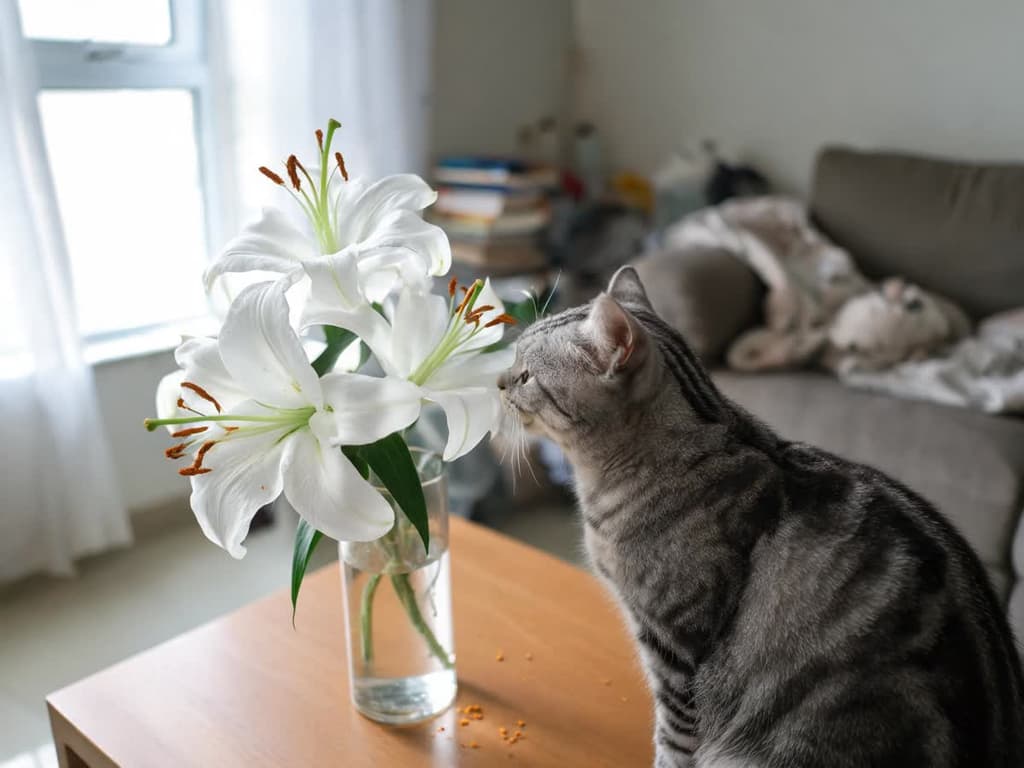
True lilies (genus Lilium, such as Easter lily and tiger lily) are the most dangerous toxic plants for cats on this list. Daylily (Hemerocallis) has the same effect. The FDA, the US health agency, states that the entire plant is toxic to cats. This includes the stem, leaf, flower, pollen, and even the vase water.
A small piece of a leaf or petal can cause fatal kidney failure in a cat in less than 3 days. The same goes for pollen grains it licks from its fur. The first signs appear between 0 and 12 hours later: the cat becomes lethargic, drools, vomits, and stops eating. According to the FDA, when treatment begins 18 hours or more after ingestion, kidney damage is usually irreversible.
A dog that eats a lily may get a mild upset stomach, without kidney damage. The ASPCA lists the cat as the only known species with this condition. Anyone with a cat should not have lilies at home, whether in a pot or in a bouquet. Plant care instructions, for those without cats, are in the guide on how to care for lilies.
Common names can be deceptive. Peace lily and calla lily also share the name "lily" and do not cause kidney failure: they irritate the mouth, as explained in item 11.
2. Sago palm: the "palm" that attacks the liver
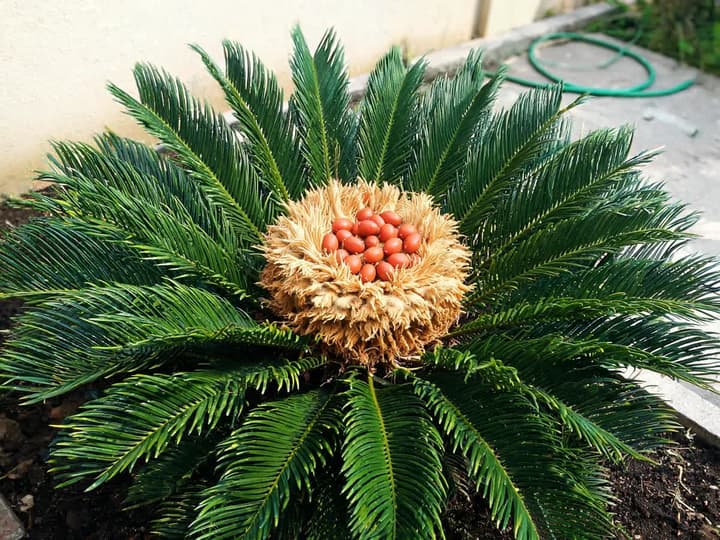
Sago palm (Cycas revoluta) looks like a small palm tree and is common in gardens, balconies, and building entrances. The ASPCA lists it as toxic to dogs, cats, and horses, due to cycasin. Recorded signs range from vomiting and dark stools to bleeding, liver damage, liver failure, and death.
The seed is the part with the most toxin. According to a veterinary review published in Clinician's Brief, the ingestion of just 2 seeds has caused symptoms in dogs. The ASPCA poison control center received 1,398 cases in 10 years, and 90% of the calls involved dogs.
Sources differ on the fatality rate. Studies published by university teaching hospitals record a mortality rate between 32% and 50%. In the ASPCA database, which includes cases treated early, 33 of the 1,398 dogs died or were euthanized, or 2.4%. The review itself explains the difference: university hospitals receive the most severe cases. In the ASPCA database, many owners called right away and treatment began earlier.
Either way, a chewed sago palm seed means going to the vet immediately, without waiting for symptoms. For humans, NC State rates the severity of sago palm as high. Its entry warns that eating any part of the plant can cause permanent internal damage or death.
3. Oleander: heart poison, fresh or dried
Oleander (Nerium oleander) is a shrub with pink, white, or red flowers. It is widely used along walls, in town squares, and in street medians. NC State rates the severity of oleander as high and writes that it can be fatal if ingested. The plant is poisonous fresh or dried, so fallen and swept leaves remain dangerous.
Oleander poison is a cardiac glycoside, a substance that alters the heart rhythm. Symptoms recorded by NC State include nausea, vomiting, stomach pain, dizziness, slow pulse, and irregular heartbeat. The ASPCA lists oleander as toxic to dogs, cats, and horses, with death among the possible signs. Sinitox material adds that contact with the latex (the milky sap) also causes a burning pain in the mouth.
4. Castor bean: chewed seeds are the ones that poison
Castor bean (Ricinus communis) grows wild in vacant lots and along roadsides across much of Brazil. The poison in the seed is ricin. Poison Control, the national poison center in the United States, explains that the seed's hard shell prevents ricin from escaping. A seed swallowed whole usually passes through the digestive tract without causing harm.
The danger begins when the seed is chewed or broken. In that case ricin is absorbed, and Poison Control notes that a single chewed seed can be enough to cause serious harm to a child. The ASPCA lists castor bean as toxic to dogs, cats, and horses. Signs include a burning sensation in the mouth, vomiting, diarrhea, kidney failure, and seizures. Castor bean is also among the 11 high-risk plants for young children in the BfR assessment.
5. Angel's trumpet: the flower that causes hallucinations
Angel's trumpet, also called saia-branca or trumpet flower (genus Brugmansia), is the shrub with large, hanging bell-shaped flowers. NC State rates the severity of angel's trumpet as high and describes it as one of the most toxic ornamental plants. The poison consists of tropane alkaloids, substances that act on the nervous system.
Recorded symptoms are hallucination, dry mouth, muscle weakness, high blood pressure and pulse, fever, and dilated pupils. In the most severe cases, Sinitox material records risk of death. The BfR places angel's trumpet among the 11 high-risk plants for young children. The ASPCA does not have a profile for angel's trumpet, so this list does not have dog and cat data for it.
6. Desert rose: severe for pets, mild on human skin
Desert rose (Adenium obesum) is the thick-stemmed succulent with pink flowers sold in small pots. The ASPCA lists it as toxic to dogs, cats, and horses, due to the same type of poison found in oleander: cardiac glycosides. Reported signs range from vomiting and diarrhea to an irregular heartbeat and death.
For people, NC State rates the severity of the desert rose as low. The most common problem is contact dermatitis, a skin irritation caused by the sap. The fact sheet warns, however, that all parts are poisonous if ingested. Wear gloves to prune the plant. The guide on how to care for the desert rose instructs keeping the pot out of reach of pets and children.
Plants that affect the heart and intestines in larger quantities
7. Azalea: just a few leaves matter
Azalea (genus Rhododendron) is a flowering shrub common in gardens and pots. The ASPCA lists it as toxic to dogs, cats, and horses because of a substance called grayanotoxin. The entry warns that eating just a few leaves can cause serious problems.
The signs recorded by the ASPCA begin a few hours later: vomiting, diarrhea, drooling, and weakness. In severe cases, low blood pressure, coma, and heart failure appear.
8. Kalanchoe: toxic, with rare arrhythmia
Kalanchoe is the succulent with small clustered flowers, commonly sold in supermarkets. The ASPCA lists it as toxic to dogs and cats due to bufadienolides, substances that can alter heart rhythm. Reported signs are vomiting and diarrhea, and the fact sheet marks abnormal heart rhythm as rare.
9. Amaryllis and daffodil: the bulb is the worst part
Amaryllis (Hippeastrum) and daffodil (Narcissus) grow from a bulb, the buried "onion" that stores the plant's reserves. The ASPCA lists both as toxic to dogs and cats due to lycorine and other alkaloids. The entries for amaryllis and daffodil record vomiting, salivation, and diarrhea. In large amounts, they record convulsions, low blood pressure, tremors, and cardiac arrhythmias.
Both entries note that the bulb is the most poisonous part. Storing bulbs above ground while waiting to plant them presents the easiest risk to prevent. Keep bulbs on a high shelf or in a closed cabinet. Daffodils are also among the 8 genera that caused at least moderate symptoms in children in the 2018 BfR study.
The ones that burn the mouth: dumb cane and the aroids
10. Dumbcane: the Brazilian case of child poisoning
Dumb cane (Dieffenbachia) is the most well-known toxic plant in Brazil. Researchers from the Federal University of Paraná cite the Sinitox prevention program. According to it, the plant is among the 16 plants that cause the most poisonings in Brazil. No consulted national source ranks it alone in first place.
The leaf and stem contain needle-shaped calcium oxalate crystals. Upon biting, these crystals enter the mouth and cause immediate pain, along with burning and swelling of the lips, mouth, and tongue. Sinitox materials also record drooling, difficulty swallowing, and asphyxiation, as well as corneal injury if the sap reaches the eye. NC State rates the severity of dumb cane for people as high.
Swelling is what makes dumb cane more serious than other aroids, the family of broadleaf plants that carry the same crystal. A case report published in 2018 describes an 8-year-old girl treated in the emergency room. She arrived with a numb tongue, a swollen lip, slurred speech, and difficulty breathing (Journal of Pediatric Emergency and Intensive Care Medicine). The ASPCA lists the plant as toxic to dogs and cats. Pruning the plant also leaves toxic debris. The guide on dumb cane with yellow leaves instructs keeping this debris out of reach of children and pets.
11. Calla lily, caladium, and indoor aroids
Calla lily (Zantedeschia aethiopica), caladium (Caladium), and elephant ear (Colocasia) carry the same crystal as dumb cane. Pothos, peace lily, monstera, and philodendron carry it too. All of them are aroids, the botanical family of broadleaf plants that produce a spike-shaped inflorescence wrapped in a modified leaf.
The ASPCA lists calla lily, caladium, pothos, peace lily, monstera, and philodendron as toxic to dogs and cats. The recorded signs recur: oral irritation and burning, drooling, vomiting, and difficulty swallowing. Elephant ear is included in Sinitox's material, with the same symptoms. For people, NC State classifies the calla lily as medium severity. The pain appears right on the first bite.
Inherited a large, broadleaf plant with a baby just learning to crawl? Many large indoor plants are aroids, such as monstera and philodendron. Identify the plant before deciding what to do. If it is an aroid, it does not need to go in the trash. Place it up high, out of the baby's reach, and clear fallen leaves the same day.
The mouth injury from a peace lily in a cat has a different mechanism and a different level of severity than that of the lily in item 1. The peace lily irritates the mouth, and the true lily attacks the kidneys.
Plants with a bigger reputation than effect
12. Poinsettia: toxic, but mild in effect
Poinsettia (Euphorbia pulcherrima), the Christmas plant with red bracts, has a reputation as a very poisonous plant. The ASPCA lists it as toxic to dogs, cats, and horses, because of the sap. On the same entry, the ASPCA writes that its toxicity is "generally overrated."
The largest survey on poinsettia gathered 22,793 exposures recorded at poison control centers in the United States between 1985 and 1992. No one died, and 92.4% of people had no effect at all (Krenzelok and colleagues, 1996, cited in the Western Journal of Emergency Medicine). The sap irritates the skin and the eyes. NC State rates the severity for people as low, and warns that sap in the eyes can damage the cornea. The guide on how to care for poinsettias explains what to do if a cat bites it.
Two other houseplants fall into this same group. The ASPCA lists aloe vera as toxic to dogs, cats, and horses, with vomiting, lethargy, and diarrhea, and notes that the gel is considered edible. With a dog at home, keep the aloe vera pot out of its reach. The plant's light and watering needs are in the guide on how to care for aloe vera. Crown-of-thorns (Euphorbia milii) has the same latex as poinsettia, and NC State notes that it can cause anything from mild irritation to severe dermatitis.
The 11 high-risk plants for young children, according to the BfR
In 2019, the BfR reassessed 251 plants using a new method. It combines actual cases handled by poison control centers with the toxicity of each plant's substances. The result: 11 plants with high risk, 32 with medium risk, 115 with mild risk, and 93 with no risk (BfR, Bundesgesundheitsblatt, 2019).
Plant | Scientific name |
|---|---|
Monkshood | Aconitum |
Belladonna (deadly nightshade) | Atropa belladonna |
Angel's trumpet | Brugmansia |
Cowbane (northern water hemlock) | Cicuta virosa |
Autumn crocus | Colchicum autumnale |
Poison hemlock | Conium maculatum |
Jimsonweed (thorn apple) | Datura stramonium |
Flame lily | Gloriosa superba |
Henbane | Hyoscyamus niger |
Castor bean | Ricinus communis |
White false hellebore | Veratrum album |
None of these 11 rank among the 8 genera that caused the most moderate symptoms in actual cases from the 2018 study. The most dangerous plants show up least often in phone calls, and the most common ones are almost never severe.
Unidentified plants: identify before you decide
Did a weed with purple flowers sprout in the garden bed, and your dog won't leave it alone? The first step is determining the plant's scientific name, and only then looking up its toxicity. Common names do not work for this lookup. "Lily" applies to at least four different plants, and only two of them attack a cat's kidneys.
An identification app helps you find the name, within measured limits. A study published in Clinical Toxicology in 2023 tested 4 apps on 16 wild plant species from the United States. Five of the 11 potentially toxic species were identified as edible by at least one of the apps (Clinical Toxicology, 2023). The app provides the likely name, and the plant's entry in the ASPCA database or at a poison control center confirms the risk.
Bloom identifies the plant from a photo and displays both common and scientific names. With the scientific name in hand, you look up the species entry before deciding whether to pull it or keep it.
How to check a plant before buying
Always look up the plant by its scientific name. In the ASPCA database, searching by common name sometimes returns the wrong plant. For example, searching "Elephant Ears" leads to caladium (Caladium) rather than taro.
"The ASPCA does not list this plant as toxic" simply means the species does not appear in their toxic plant catalog. It is not permission for an animal to eat the plant: eating large amounts of plant fiber causes cats to vomit even when the species appears in no catalog at all. Moreover, the catalog does not include every plant; angel's trumpet and crown of thorns, for instance, lack entries.
Pet-safe plant lists contradict each other for two reasons: mixed-up common names and unlisted species treated as safe. Bloom listicles provide ASPCA data species by species, each within its specific focus. These include: low-light plants, large indoor plants, trailing plants, plants for bathrooms, and air-purifying plants. To manage your home's greenery alongside a pet, see our comparison of the best plant apps for pet owners.
What to do if a child or pet ate a plant
Follow these steps, in this order:
Remove any plant remnants from the mouth. Do not force your hand down the throat.
Save a piece of the plant or take a clear photo. The plant's identity determines proper treatment.
Call Disque-Intoxicação: 0800 722 6001. The call is free and operates 24 hours a day, every day. It connects to the nearest poison control center in the Anvisa network (Anvisa). Outside Brazil, call your country's poison control center.
For a dog or cat, call your veterinarian. A cat that chewed a lily and a dog that chewed a sago palm seed must see a vet immediately, even without symptoms.
Call emergency services if the person or animal has trouble breathing, faints, or has seizures. In Brazil, the Samu number is 192.
Do not induce vomiting. Do not give milk or salt water. The BfR advises, at most, one or two glasses of water or tea to dilute, and nothing beyond that without medical guidance (BfR, 2025). Milk can increase the absorption of some poisons. Salt water can endanger the life of a young child.
Two old pieces of advice still appear on gardening websites: induce vomiting and give activated charcoal at home. This article follows the BfR and the clinical toxicology associations of the United States and Europe (AACT and EAPCCT). They are the sources that evaluated the studies. In the joint position of the two associations, activated charcoal should not be given routinely. There is no evidence that it improves the outcome (AACT/EAPCCT). Charcoal is only used under guidance from the poison control center.
With pets, the rule is the same. The ASPCA warns that salt, a finger down the throat, olive oil, and syrup of ipecac do not work to make an animal vomit, or are dangerous. For cats, the ASPCA states that there is nothing you can give at home to make them vomit safely. In dogs, only a veterinarian decides whether inducing vomiting is worth it, and how to do it.
This article does not replace care from a physician, veterinarian, or poison control center. It helps you recognize, before an accident happens, which home and garden plants require caution.
Frequently asked questions
What is the most toxic plant for cats?
True lilies (Lilium) and daylilies (Hemerocallis). According to the FDA, all it takes is a bite of a leaf or petal, pollen licked from the fur, or water from the vase. The cat can suffer kidney failure in less than 3 days. Treatment must begin within 18 hours. Peace lily and calla lily, despite their names, only irritate the mouth.
Is snake plant toxic to dogs and cats?
Yes. The ASPCA lists snake plant (Sansevieria trifasciata) as toxic to dogs and cats because of saponins. Reported signs include nausea, vomiting, and diarrhea. It is a mild toxicity, in the same group as aloe, and not in the group with lilies or sago palm.
Can a toxic plant cause harm just from touching it?
Some can. The latex from oleander, crown of thorns, desert rose, and poinsettia irritates skin and can injure eyes. Wear gloves when pruning these plants and wash your hands before touching your face. For the other plants on this list, danger comes from eating or chewing any part.
Which plant poisons children most often in Brazil?
Sinitox data from 2011 to 2017 are compiled in a 2023 study. They show the 1 to 9 age group with the largest share of plant poisoning cases. Dumb cane ranks among the 16 plants that cause the most poisonings in the country, along with calla lily. No national source consulted publishes a ranking that places it alone in first place.
Related articles
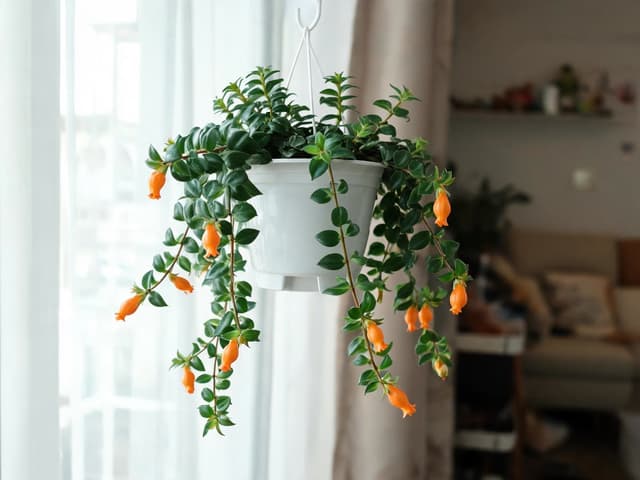
How to Care for a Goldfish Plant: Light, Watering, and Blooms
How to care for a goldfish plant: bright light without strong sun, water when the soil surface dries, and humid air. Learn how to tell a Nematanthus from a Columnea, why it drops leaves, and how to get it to bloom again.
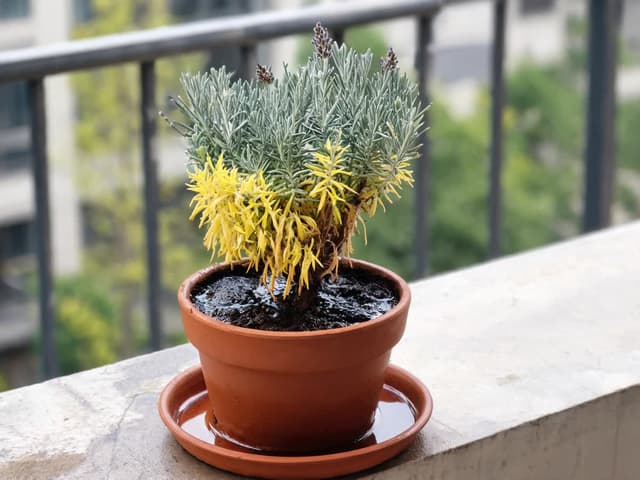
Lavender Leaves Turning Yellow: Where the Yellowing Starts Shows the Cause
Lower leaves turning yellow with moist soil means overwatered roots, the most common cause. Old leaves drying one by one on woody stems is normal. Take the stem and root test, see if your plant can still be saved, and find out what to do today.
How to Propagate Lavender: Where to Cut and Why Cuttings Rot
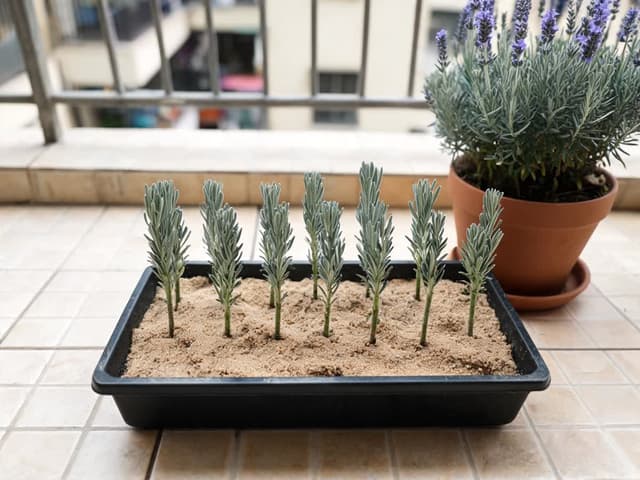
A lavender cutting comes from a non-flowering branch tip, about 4 inches long, planted in sandy soil that never stays soggy. Learn where to cut, rooting times, seasonality in Brazil, and what to do if the base turns black.