Rosaceae
Apple Tree — Complete Growing Guide
Malus domestica
Apple trees require moderate to high maintenance. They need full sun (6–8 hours daily), regular watering during flowering and fruit development, annual pruning to maintain shape and productivity, and a regular spray program to prevent common diseases and pest damage. They thrive in well-drained loamy soil with a pH of 6.0–7.0.
Every 10 days
Direct sun
-20° - 35°C
50% - 75%
Categories
What is Apple Tree?
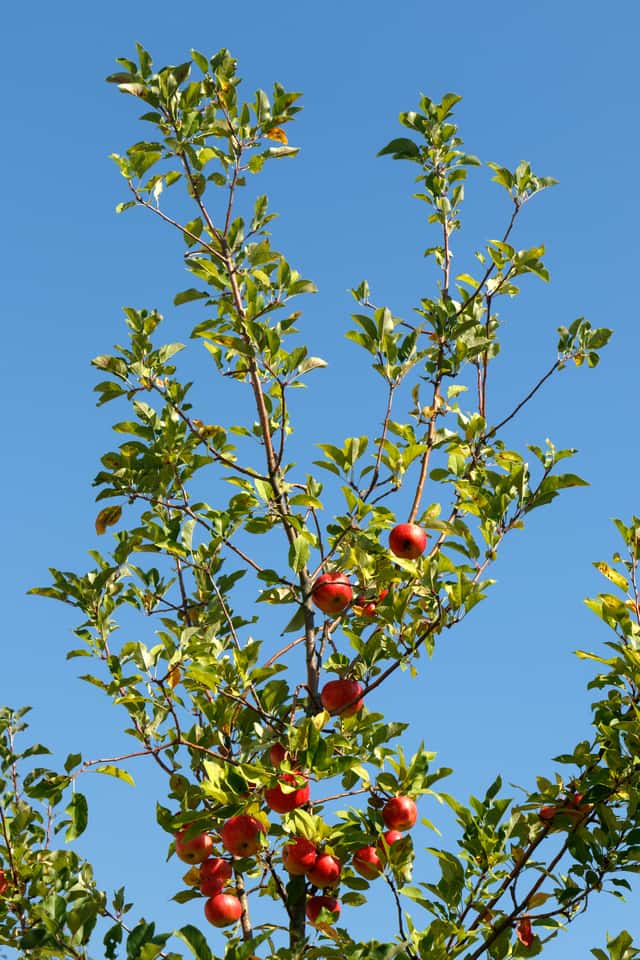
Apple Tree (Malus domestica) is a medium-care plant from the Rosaceae family. The apple tree (Malus domestica) is one of the most widely cultivated and economically significant fruit trees in the world, belonging to the rose family (Rosaceae). Native to the mountainous regions of Central Asia, it has been cultivated for over 4,000 years and today grows in temperate climates a...
Apple Tree grows up to 9.0m, spread of 900cm, watering every 10 days, -20°C – 35°C, 50–75% humidity. It is not suitable for indoor environments and not safe for pets.
Without precautions, ingestion can cause irritation in pets. Keep out of reach of cats and dogs.
How to Care for Apple Tree?
TLDR: Apple Tree needs Direct sun, watering every 10 days, and temperatures between -20-35°C with 50-75% humidity.
How Often Should You Water Apple Tree?
Water apple trees deeply and regularly, especially during flowering and fruit development. In dry conditions, water every 7–14 days, ensuring the soil stays evenly moist but not waterlogged. Drip irrigation systems are ideal for maintaining consistent soil moisture without wetting the trunk base.
How Much Light Does Apple Tree Need?
Apple trees require full sun to produce quality fruit — at least 6 to 8 hours of direct sunlight per day. Partial shade significantly reduces yield and increases susceptibility to fungal diseases such as apple scab and powdery mildew.
What Is the Best Soil for Apple Tree?
Plant in well-drained, fertile loamy soil rich in organic matter. The ideal pH range is 6.0–7.0. Avoid compacted or poorly drained soils, as apple trees are sensitive to waterlogged roots which can cause crown rot and root rot.
What Pot Should You Use for Apple Tree?
Apple trees are best suited to outdoor orchard or garden planting. Dwarf varieties can be grown in large containers (minimum 100 liters) using deep, sturdy pots with excellent drainage.
Care Schedule
Fertilize
Every 90 days
What Is Apple Tree and Where Does It Come From?
The apple tree (Malus domestica) is one of the most widely cultivated and economically significant fruit trees in the world, belonging to the rose family (Rosaceae). Native to the mountainous regions of Central Asia, it has been cultivated for over 4,000 years and today grows in temperate climates across every inhabited continent. Apple trees produce fragrant white and pink blossoms in spring and edible fruits in late summer to autumn. They are deciduous trees that can reach 9 meters in natural growth, though grafted dwarf varieties are typically much more compact.
How Big Does Apple Tree Grow?
TLDR: Apple Tree can reach up to 9.0m tall with Medium growth rate.
Max height
9.0m
Spread
9.0m
Growth rate
Medium
Foliage
Deciduous
Warning: Toxic Plant
This plant can be toxic if ingested. Keep out of reach of:
Plant Uses
Edible
Can be consumed
Ornamental
Great for decoration
Medicinal
Medicinal properties
Medicinal Uses
- Digestive aid (pectin content)
- Antioxidant properties (quercetin, catechins)
- Cholesterol regulation
- Cardiovascular health support
- Anti-inflammatory compounds in the skin
Culinary Uses
- Fresh fruit consumption
- Apple juice and cider
- Jams, jellies, and preserves
- Baking and desserts
- Apple cider vinegar
- Fermented cider and calvados
Is your plant showing symptoms?
Click on the symptom to discover possible causes:
What Diseases Commonly Affect Apple Tree?
TLDR: Apple Tree is susceptible to 8 known diseases. Monitor regularly for early detection.
Powdery Mildew
Powdery mildew is a common fungal disease caused by various fungi species including Erysiphe, Podosphaera, Oïdium, and Leveillula. It affects over 10,000 plant species worldwide. The disease thrives in warm, dry climates with high humidity and appears as a distinctive white powdery coating on plant surfaces.
Fire Blight
Fire blight is a highly destructive and contagious bacterial disease caused by Erwinia amylovora. It primarily affects plants in the Rosaceae family, including apple, pear, quince trees, and various ornamental plants. The disease can destroy an entire orchard in a single growing season under ideal conditions, with the bacterium moving approximately 11 inches per week in new growth.
Aphids
Aphids are small, soft-bodied, pear-shaped insects (1/16 to 1/8 inch long) that feed by sucking nutrient-rich sap from plants. They reproduce rapidly and can quickly weaken plants, causing distorted growth and transmitting plant viruses. Aphids come in various colors including green, black, red, yellow, brown, and gray. They secrete honeydew, a sticky substance that attracts ants and encourages sooty mold growth.
Canker
Canker is a disease caused by various fungi and bacteria that create necrotic, sunken areas on bark of branches, stems, and trunks. Pathogens enter through wounds and natural openings, especially when plants are stressed. Canker can gradually weaken or kill branches by disrupting water and nutrient flow.
Meaning & Symbolism
The apple tree carries rich symbolism across cultures. In Norse mythology, golden apples granted immortality to the gods. In the Christian tradition, it represents temptation and the fall from Eden. In many cultures, the apple symbolizes knowledge, beauty, fertility, and abundance. Gifting an apple has historically symbolized love and admiration.
Fun Facts
There are over 7,500 known cultivars of apple trees worldwide.
The domestic apple originated in the mountains of Kazakhstan, where wild Malus sieversii forests still exist today.
Apple trees typically require cross-pollination from another compatible variety to produce fruit.
A mature apple tree can produce between 100 and 500 kg of fruit per season.
The apple genome is more complex than the human genome — it contains approximately 57,000 genes compared to around 20,000 in humans.
Frequently asked questions
When should I prune my apple tree?
Do apple trees self-pollinate?
How often should I water my apple tree?
Are apple tree seeds toxic?
Compare with similar plants
| Attribute | Difficulty | Light | Watering | Pet Safe |
|---|---|---|---|---|
| Dark Fieldcap | Medium | Low light | 2d | ⚠️ |
| Azalea | Medium | Partial shade | 3d | ⚠️ |
| Muriel's Bamboo | Medium | Partial shade | 3d | ✓ |
| Bougainvillea | Medium | Direct sun | 7d | ⚠️ |




