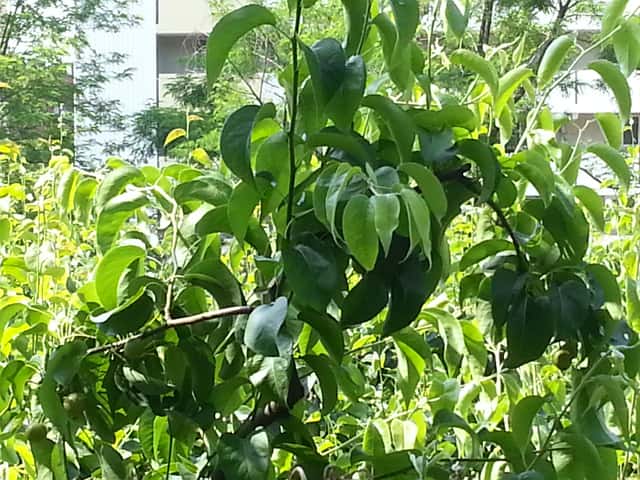
Rosaceae
Asian Pear: Edible Plant
Pyrus pyrifolia
Plant in full sun with deep, well-draining loamy soil and give it room to spread. Water deeply and regularly during the growing season, especially while fruit is developing, but avoid waterlogging since the roots are prone to rot in soggy soil. Most cultivars are self-incompatible and need a second, compatible pear cultivar nearby for pollination and fruit set. Prune annually during dormancy to maintain an open shape and remove growth prone to fire blight.
Every 7 days
Direct sun
-20° - 35°C
40% - 70%
Categories
What is Asian Pear?
Asian Pear (Pyrus pyrifolia) is a medium-care plant from the Rosaceae family. Pyrus pyrifolia, the Asian or nashi pear, is a deciduous fruit tree native to East Asia (China, Japan, and Korea) in the rose family Rosaceae. It grows 7-15 m tall with a rounded crown, glossy serrated leaves, and clusters of fragrant white five-petaled flowers that open in early spring before the l...
Asian Pear grows up to 12.0m, spread of 900cm, watering every 7 days, -20°C – 35°C, 40–70% humidity. It is not suitable for indoor environments and safe for pets.
Unlike many popular species, Asian Pear is safe to keep around pets.
How to Care for Asian Pear?
TLDR: Asian Pear needs Direct sun, watering every 7 days, and temperatures between -20-35°C with 40-70% humidity.
How Often Should You Water Asian Pear?
Water deeply once a week during the growing season (more often in hot, dry spells), letting the top few centimeters of soil dry between waterings; reduce watering in autumn and winter.
How Much Light Does Asian Pear Need?
Give it at least 6-8 hours of direct sun a day — full sun produces the best flowering and fruit; too much shade lowers yield and increases disease risk.
What Is the Best Soil for Asian Pear?
Use deep, well-draining loamy soil with a slightly acidic to neutral pH (about 6.0-6.5); avoid heavy clay or waterlogged sites that encourage root rot.
What Pot Should You Use for Asian Pear?
Best grown in open ground; if container culture is necessary, use a large (60+ cm) pot with excellent drainage and repot every 2-3 years into fresh loamy mix, since Asian pears eventually need in-ground planting to reach full size.
Care Schedule
Fertilize
Every 90 days
What Is Asian Pear and Where Does It Come From?
Pyrus pyrifolia, the Asian or nashi pear, is a deciduous fruit tree native to East Asia (China, Japan, and Korea) in the rose family Rosaceae. It grows 7-15 m tall with a rounded crown, glossy serrated leaves, and clusters of fragrant white five-petaled flowers that open in early spring before the leaves. Its fruit is round, crisp, and juicy rather than the soft, buttery texture of European pears, with russeted or golden skin and a sweet, mildly floral flavor. Widely cultivated in Japan, China, and Korea, and increasingly in orchards worldwide, it requires a period of winter chilling to break dormancy and set fruit.
How to Propagate Asian Pear?
Grafting onto rootstock
Grafting is the standard method because it preserves the exact fruit qualities of the parent cultivar and produces fruit years sooner than seed-grown trees.
- 1 Select healthy scion wood from a fruiting Asian pear cultivar in late winter while dormant
- 2 Choose a compatible pear or quince rootstock
- 3 Make matching cuts and join scion to rootstock using a whip-and-tongue or cleft graft
- 4 Wrap the graft union with grafting tape and seal with grafting wax
- 5 Keep the graft protected and watered until new growth appears in spring
Materials needed:
Seed propagation
Seed-grown trees take many years to fruit and will not reproduce the parent cultivar's traits, so seed propagation is mainly used to grow rootstock, not named varieties.
- 1 Extract seeds from ripe fruit and clean off the pulp
- 2 Stratify seeds in moist sand in the refrigerator for 8-10 weeks to break dormancy
- 3 Sow stratified seeds in a seedbed or pots in early spring
- 4 Transplant seedlings once they have several true leaves
Materials needed:
How Big Does Asian Pear Grow?
TLDR: Asian Pear can reach up to 12.0m tall with Medium growth rate.
Max height
12.0m
Spread
9.0m
Growth rate
Medium
Foliage
Deciduous
Plant Uses
Edible
Can be consumed
Ornamental
Great for decoration
Medicinal Uses
- Traditional Chinese medicine simmers pear as a soothing remedy for dry cough and sore throat
- Used to help clear internal "heat" and moisten the lungs in TCM practice
Culinary Uses
- Eaten fresh, unpeeled, for its crisp juicy texture
- Added to salads for crunch and sweetness
- Cooked into jams, chutneys, and cakes
- Pickled or lightly fermented in East Asian cuisine
Is your plant showing symptoms?
Click on the symptom to discover possible causes:
What Diseases Commonly Affect Asian Pear?
TLDR: Asian Pear is susceptible to 5 known diseases. Monitor regularly for early detection.
Fire Blight
Fire blight is a highly destructive and contagious bacterial disease caused by Erwinia amylovora. It primarily affects plants in the Rosaceae family, including apple, pear, quince trees, and various ornamental plants. The disease can destroy an entire orchard in a single growing season under ideal conditions, with the bacterium moving approximately 11 inches per week in new growth.
Septoria
Septoria (often called septoria leaf spot) is a fungal disease that causes many small spots on leaves and can lead to early leaf drop. It spreads in cool, wet weather by splashing water, wind, tools, and hands. Spots are usually tiny, round, and numerous, with dark brown edges and pale gray centers; you may see tiny black dots in the middle of the spots. Leaves turn yellow and drop, usually starting on lower leaves and moving upward. It is common on tomatoes, peppers, eggplant, parsley, and many ornamental plants.
Aphids
Aphids are small, soft-bodied, pear-shaped insects (1/16 to 1/8 inch long) that feed by sucking nutrient-rich sap from plants. They reproduce rapidly and can quickly weaken plants, causing distorted growth and transmitting plant viruses. Aphids come in various colors including green, black, red, yellow, brown, and gray. They secrete honeydew, a sticky substance that attracts ants and encourages sooty mold growth.
Spider Mites
Spider mites are tiny arachnids (less than 1/20 inch long) related to spiders and ticks that feed on plant sap. They thrive in hot, dry conditions and can cause significant damage to ornamental and vegetable plants. During severe infestations, crop losses can reach 14% or higher as these pests disrupt vital plant processes including photosynthesis, carbon dioxide absorption, and transpiration.
Meaning & Symbolism
In Japan and China, pear blossoms symbolize purity, fresh beginnings, and comfort, and the pear itself is traditionally shared as a symbol of good fortune, health, and longevity.
Compare with similar plants
| Attribute | Difficulty | Light | Watering | Pet Safe |
|---|---|---|---|---|
| Dark Fieldcap | Medium | Low light | 2d | ⚠️ |
| Azalea | Medium | Partial shade | 3d | ⚠️ |
| Muriel's Bamboo | Medium | Partial shade | 3d | ✓ |
| Bougainvillea | Medium | Direct sun | 7d | ⚠️ |




