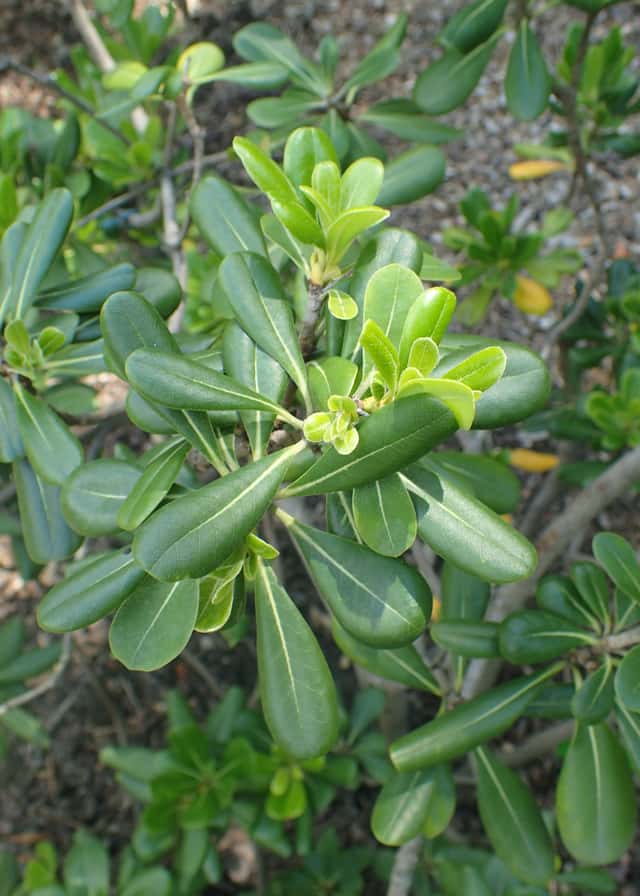
Pittosporaceae
Pittosporum: Pet-Safe Plant
Pittosporum
Grow in full sun to light shade in well-drained soil. Water moderately, letting the topsoil dry between waterings, since it is sensitive to soggy conditions. Feed every 2 months during the growing season and prune every 3-4 months to maintain shape.
Every 10 days
Bright indirect
10° - 29°C
40% - 60%
Categories
What is Pittosporum?
Pittosporum (Pittosporum) is a easy-care plant from the Pittosporaceae family. Pittosporum is a genus of evergreen shrubs and small trees prized for their glossy, whorled foliage and clusters of fragrant, orange-blossom-scented flowers that bloom in spring. Widely used for hedging, screening, and foundation plantings, it is tough, tolerant of coastal salt spray, and responds w...
Pittosporum grows up to 3.7m, spread of 366cm, watering every 10 days, 10°C – 29°C, 40–60% humidity. It is suitable for indoor environments and safe for pets.
Unlike many tropical plants, Pittosporum tolerates watering mistakes. Best for beginners. Unlike many popular species, Pittosporum is safe to keep around pets. Without adequate drainage, root rot can develop within 20 days.
How to Care for Pittosporum?
TLDR: Pittosporum needs Bright indirect, watering every 10 days, and temperatures between 10-29°C with 40-60% humidity.
How Often Should You Water Pittosporum?
Allow the top layer of soil to dry out before watering again; waterlogged soil quickly leads to root rot.
How Much Light Does Pittosporum Need?
Prefers bright, indirect light to full sun; variegated cultivars need more sun exposure to keep their leaf coloring vivid.
What Is the Best Soil for Pittosporum?
Use well-drained soil rich in organic matter with a slightly acidic to neutral pH; avoid soils that stay wet for long periods.
What Pot Should You Use for Pittosporum?
A terracotta or ceramic pot with ample drainage holes to prevent moisture buildup around the roots.
Care Schedule
Fertilize
Every 60 days
Rotate
Every 14 days
Repot
Every 730 days
What Is Pittosporum and Where Does It Come From?
Pittosporum is a genus of evergreen shrubs and small trees prized for their glossy, whorled foliage and clusters of fragrant, orange-blossom-scented flowers that bloom in spring. Widely used for hedging, screening, and foundation plantings, it is tough, tolerant of coastal salt spray, and responds well to shaping, making it a staple of ornamental landscaping in mild climates.
How to Propagate Pittosporum?
Semi-ripe cuttings
- Take cuttings from summer to early autumn
- Use rooting hormone to improve success rate
- 1 Take the cutting
Cut a 6-8cm semi-ripe shoot with at least two leaf nodes.
- 2 Prepare and plant
Remove lower leaves, dip the base in rooting hormone, and plant in a light, moist growing medium.
- 3 Wait for roots
Keep in a humid spot with indirect light until rooted, roughly 6-8 weeks.
Materials needed:
How Big Does Pittosporum Grow?
TLDR: Pittosporum can reach up to 3.7m tall with Medium growth rate.
Max height
3.7m
Spread
3.7m
Growth rate
Medium
Foliage
Evergreen
Plant Uses
Ornamental
Great for decoration
Is your plant showing symptoms?
Click on the symptom to discover possible causes:
What Diseases Commonly Affect Pittosporum?
TLDR: Pittosporum is susceptible to 13 known diseases. Monitor regularly for early detection.
Phytophthora Root Rot
Disease caused by fungus-like organisms (oomycetes) that live in soil and can survive for years. It affects roots, stem, and crown of plants, being especially severe in waterlogged or poorly drained soils. It is the second most common cause of root rot in trees and shrubs.
Root Rot
Root rot is a serious fungal disease that affects the root system of plants, causing them to decay and die. It is primarily caused by overwatering, poor drainage, or soil-borne fungi such as Pythium, Phytophthora, Rhizoctonia, and Fusarium. The disease thrives in waterlogged conditions where roots are deprived of oxygen, making them susceptible to fungal infection.
Leaf Spot
Leaf spot is a common fungal disease caused by various pathogens including Alternaria, Ascochyta, Colletotrichum, Septoria, and Venturia. It primarily affects leaves, causing discolored spots that can lead to premature leaf drop if left untreated.
Alternaria Leaf Spot
Alternaria leaf spot is a common fungal disease caused by Alternaria solani and Alternaria alternata that affects a wide range of plants including tomatoes, potatoes, brassicas, and ornamentals. The disease thrives in warm, humid conditions and can cause significant crop damage if left untreated. Spores overwinter on plant debris and can attach to seeds, making complete elimination difficult.
Meaning & Symbolism
Associated with purity, renewal, and protection; commonly planted as hedging that symbolizes resilience and shelter.
Compare with similar plants
| Attribute | Difficulty | Light | Watering | Pet Safe |
|---|---|---|---|---|
| Field Maple | Easy | Bright indirect | 14d | ✓ |
| Silver Birch | Easy | Direct sun | 14d | ✓ |
| Cushion Bush | Easy | Direct sun | 14d | ✓ |
| Peruvian peppertree | Easy | Direct sun | 14d | ⚠️ |





