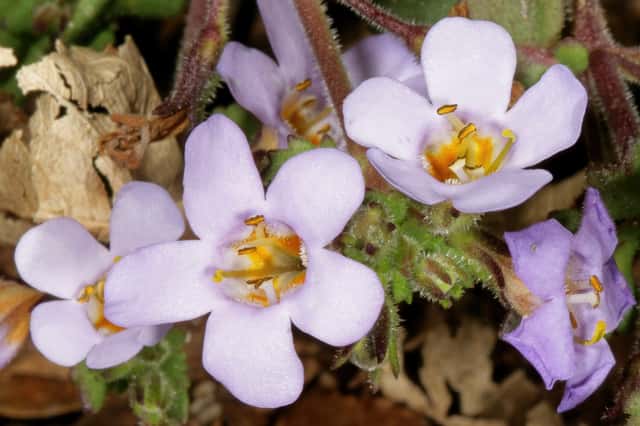
Scrophulariaceae
Bacopa: Ground Cover Plant
Chaenostoma cordatum
Bacopa requires full sun to partial shade, regular and consistent watering, and well-draining soil. It is suitable for both containers and garden beds. It thrives in warm conditions and blooms profusely from spring to fall. With easy maintenance and regular fertilization, the plant provides excellent ornamental value throughout the growing season.
Every 5 days
Direct sun
5° - 35°C
30% - 60%
Categories
What is Bacopa?
Bacopa (Chaenostoma cordatum) is a easy-care plant from the Scrophulariaceae family. Chaenostoma cordatum, popularly known as Bacopa, is a fast-growing evergreen creeping perennial from the Scrophulariaceae family, native to South Africa. The plant forms a dense carpet of small heart-shaped green leaves and produces an abundance of small five-petaled flowers in white, pink, blue, or...
Bacopa grows up to 20cm, spread of 60cm, watering every 5 days, 5°C – 35°C, 30–60% humidity. It is suitable for indoor environments and safe for pets.
Unlike many tropical plants, Bacopa tolerates watering mistakes. Best for beginners. Unlike many popular species, Bacopa is safe to keep around pets. Without adequate drainage, root rot can develop within 10 days.
How to Care for Bacopa?
TLDR: Bacopa needs Direct sun, watering every 5 days, and temperatures between 5-35°C with 30-60% humidity.
How Often Should You Water Bacopa?
Water regularly, keeping the soil slightly moist but avoiding excess moisture and waterlogging. Allow the top layer of soil (about 2–3 cm) to dry out before watering. In dry conditions, potted plants may need watering every 4–6 days. Avoid watering the foliage, as this promotes mold growth.
How Much Light Does Bacopa Need?
Bacopa prefers full sun to lightly shaded locations. It blooms most profusely in full sun; flowering decreases in partial shade. In hot climates, light afternoon shade provides relief, but it must receive at least 6 hours of direct sunlight per day.
What Is the Best Soil for Bacopa?
Use a light, well-draining soil with a slightly acidic to neutral pH level (5.6–6.5). A sandy loam or loamy potting mix is ideal. Avoid heavy clay soils that retain excess moisture and promote root rot. For pots, add approximately 20–30% drainage material (perlite, gravel).
What Pot Should You Use for Bacopa?
Well-suited for hanging baskets, balcony boxes, and wide, shallow pots where the trailing stems can cascade freely. Breathable terracotta or clay pots are preferred. Ensure the pot has adequate drainage holes.
Care Schedule
Fertilize
Every 21 days
Rotate
Every 30 days
Repot
Every 365 days
What Is Bacopa and Where Does It Come From?
Chaenostoma cordatum, popularly known as Bacopa, is a fast-growing evergreen creeping perennial from the Scrophulariaceae family, native to South Africa. The plant forms a dense carpet of small heart-shaped green leaves and produces an abundance of small five-petaled flowers in white, pink, blue, or purple shades. It features a bushy and naturally trailing growth habit, making it popular for balcony boxes, hanging baskets, and as groundcover in garden beds.
How to Propagate Bacopa?
Cuttings
- 1 Cut an 8–10 cm long healthy stem containing at least 2–3 leaf nodes.
- 2 Remove the lower leaves and dip the cut end into rooting hormone.
- 3 Plant in a moist potting mix (perlite + peat 1:1).
- 4 Keep in a slightly moist and warm place (20–25 °C) in partial shade.
- 5 Roots will form in 2–3 weeks; then transplant into a larger pot.
Seeds
- 1 Sow seeds in spring (February–April) on the surface without covering with soil, as seeds need light to germinate.
- 2 Maintain a temperature of 18–22 °C in a moist germination environment.
- 3 Germination occurs in 7–14 days.
- 4 Thin out and transplant after the first pair of true leaves appear.
How Big Does Bacopa Grow?
TLDR: Bacopa can reach up to 20cm tall with Fast growth rate.
Max height
20cm
Spread
60cm
Growth rate
Fast
Foliage
Evergreen
Plant Uses
Ornamental
Great for decoration
Ground Cover
Soil coverage
Is your plant showing symptoms?
Click on the symptom to discover possible causes:
What Diseases Commonly Affect Bacopa?
TLDR: Bacopa is susceptible to 7 known diseases. Monitor regularly for early detection.
Root Rot
Root rot is a serious fungal disease that affects the root system of plants, causing them to decay and die. It is primarily caused by overwatering, poor drainage, or soil-borne fungi such as Pythium, Phytophthora, Rhizoctonia, and Fusarium. The disease thrives in waterlogged conditions where roots are deprived of oxygen, making them susceptible to fungal infection.
Powdery Mildew
Powdery mildew is a common fungal disease caused by various fungi species including Erysiphe, Podosphaera, Oïdium, and Leveillula. It affects over 10,000 plant species worldwide. The disease thrives in warm, dry climates with high humidity and appears as a distinctive white powdery coating on plant surfaces.
Gray Mold (Botrytis Blight)
Gray mold, caused by the fungus Botrytis cinerea, is one of the most common fungal diseases in plants. It affects over 200 plant species, including ornamentals, vegetables, fruits, and houseplants. The disease thrives in cool, humid conditions with poor air circulation, causing grayish spots and soft rot on infected tissues.
Aphids
Aphids are small, soft-bodied, pear-shaped insects (1/16 to 1/8 inch long) that feed by sucking nutrient-rich sap from plants. They reproduce rapidly and can quickly weaken plants, causing distorted growth and transmitting plant viruses. Aphids come in various colors including green, black, red, yellow, brown, and gray. They secrete honeydew, a sticky substance that attracts ants and encourages sooty mold growth.
Meaning & Symbolism
Bacopa's heart-shaped leaves (Latin 'cordatum' = heart-shaped) symbolize love, warmth, and joy. The plant is considered a symbol of luck and positivity, bringing light and cheerful energy to home environments.
Compare with similar plants
| Attribute | Difficulty | Light | Watering | Pet Safe |
|---|---|---|---|---|
| Small Scabious | Easy | Direct sun | 7d | ✓ |
| Field Maple | Easy | Bright indirect | 14d | ✓ |
| Silver Birch | Easy | Direct sun | 14d | ✓ |
| Red valerian | Easy | Direct sun | 10d | ✓ |


