Ranunculaceae
Kamchatka Bugbane: Aromatic Plant
Actaea simplex
A slow-to-establish but easy-care woodland perennial once settled. Grow in cool, consistently moist, humus-rich soil in partial to dappled shade; it will not tolerate hot, dry, or full-sun conditions well. Mulch to retain moisture, stake tall flower stems in exposed sites, and cut back spent foliage in fall. No regular feeding is required beyond an annual spring top-dress of compost. Not suitable as a houseplant — it is a fully hardy outdoor perennial (USDA zones 4a-8b) that needs a cold winter dormancy.
Every 7 days
Low light
-34° - 29°C
60% - 90%
Categories
What is Kamchatka Bugbane?
Kamchatka Bugbane (Actaea simplex) is a medium-care plant from the Ranunculaceae family. Actaea simplex is a clump-forming, rhizomatous herbaceous perennial native to Kamchatka, Sakhalin, Siberia, western China, Manchuria, Mongolia, Korea and Japan. It forms mounds of dark green, trifoliate, deeply divided foliage from which tall, wiry, arching stems rise in late summer, topped with fra...
Kamchatka Bugbane grows up to 1.5m, spread of 90cm, watering every 7 days, -34°C – 29°C, 60–90% humidity. It is not suitable for indoor environments and not safe for pets.
Without precautions, ingestion can cause irritation in pets. Keep out of reach of cats and dogs.
How to Care for Kamchatka Bugbane?
TLDR: Kamchatka Bugbane needs Low light, watering every 7 days, and temperatures between -34-29°C with 60-90% humidity.
How Often Should You Water Kamchatka Bugbane?
Keep soil evenly moist at all times; the foliage scorches quickly if it dries out. Water deeply about once a week during dry spells, more often in containers or sandy soil, and mulch generously to conserve moisture.
How Much Light Does Kamchatka Bugbane Need?
Best in partial or dappled shade. Full shade causes leggy growth, greener (less colorful) foliage on dark-leaved cultivars, and fewer flowers; full sun scorches leaves unless soil stays constantly moist and the climate is cool.
What Is the Best Soil for Kamchatka Bugbane?
Plant in rich, deep, humus-laden soil that drains well but never fully dries out. Work in generous compost or leaf mold at planting time and reapply as a yearly mulch to maintain organic content and moisture retention.
What Pot Should You Use for Kamchatka Bugbane?
Best grown directly in the ground where its roots can stay consistently cool and moist; if container growing is unavoidable, use a large, deep pot (at least 40cm) with good drainage holes, moisture-retentive potting mix enriched with compost, and keep the container in a shaded, sheltered spot.
Care Schedule
Fertilize
Every 180 days
What Is Kamchatka Bugbane and Where Does It Come From?
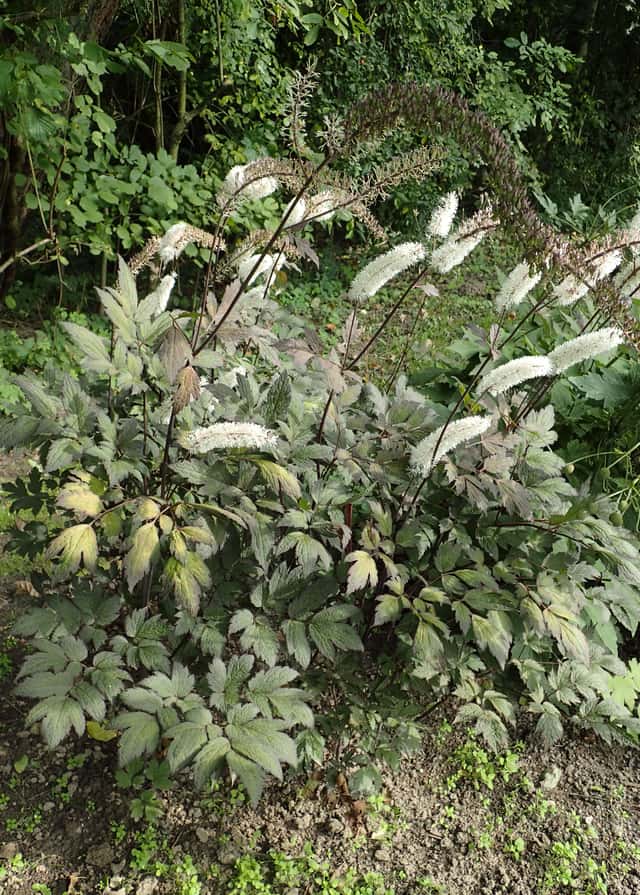
Actaea simplex is a clump-forming, rhizomatous herbaceous perennial native to Kamchatka, Sakhalin, Siberia, western China, Manchuria, Mongolia, Korea and Japan. It forms mounds of dark green, trifoliate, deeply divided foliage from which tall, wiry, arching stems rise in late summer, topped with fragrant terminal racemes of small white to cream flowers held well above the leaves. Reaching up to 150cm tall, it is prized for shade and woodland gardens for its late-season blooms, upright architectural habit, and tolerance of moist, humus-rich soil.
How to Propagate Kamchatka Bugbane?
How Big Does Kamchatka Bugbane Grow?
TLDR: Kamchatka Bugbane can reach up to 1.5m tall with Medium growth rate.
Max height
1.5m
Spread
90cm
Growth rate
Medium
Foliage
Deciduous
Warning: Toxic Plant
This plant can be toxic if ingested. Keep out of reach of:
Plant Uses
Ornamental
Great for decoration
Aromatic
Pleasant fragrance
Is your plant showing symptoms?
Click on the symptom to discover possible causes:
What Diseases Commonly Affect Kamchatka Bugbane?
TLDR: Kamchatka Bugbane is susceptible to 4 known diseases. Monitor regularly for early detection.
Rust
Rust is a common fungal disease caused by fungi in the order Pucciniales that affects a wide variety of plants. The disease gets its name from the characteristic orange, yellow, or reddish-brown pustules that appear on leaves, resembling metal rust. This obligate fungal parasite requires living plants to survive and can cause significant economic losses in agricultural crops.
Leaf Spot
Leaf spot is a common fungal disease caused by various pathogens including Alternaria, Ascochyta, Colletotrichum, Septoria, and Venturia. It primarily affects leaves, causing discolored spots that can lead to premature leaf drop if left untreated.
Powdery Mildew
Powdery mildew is a common fungal disease caused by various fungi species including Erysiphe, Podosphaera, Oïdium, and Leveillula. It affects over 10,000 plant species worldwide. The disease thrives in warm, dry climates with high humidity and appears as a distinctive white powdery coating on plant surfaces.
Slugs and Snails
Slugs and snails are mollusks that feed on plant tissue, causing irregular holes in leaves and damage to young seedlings. They are most active at night and in moist conditions, leaving characteristic silvery slime trails. These pests can quickly devastate gardens, especially during wet seasons.
Meaning & Symbolism
The name "bugbane" comes from the pungent scent of the leaves, long believed to repel insects, while "baneberry" recalls the toxic berries shared across the genus Actaea. In woodland gardens, its tall dark racemes blooming in late summer and fall have made it a symbol of quiet transition into autumn, thriving in the cool shade where other perennials fade.
Compare with similar plants
| Attribute | Difficulty | Light | Watering | Pet Safe |
|---|---|---|---|---|
| Dark Fieldcap | Medium | Low light | 2d | ⚠️ |
| Azalea | Medium | Partial shade | 3d | ⚠️ |
| Muriel's Bamboo | Medium | Partial shade | 3d | ✓ |
| Bougainvillea | Medium | Direct sun | 7d | ⚠️ |




