Orchidaceae
Epidendrum fulgens (Beach Crucifix Orchid)
Epidendrum fulgens
Grow in full sun or very bright light, as strong light is essential for flowering. Water moderately, letting the substrate dry out well between waterings, since the roots do not tolerate waterlogging despite the terrestrial habit. Use a sandy, organic-rich, well-draining substrate. It is a fast grower, best suited to outdoor gardens and coastal landscapes; not recommended for apartments due to its high light and space requirements.
Every 7 days
Direct sun
10° - 32°C
50% - 80%
Categories
What is Beach Crucifix Orchid?
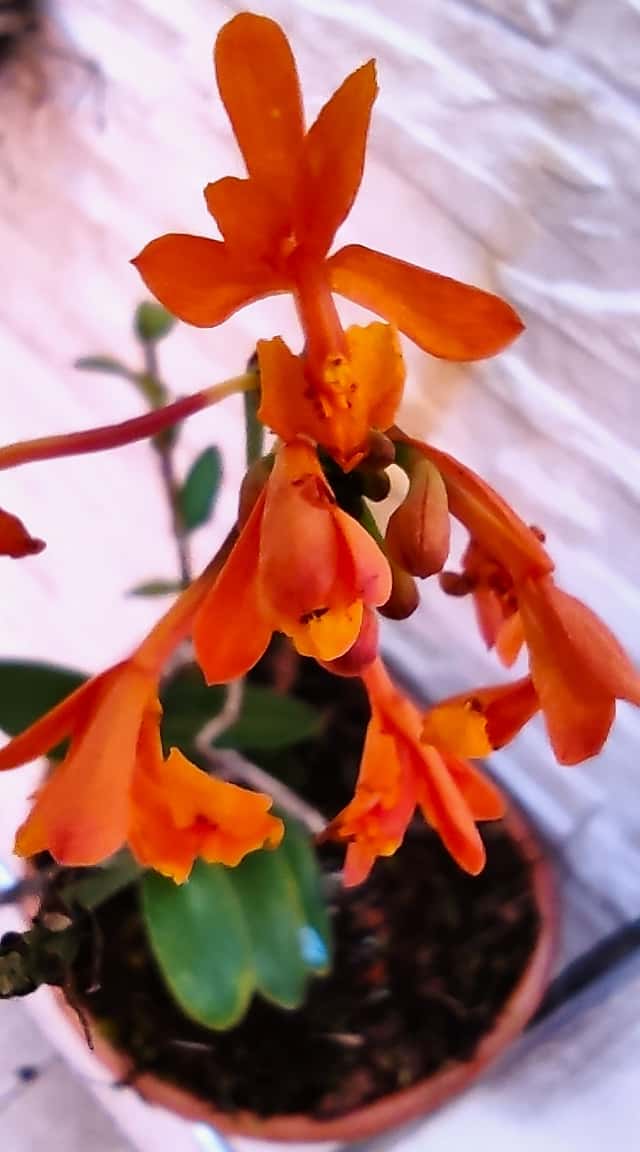
Beach Crucifix Orchid (Epidendrum fulgens) is a medium-care plant from the Orchidaceae family. Epidendrum fulgens is a terrestrial crucifix orchid native to the restinga (coastal scrubland) of southern and southeastern Brazil, from Rio de Janeiro to Rio Grande do Sul. It forms robust clumps of cane-like pseudobulbs and produces upright flower spikes bearing dozens of brilliant orange-yellow,...
Beach Crucifix Orchid grows up to 2.0m, watering every 7 days, 10°C – 32°C, 50–80% humidity. It is not suitable for indoor environments and safe for pets.
Unlike many popular species, Beach Crucifix Orchid is safe to keep around pets.
How to Care for Beach Crucifix Orchid?
TLDR: Beach Crucifix Orchid needs Direct sun, watering every 7 days, and temperatures between 10-32°C with 50-80% humidity.
How Often Should You Water Beach Crucifix Orchid?
Allow the substrate to dry out thoroughly between waterings; overwatering encourages root rot.
How Much Light Does Beach Crucifix Orchid Need?
Provide full sun or very bright light — the more shade, the leggier the growth and the fewer the blooms.
What Is the Best Soil for Beach Crucifix Orchid?
Use a sandy, organic, well-draining substrate similar to the coastal restinga soils where the species grows naturally.
What Pot Should You Use for Beach Crucifix Orchid?
Wide, shallow pots or garden beds with excellent drainage, suited to the terrestrial habit of this species.
What Is Beach Crucifix Orchid and Where Does It Come From?
Epidendrum fulgens is a terrestrial crucifix orchid native to the restinga (coastal scrubland) of southern and southeastern Brazil, from Rio de Janeiro to Rio Grande do Sul. It forms robust clumps of cane-like pseudobulbs and produces upright flower spikes bearing dozens of brilliant orange-yellow, non-resupinate flowers with red spots on the lip. The species is remarkably tolerant of full sun, strong coastal winds, and salt spray.
How to Propagate Beach Crucifix Orchid?
Clump Division
Divide right after the flowering period to reduce plant stress, and always use sterilized tools to avoid contamination.
- 1 Choose a healthy clump with at least three pseudobulbs
- 2 Carefully dig up or unpot the plant, preserving the roots
- 3 Separate sections with a sterilized knife, making sure each division has at least one pseudobulb and roots
- 4 Plant each division in sandy, well-draining substrate in full sun
- 5 Keep the substrate lightly moist until new roots establish
Materials needed:
Seed Propagation
A slow, technical method best suited to experienced growers and nurseries; requires aseptic conditions.
- 1 Collect seeds from mature pods after pollination
- 2 Sow in sterile culture medium (in vitro), since the seeds have no nutrient reserves
- 3 Maintain high humidity (70-80%) and temperature between 22-28°C
- 4 Transplant seedlings to appropriate substrate after the first roots develop
Materials needed:
How Big Does Beach Crucifix Orchid Grow?
TLDR: Beach Crucifix Orchid can reach up to 2.0m tall with Fast growth rate.
Max height
2.0m
Growth rate
Fast
Foliage
Evergreen
Plant Uses
Ornamental
Great for decoration
Is your plant showing symptoms?
Click on the symptom to discover possible causes:
What Diseases Commonly Affect Beach Crucifix Orchid?
TLDR: Beach Crucifix Orchid is susceptible to 11 known diseases. Monitor regularly for early detection.
Root Rot
Root rot is a serious fungal disease that affects the root system of plants, causing them to decay and die. It is primarily caused by overwatering, poor drainage, or soil-borne fungi such as Pythium, Phytophthora, Rhizoctonia, and Fusarium. The disease thrives in waterlogged conditions where roots are deprived of oxygen, making them susceptible to fungal infection.
Leaf Spot
Leaf spot is a common fungal disease caused by various pathogens including Alternaria, Ascochyta, Colletotrichum, Septoria, and Venturia. It primarily affects leaves, causing discolored spots that can lead to premature leaf drop if left untreated.
Rust
Rust is a common fungal disease caused by fungi in the order Pucciniales that affects a wide variety of plants. The disease gets its name from the characteristic orange, yellow, or reddish-brown pustules that appear on leaves, resembling metal rust. This obligate fungal parasite requires living plants to survive and can cause significant economic losses in agricultural crops.
Mosaic Virus
Mosaic virus is a group of plant viruses that cause mottled, patchy patterns on leaves and can affect a wide variety of plants. The virus creates characteristic yellow, white, and green mosaic patterns, often accompanied by stunted growth and deformed plant parts. This highly contagious disease spreads rapidly through insect vectors and contaminated tools.
Fun Facts
The epithet fulgens comes from Latin, meaning shining or glowing, a nod to its brilliant flower color.
It is called a crucifix orchid because its three-lobed lip forms a cross-like shape, typical of subgenus Amphiglottium.
It grows naturally in coastal restinga habitat between Rio de Janeiro and Rio Grande do Sul, withstanding strong winds and salt spray.
Frequently asked questions
Can Epidendrum fulgens be grown indoors?
How often should I water Epidendrum fulgens?
Is Epidendrum fulgens toxic to cats and dogs?
What is the best way to propagate Epidendrum fulgens?
Compare with similar plants
| Attribute | Difficulty | Light | Watering | Pet Safe |
|---|---|---|---|---|
| Dark Fieldcap | Medium | Low light | 2d | ⚠️ |
| Azalea | Medium | Partial shade | 3d | ⚠️ |
| Muriel's Bamboo | Medium | Partial shade | 3d | ✓ |
| Bougainvillea | Medium | Direct sun | 7d | ⚠️ |




