Fagaceae
Blackjack Oak: Edible Plant
Quercus marilandica
A slow-growing, low-maintenance tree once established. Give it full sun and well-drained, acidic soil; avoid wet or compacted ground. Deep, infrequent watering during establishment builds the drought tolerance it's known for. Minimal fertilizing or pruning is needed — this tree thrives on neglect in the right site.
Every 14 days
Direct sun
-23° - 38°C
% - %
Categories
What is Blackjack Oak?
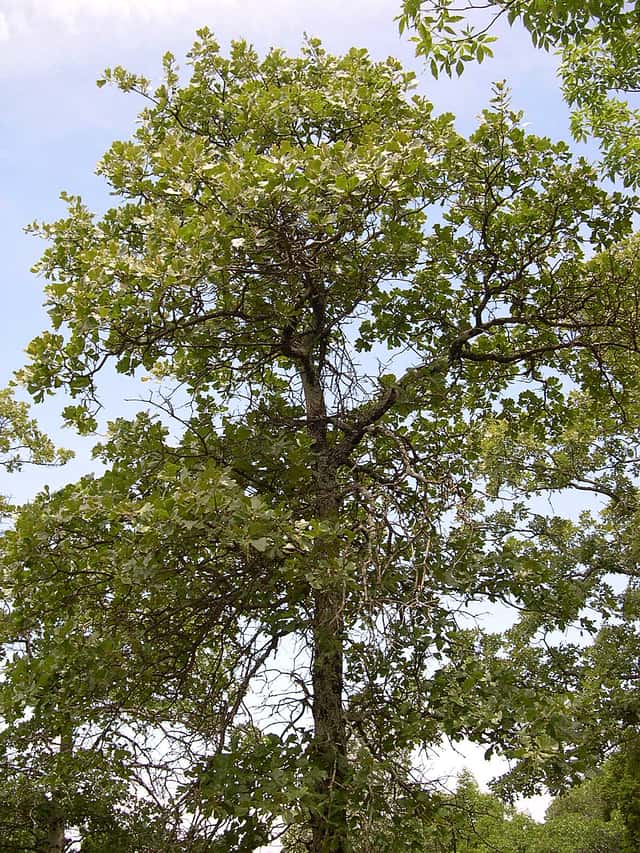
Blackjack Oak (Quercus marilandica) is a medium-care plant from the Fagaceae family. Blackjack Oak is a small to medium deciduous tree native to the dry, sandy and rocky uplands of central and eastern North America. Named for its dark, blocky bark, it is prized less for ornamental beauty and more for its toughness — thriving in poor, acidic soils where few other trees survive. Its d...
Blackjack Oak grows up to 15.0m, spread of 1200cm, watering every 14 days, -23°C – 38°C. It is not suitable for indoor environments and not safe for pets.
Without precautions, ingestion can cause irritation in pets. Keep out of reach of cats and dogs.
How to Care for Blackjack Oak?
TLDR: Blackjack Oak needs Direct sun, watering every 14 days, and temperatures between -23-38°C with 40-70% humidity.
How Often Should You Water Blackjack Oak?
Water deeply but infrequently, especially in the first two years. Once established, Blackjack Oak tolerates drought well and rarely needs supplemental irrigation except in extended dry spells.
How Much Light Does Blackjack Oak Need?
Plant in full sun — at least 6 hours of direct light daily. This species is shade-intolerant and will grow spindly or decline in shaded sites.
What Is the Best Soil for Blackjack Oak?
Choose sandy, gravelly, or clay soil that drains well; avoid heavy, poorly-drained or waterlogged sites. Acidic soil (pH below 6.0) is ideal — this oak actually thrives in poor, nutrient-scarce ground.
What Pot Should You Use for Blackjack Oak?
Not suited to container life long-term — this is a taprooted landscape tree. If starting from seed, use a deep, biodegradable root-training pot to avoid transplant shock before moving it to open ground.
Care Schedule
Fertilize
Every 14 days
Misting
Every 3 days
Rotate
Every 7 days
Repot
Every 365 days
What Is Blackjack Oak and Where Does It Come From?
Blackjack Oak is a small to medium deciduous tree native to the dry, sandy and rocky uplands of central and eastern North America. Named for its dark, blocky bark, it is prized less for ornamental beauty and more for its toughness — thriving in poor, acidic soils where few other trees survive. Its distinctive leathery, three-lobed leaves and gnarled, irregular crown make it a valued native for woodland and wildlife gardens.
How to Propagate Blackjack Oak?
Seed sowing
- Sow acorns fresh in fall — they lose viability quickly if dried out
- Direct-sow in place when possible since taproots resent transplanting
- 1 Collect fresh acorns
Gather mature acorns in autumn as soon as they drop, discarding any with holes or soft spots.
- 2 Sow immediately
Plant in a prepared outdoor bed or deep pot, 2-3 cm deep, in well-drained soil.
- 3 Protect over winter
Mulch lightly to protect seeds from freeze-thaw heaving and rodents.
- 4 Transplant young seedlings early
Move seedlings to their permanent site while still young, before the taproot develops fully.
Materials needed:
How Big Does Blackjack Oak Grow?
TLDR: Blackjack Oak can reach up to 15.0m tall with Slow growth rate.
Max height
15.0m
Spread
12.0m
Growth rate
Slow
Foliage
Deciduous
Warning: Toxic Plant
This plant can be toxic if ingested. Keep out of reach of:
Plant Uses
Ornamental
Great for decoration
Edible
Can be consumed
Medicinal
Medicinal properties
Medicinal Uses
- Bark infusion historically used to ease childbirth and cramps
- Astringent leaf galls used traditionally for diarrhea and dysentery
Culinary Uses
- Acorns leached of tannins and cooked as a famine food, ground into flour or roasted as a coffee substitute
Is your plant showing symptoms?
Click on the symptom to discover possible causes:
What Diseases Commonly Affect Blackjack Oak?
TLDR: Blackjack Oak is susceptible to 9 known diseases. Monitor regularly for early detection.
Anthracnose
Anthracnose is a fungal disease caused by fungi in the genus Colletotrichum that affects many plants, including vegetables, fruits, and trees. The disease thrives in cool, wet conditions, causing dark, sunken lesions on leaves, stems, flowers, and fruits.
Powdery Mildew
Powdery mildew is a common fungal disease caused by various fungi species including Erysiphe, Podosphaera, Oïdium, and Leveillula. It affects over 10,000 plant species worldwide. The disease thrives in warm, dry climates with high humidity and appears as a distinctive white powdery coating on plant surfaces.
Scale Insects
Scale insects are small sap-sucking pests that appear as brown, shell-like bumps on plant stems and leaves. There are over 25 species, divided into armored (hard) and unarmored (soft) scales. They feed by piercing plant tissue and extracting sap, which weakens the plant and can lead to yellowing, stunted growth, and even death if left untreated. They also excrete honeydew, which attracts ants and promotes sooty mold growth.
Leafminers
Leafminers are the larvae of various insects including flies, moths, sawflies, and beetles that tunnel between leaf surfaces, creating distinctive serpentine trails or blotchy patches. While primarily cosmetic, severe infestations can weaken plants by reducing photosynthesis capacity and making them susceptible to secondary infections.
Meaning & Symbolism
In folklore and heraldry, oaks broadly symbolize strength, endurance and steadfastness; Blackjack Oak's ability to flourish in the harshest, poorest ground has made it a quiet emblem of resilience.
Compare with similar plants
| Attribute | Difficulty | Light | Watering | Pet Safe |
|---|---|---|---|---|
| Dark Fieldcap | Medium | Low light | 2d | ⚠️ |
| Azalea | Medium | Partial shade | 3d | ⚠️ |
| Bougainvillea | Medium | Direct sun | 7d | ⚠️ |
| Wild Lettuce | Medium | Direct sun | 7d | ⚠️ |



