Rubiaceae
Coffee Plant: Edible Plant
Coffea arabica
Requires bright indirect light, slightly acidic soil, and regular watering to maintain moisture without becoming waterlogged.
Every 5 days
Partial shade
15° - 32°C
50% - 70%
Categories
What is Coffee Plant?
Coffee Plant (Coffea arabica) is a medium-care plant from the Rubiaceae family. Coffea arabica, commonly known as the coffee plant, is an evergreen shrub with dark green, glossy, and waxy foliage. Native to the highlands of Ethiopia, it is the species responsible for most of the world's gourmet coffee production. When grown indoors, it stands out for its ornamental beauty and o...
Coffee Plant grows up to 3.0m, spread of 150cm, watering every 5 days, 15°C – 32°C, 50–70% humidity. It is suitable for indoor environments and not safe for pets.
Without precautions, ingestion can cause irritation in pets. Keep out of reach of cats and dogs. Without adequate drainage, root rot can develop within 10 days.
How to Care for Coffee Plant?
TLDR: Coffee Plant needs Partial shade, watering every 5 days, and temperatures between 15-32°C with 50-70% humidity.
How Often Should You Water Coffee Plant?
Water whenever the top layer of soil feels dry to the touch. Use room-temperature water and avoid water accumulation in the saucer.
How Much Light Does Coffee Plant Need?
Prefers intense filtered light. Avoid direct midday sun, which can burn the leaves, but ensure sufficient brightness to prevent the plant from becoming leggy.
What Is the Best Soil for Coffee Plant?
Use a mixture rich in organic matter, such as peat moss and perlite, ensuring a pH between 5.5 and 6.5.
What Pot Should You Use for Coffee Plant?
Deep ceramic or terracotta pots with excellent drainage to accommodate the root system.
Care Schedule
Fertilize
Every 21 days
Misting
Every 3 days
Rotate
Every 14 days
Repot
Every 730 days
What Is Coffee Plant and Where Does It Come From?
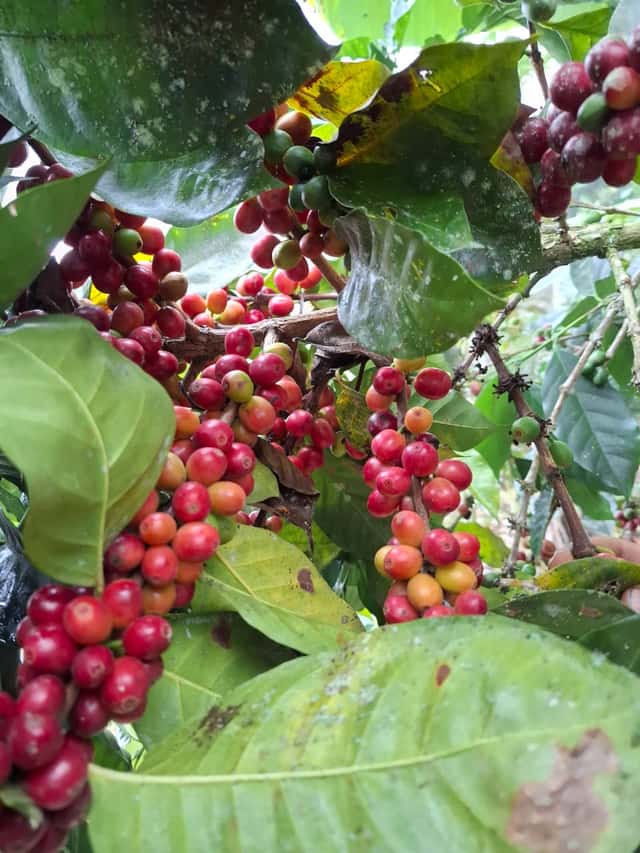
Coffea arabica, commonly known as the coffee plant, is an evergreen shrub with dark green, glossy, and waxy foliage. Native to the highlands of Ethiopia, it is the species responsible for most of the world's gourmet coffee production. When grown indoors, it stands out for its ornamental beauty and occasionally for its fragrant white flowers that give rise to the red fruits known as 'coffee cherries'.
How to Propagate Coffee Plant?
Sowing
- Coffee seeds lose viability quickly, so plant them as soon as possible after harvesting.
- 1 Seed Preparation
Use fresh seeds (green beans) and remove the outer pulp if necessary.
- 2 Planting
Sow in a light, sandy substrate, covering with only 1 cm of soil.
- 3 Germination
Keep the soil warm and constantly moist until sprouts appear.
Materials needed:
Stem Cuttings
- Keep the cutting in a warm place with indirect light.
- 1 Cutting
Cut a semi-woody branch approximately 15 cm long with at least two nodes.
- 2 Preparation
Remove the lower leaves and apply rooting hormone to the base.
- 3 Rooting
Plant in moist soil and cover with a plastic bag to maintain very high humidity.
Materials needed:
How Big Does Coffee Plant Grow?
TLDR: Coffee Plant can reach up to 3.0m tall with Slow growth rate.
Max height
3.0m
Spread
1.5m
Growth rate
Slow
Foliage
Evergreen
Warning: Toxic Plant
This plant can be toxic if ingested. Keep out of reach of:
Plant Uses
Ornamental
Great for decoration
Edible
Can be consumed
Medicinal Uses
- Central nervous system stimulant
- Concentration aid
- Antioxidant properties
Culinary Uses
- Coffee bean production
- Flavoring for sweets and liqueurs
- Fruit husk infusion (Cascara)
Is your plant showing symptoms?
Click on the symptom to discover possible causes:
What Diseases Commonly Affect Coffee Plant?
TLDR: Coffee Plant is susceptible to 18 known diseases. Monitor regularly for early detection.
Rust
Rust is a common fungal disease caused by fungi in the order Pucciniales that affects a wide variety of plants. The disease gets its name from the characteristic orange, yellow, or reddish-brown pustules that appear on leaves, resembling metal rust. This obligate fungal parasite requires living plants to survive and can cause significant economic losses in agricultural crops.
Cercospora Leaf Spot
Cercospora leaf spot is a common fungal disease caused by Cercospora species that affects many plant types, particularly beets, roses, and leafy vegetables. The disease thrives in warm, humid conditions and can cause significant defoliation, reducing plant vigor and yield. It spreads rapidly through water splash, wind, and contaminated tools.
Root Rot
Root rot is a serious fungal disease that affects the root system of plants, causing them to decay and die. It is primarily caused by overwatering, poor drainage, or soil-borne fungi such as Pythium, Phytophthora, Rhizoctonia, and Fusarium. The disease thrives in waterlogged conditions where roots are deprived of oxygen, making them susceptible to fungal infection.
Mealybugs
Mealybugs are small, soft-bodied insects covered with a white, waxy, cottony material. They are common pests of houseplants and outdoor plants in mild climates. These sap-sucking insects feed on plant tissue, causing damage, stunted growth, and can lead to plant death if left untreated. They produce sticky honeydew which attracts sooty mold.
Meaning & Symbolism
Represents hospitality, energy, vitality, and the awakening of consciousness.
Compare with similar plants
| Attribute | Difficulty | Light | Watering | Pet Safe |
|---|---|---|---|---|
| Dark Fieldcap | Medium | Low light | 2d | ⚠️ |
| Azalea | Medium | Partial shade | 3d | ⚠️ |
| Bougainvillea | Medium | Direct sun | 7d | ⚠️ |
| Wild Lettuce | Medium | Direct sun | 7d | ⚠️ |



