Cucurbitaceae
Caigua: Edible Plant
Cyclanthera pedata
Caigua needs a warm, sunny, and sheltered location with a sturdy support (mesh or horizontal wires) to climb. It requires regular but moderate watering and fertile, well-drained soil. It is sensitive to frost, so in temperate zones, it is grown as an annual planted only after the last spring frosts.
Every 4 days
Direct sun
12° - 27°C
50% - 80%
Categories
What is Caigua?
Caigua (Cyclanthera pedata) is a medium-care plant from the Cucurbitaceae family. Caigua (Cyclanthera pedata) is a fast-growing annual climbing vine from the Cucurbitaceae family, native to the Andean regions of Peru. Its thin, tendril-bearing stems grow to a length of approximately 4.5 m, with palmately divided leaves measuring 10–12 cm in diameter. Small white-greenish flowers...
Caigua grows up to 4.5m, watering every 4 days, 12°C – 27°C, 50–80% humidity. It is not suitable for indoor environments and safe for pets.
Unlike many popular species, Caigua is safe to keep around pets.
How to Care for Caigua?
TLDR: Caigua needs Direct sun, watering every 4 days, and temperatures between 12-27°C with 50-80% humidity.
How Often Should You Water Caigua?
Water regularly so that the soil remains slightly moist, but never waterlogged – excess water poses a risk of root rot. Increase watering during dry spells, especially during flowering and fruit formation.
How Much Light Does Caigua Need?
Caigua needs full sun, ideally 6–8 hours of direct light daily, and a warm, sheltered spot without drafts. In warmer climates, it can tolerate light partial shade.
What Is the Best Soil for Caigua?
It thrives in fertile, well-drained soil rich in organic matter, with a pH of 6.0–7.0. Enrich the soil with compost before planting; improve heavy or waterlogged soils with sand or peat.
What Pot Should You Use for Caigua?
When growing in a container, choose a deep pot with a good drainage hole and attach a trellis or climbing pole from the start. Regular watering and fertilization are essential in a container for a stable harvest.
What Is Caigua and Where Does It Come From?
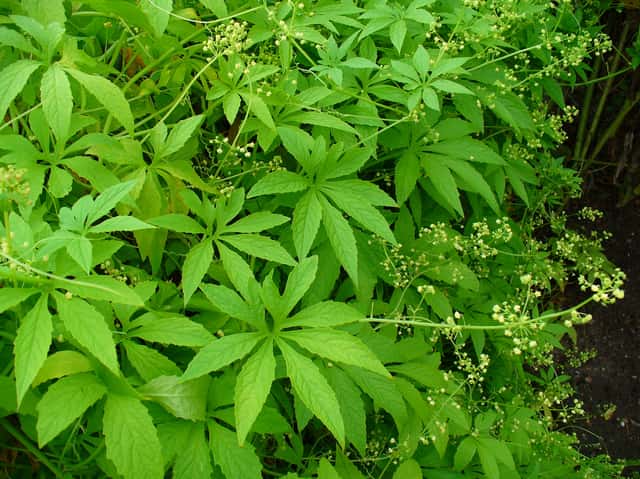
Caigua (Cyclanthera pedata) is a fast-growing annual climbing vine from the Cucurbitaceae family, native to the Andean regions of Peru. Its thin, tendril-bearing stems grow to a length of approximately 4.5 m, with palmately divided leaves measuring 10–12 cm in diameter. Small white-greenish flowers grow in the leaf axils. The light green, slightly curved fruits grow up to 20 cm and have a smooth or finely spiked skin; young fruits are eaten raw, while more mature ones are stuffed.
How to Propagate Caigua?
Sowing seeds
- 1 Soak the seeds for 12–24 hours in lukewarm water to accelerate germination.
- 2 Sow into rich compost substrate at a depth of about 1–2 cm.
- 3 Maintain a soil temperature of 20–25 °C; germination takes approximately 10–20 days.
- 4 Transfer seedlings to individual containers when they have their first true leaves.
- 5 Plant outside only after the last spring frost, at intervals of 35–90 cm.
- 6 Provide a support (trellis or wires) for climbing from the time of planting.
Materials needed:
How Big Does Caigua Grow?
TLDR: Caigua can reach up to 4.5m tall with Fast growth rate.
Max height
4.5m
Growth rate
Fast
Foliage
Deciduous
Plant Uses
Edible
Can be consumed
Medicinal
Medicinal properties
Medicinal Uses
- In traditional Andean medicine, tea made from the seeds is used to lower high blood pressure.
- Dried and crushed seeds are traditionally taken to combat intestinal parasites.
- The fruits are attributed with diuretic effects and are used for digestive issues.
- Plant extracts are credited with anti-inflammatory, hypoglycemic, and cholesterol-lowering effects, supported by studies on flavonoid content.
Culinary Uses
- Young, immature fruits are eaten raw or in salads, with a flavor reminiscent of cucumber.
- More mature fruits are hollowed out and stuffed with meat, rice, cheese, or vegetables and then baked, stewed, or fried.
- Young shoots and leaves are used as cooked leafy vegetables.
- In Andean cuisine, the fruits are also pickled or prepared as stir-fry.
Is your plant showing symptoms?
Click on the symptom to discover possible causes:
What Diseases Commonly Affect Caigua?
TLDR: Caigua is susceptible to 6 known diseases. Monitor regularly for early detection.
Powdery Mildew
Powdery mildew is a common fungal disease caused by various fungi species including Erysiphe, Podosphaera, Oïdium, and Leveillula. It affects over 10,000 plant species worldwide. The disease thrives in warm, dry climates with high humidity and appears as a distinctive white powdery coating on plant surfaces.
Anthracnose
Anthracnose is a fungal disease caused by fungi in the genus Colletotrichum that affects many plants, including vegetables, fruits, and trees. The disease thrives in cool, wet conditions, causing dark, sunken lesions on leaves, stems, flowers, and fruits.
Fusarium Wilt
Fusarium wilt is a serious fungal disease caused by the soil-borne fungus Fusarium oxysporum. The fungus invades roots and blocks the water-conducting vessels (xylem) of the plant, causing progressive wilting and eventual death. Host-specific forms of the pathogen exist that attack different plant species.
Whiteflies
Whiteflies are small, soft-bodied, winged insects closely related to aphids and mealybugs. They are moth-like in appearance, about 1/16 inch long, triangular in shape, and gray-white in color. These sap-sucking pests feed on plant tissue, causing yellowing, stunted growth, and wilting. They also excrete honeydew, which attracts ants and promotes sooty mold growth. Whiteflies can transmit serious plant viruses.
Compare with similar plants
| Attribute | Difficulty | Light | Watering | Pet Safe |
|---|---|---|---|---|
| Dark Fieldcap | Medium | Low light | 2d | ⚠️ |
| Azalea | Medium | Partial shade | 3d | ⚠️ |
| Muriel's Bamboo | Medium | Partial shade | 3d | ✓ |
| Bougainvillea | Medium | Direct sun | 7d | ⚠️ |




