Marantaceae
Freddie Calathea (Goeppertia concinna): Complete Care Guide
Goeppertia concinna
Medium-maintenance plant requiring high humidity, regular watering with filtered water, and bright indirect light. Keep away from cold drafts and direct sunlight. Mist leaves regularly to maintain optimal humidity.
Every 7 days
Low light
15° - 30°C
65% - 90%
Categories
What is Freddie Calathea?
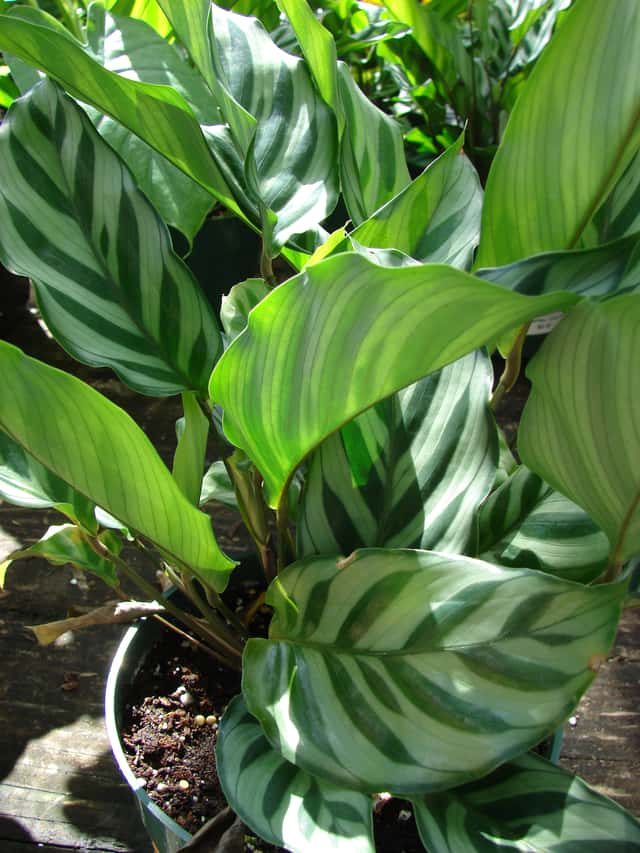
Freddie Calathea (Goeppertia concinna) is a medium-care plant from the Marantaceae family. Freddie Calathea (Goeppertia concinna) is a stunning tropical houseplant from Brazil, belonging to the Marantaceae family. It is celebrated for its striking striped foliage — pale green stripes over deep green leaves — that resemble a leopard's pattern. A popular choice for bringing lush, tropical v...
Freddie Calathea grows up to 90cm, spread of 90cm, watering every 7 days, 15°C – 30°C, 65–90% humidity. It is suitable for indoor environments and safe for pets.
Unlike many popular species, Freddie Calathea is safe to keep around pets. Without adequate drainage, root rot can develop within 14 days.
How to Care for Freddie Calathea?
TLDR: Freddie Calathea needs Low light, watering every 7 days, and temperatures between 15-30°C with 65-90% humidity.
How Often Should You Water Freddie Calathea?
Water every 7 days when the top 2 inches of soil feel dry. Always use filtered, rainwater, or distilled water — this plant is very sensitive to chlorine and fluoride in tap water.
How Much Light Does Freddie Calathea Need?
Thrives in bright indirect light, away from direct sun which scorches leaves and fades the distinctive stripe patterns. Tolerates lower light but avoid deep shade.
What Is the Best Soil for Freddie Calathea?
Use a light, well-draining potting mix: combine potting soil with perlite and orchid bark. Soil should retain slight moisture but never become waterlogged. Ideal pH 6.0–6.5.
What Pot Should You Use for Freddie Calathea?
Terracotta or plastic pots with drainage holes. Avoid oversized pots — prefers slightly snug containers. Repot every 2 years or when roots emerge from drainage holes.
Care Schedule
Fertilize
Every 30 days
Misting
Every 2 days
Rotate
Every 30 days
Repot
Every 730 days
What Is Freddie Calathea and Where Does It Come From?
Freddie Calathea (Goeppertia concinna) is a stunning tropical houseplant from Brazil, belonging to the Marantaceae family. It is celebrated for its striking striped foliage — pale green stripes over deep green leaves — that resemble a leopard's pattern. A popular choice for bringing lush, tropical vibes indoors.
How to Propagate Freddie Calathea?
Root Division
Only divide when the plant is healthy and actively growing. Keep new divisions away from direct light until established.
- 1 Gently remove the plant from its pot in spring
- 2 Separate the root clump into two or more natural sections by hand or with a clean knife
- 3 Plant each section in individual pots with moist, well-draining mix
- 4 Keep in a warm, humid spot away from direct light until new growth appears
Materials needed:
How Big Does Freddie Calathea Grow?
TLDR: Freddie Calathea can reach up to 90cm tall with Medium growth rate.
Max height
90cm
Spread
90cm
Growth rate
Medium
Foliage
Evergreen
Plant Uses
Ornamental
Great for decoration
Air Purifying
Improves air quality
Is your plant showing symptoms?
Click on the symptom to discover possible causes:
What Diseases Commonly Affect Freddie Calathea?
TLDR: Freddie Calathea is susceptible to 6 known diseases. Monitor regularly for early detection.
Spider Mites
Spider mites are tiny arachnids (less than 1/20 inch long) related to spiders and ticks that feed on plant sap. They thrive in hot, dry conditions and can cause significant damage to ornamental and vegetable plants. During severe infestations, crop losses can reach 14% or higher as these pests disrupt vital plant processes including photosynthesis, carbon dioxide absorption, and transpiration.
Mealybugs
Mealybugs are small, soft-bodied insects covered with a white, waxy, cottony material. They are common pests of houseplants and outdoor plants in mild climates. These sap-sucking insects feed on plant tissue, causing damage, stunted growth, and can lead to plant death if left untreated. They produce sticky honeydew which attracts sooty mold.
Root Rot
Root rot is a serious fungal disease that affects the root system of plants, causing them to decay and die. It is primarily caused by overwatering, poor drainage, or soil-borne fungi such as Pythium, Phytophthora, Rhizoctonia, and Fusarium. The disease thrives in waterlogged conditions where roots are deprived of oxygen, making them susceptible to fungal infection.
Fungus Gnats
Fungus gnats are small, gray-to-black mosquito-like insects (1/8 to 1/10 inches long) commonly found in indoor plants. Adult gnats are mostly a nuisance, but their larvae feed on plant roots and organic matter in soil, potentially causing serious damage to young or vulnerable plants. The larvae are translucent white with distinctive black heads and can leave slime trails on the soil surface in heavy infestations.
Meaning & Symbolism
Symbol of protection, renewal and connection with tropical nature.
Fun Facts
Goeppertia concinna leaves fold slightly upward at night — a movement called nyctinasty, as if the plant is going to sleep.
Despite being widely known as Calathea, it was reclassified to the genus Goeppertia in 2012 following genetic studies.
Native to the rainforests of Brazil, it evolved for millennia on the forest floor where direct sunlight rarely reached.
Its distinctive stripe patterns may serve as natural camouflage in dense tropical undergrowth.
Frequently asked questions
How often should I water Freddie Calathea?
Is Freddie Calathea toxic to cats and dogs?
Why does my Freddie Calathea have brown leaf tips?
What light does Freddie Calathea need?
How often should I fertilize Freddie Calathea?
Compare with similar plants
| Attribute | Difficulty | Light | Watering | Pet Safe |
|---|---|---|---|---|
| Dark Fieldcap | Medium | Low light | 2d | ⚠️ |
| Azalea | Medium | Partial shade | 3d | ⚠️ |
| Bougainvillea | Medium | Direct sun | 7d | ⚠️ |
| Wild Lettuce | Medium | Direct sun | 7d | ⚠️ |



