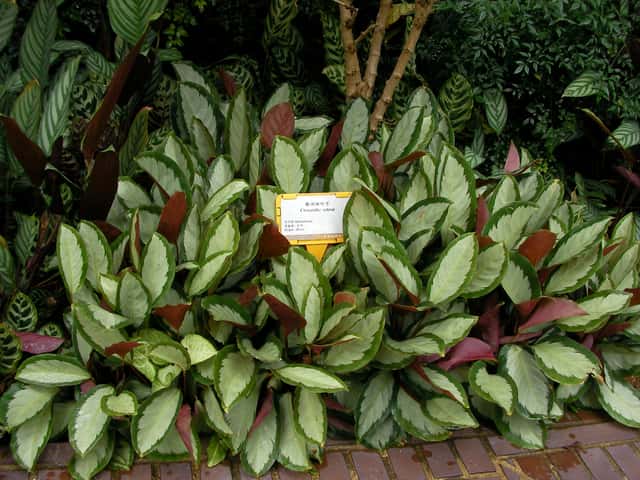
Marantaceae
Calathea Picturata – Complete Care Guide
Goeppertia picturata
Keep soil consistently moist but never waterlogged. Provide bright indirect light, high humidity (60–80%), and temperatures between 13 °C and 30 °C (55–86 °F). Fertilize monthly during the growing season. Use distilled or rainwater to avoid fluoride damage.
Every 7 days
Partial shade
13° - 30°C
60% - 80%
Categories
What is Calathea Picturata?
Calathea Picturata (Goeppertia picturata) is a medium-care plant from the Marantaceae family. Goeppertia picturata, commonly known as Calathea Picturata, is a tropical houseplant native to northern Brazil in the Marantaceae family. It is prized for its stunning foliage — dark green leaves adorned with silvery stripes along the midrib and margins, and deep purple undersides. Like all prayer p...
Calathea Picturata grows up to 50cm, spread of 60cm, watering every 7 days, 13°C – 30°C, 60–80% humidity. It is suitable for indoor environments and safe for pets.
Unlike many popular species, Calathea Picturata is safe to keep around pets. Without adequate drainage, root rot can develop within 14 days.
How to Care for Calathea Picturata?
TLDR: Calathea Picturata needs Partial shade, watering every 7 days, and temperatures between 13-30°C with 60-80% humidity.
How Often Should You Water Calathea Picturata?
Water when the top 2–3 inches of soil begin to dry out. Always use distilled, filtered, or rainwater — tap water high in fluoride or chlorine causes brown leaf tips.
How Much Light Does Calathea Picturata Need?
Place in bright indirect light, away from direct sun which bleaches and burns the leaves. An east- or west-facing window a few feet from the glass is ideal.
What Is the Best Soil for Calathea Picturata?
Use a well-draining, organic-rich potting mix: peat or coco coir, perlite, and orchid bark. Maintain soil pH between 6.0 and 6.5.
What Pot Should You Use for Calathea Picturata?
Terra cotta or ceramic pots with drainage holes work best — they allow soil to breathe and prevent waterlogging.
Care Schedule
Fertilize
Every 28 days
Misting
Every 3 days
Rotate
Every 7 days
Repot
Every 450 days
What Is Calathea Picturata and Where Does It Come From?
Goeppertia picturata, commonly known as Calathea Picturata, is a tropical houseplant native to northern Brazil in the Marantaceae family. It is prized for its stunning foliage — dark green leaves adorned with silvery stripes along the midrib and margins, and deep purple undersides. Like all prayer plants, it performs nyctinasty: leaves fold upward at night and open again during the day.
How Big Does Calathea Picturata Grow?
TLDR: Calathea Picturata can reach up to 50cm tall with Medium growth rate.
Max height
50cm
Spread
60cm
Growth rate
Medium
Foliage
Evergreen
Plant Uses
Ornamental
Great for decoration
Is your plant showing symptoms?
Click on the symptom to discover possible causes:
What Diseases Commonly Affect Calathea Picturata?
TLDR: Calathea Picturata is susceptible to 11 known diseases. Monitor regularly for early detection.
Root Rot
Root rot is a serious fungal disease that affects the root system of plants, causing them to decay and die. It is primarily caused by overwatering, poor drainage, or soil-borne fungi such as Pythium, Phytophthora, Rhizoctonia, and Fusarium. The disease thrives in waterlogged conditions where roots are deprived of oxygen, making them susceptible to fungal infection.
Spider Mites
Spider mites are tiny arachnids (less than 1/20 inch long) related to spiders and ticks that feed on plant sap. They thrive in hot, dry conditions and can cause significant damage to ornamental and vegetable plants. During severe infestations, crop losses can reach 14% or higher as these pests disrupt vital plant processes including photosynthesis, carbon dioxide absorption, and transpiration.
Leaf Spot
Leaf spot is a common fungal disease caused by various pathogens including Alternaria, Ascochyta, Colletotrichum, Septoria, and Venturia. It primarily affects leaves, causing discolored spots that can lead to premature leaf drop if left untreated.
Grey Mould
Meaning & Symbolism
Transformation and beauty; the painted leaves symbolize artistic expression and the art of living with intention.
Fun Facts
Goeppertia picturata was formerly classified as Calathea picturata before a major taxonomic reclassification moved most prayer plants into the Goeppertia genus.
The species epithet "picturata" means "painted" in Latin, perfectly describing the hand-painted appearance of its leaves.
Prayer plants fold their leaves upward at night through a process called nyctinasty, driven by changes in water pressure in specialised cells at the base of each leaf.
Frequently asked questions
Is Calathea Picturata toxic to pets?
Why are my Calathea Picturata leaves curling?
How often should I repot Calathea Picturata?
Compare with similar plants
| Attribute | Difficulty | Light | Watering | Pet Safe |
|---|---|---|---|---|
| Dark Fieldcap | Medium | Low light | 2d | ⚠️ |
| Azalea | Medium | Partial shade | 3d | ⚠️ |
| Muriel's Bamboo | Medium | Partial shade | 3d | ✓ |
| Bougainvillea | Medium | Direct sun | 7d | ⚠️ |
Choose & Compare
Sources & References
- How to Care for Calathea Picturata Argentea - GardenAndSunshine
- Calathea picturata - Goeppertia picturata care | Travaldo blog
- Goeppertia picturata | NC State Extension Gardener Plant Toolbox
- Goeppertia syn. Calathea Prayer Plant Care Guide | Between Two Thorns
- Calatea - Calathea picturata | Planterista




