Crassulaceae
Aeonium aureum - Canary Island Rose
Aeonium aureum
Give this drought-tolerant succulent bright, direct light, well-draining mineral soil, and a soak-and-dry watering routine during its winter-to-spring growing season. Water sparingly to almost not at all through summer dormancy, when the rosette closes up to protect itself from heat.
Every 10 days
Direct sun
10° - 24°C
30% - 50%
Categories
What is Canary Island Rose?
Canary Island Rose (Aeonium aureum) is a medium-care plant from the Crassulaceae family. Aeonium aureum, commonly known as the Canary Island Rose, is a striking rosette-forming succulent native to the volcanic slopes of Tenerife in the Canary Islands. Its tightly packed, spoon-shaped leaves form a perfectly symmetrical, rose-like rosette in shades of blue-green to golden-green, giving t...
Canary Island Rose grows up to 30cm, spread of 30cm, watering every 10 days, 10°C – 24°C, 30–50% humidity. It is suitable for indoor environments and safe for pets.
Unlike many popular species, Canary Island Rose is safe to keep around pets. Without adequate drainage, root rot can develop within 20 days.
How to Care for Canary Island Rose?
TLDR: Canary Island Rose needs Direct sun, watering every 10 days, and temperatures between 10-24°C with 30-50% humidity.
How Often Should You Water Canary Island Rose?
Water deeply only when the soil is completely dry, roughly every 7-10 days during the active growing season (fall through spring). During summer dormancy, cut back drastically, watering only lightly once every 3-4 weeks, or the roots may rot.
How Much Light Does Canary Island Rose Need?
Provide bright, direct sunlight, ideally a south- or west-facing spot with several hours of direct sun daily. Insufficient light causes the rosette to stretch and lose its tight, rose-like form.
What Is the Best Soil for Canary Island Rose?
Use a fast-draining mineral mix, 50-70% coarse sand, pumice, or perlite blended with a standard succulent or cactus potting soil, to prevent waterlogging around the shallow roots.
What Pot Should You Use for Canary Island Rose?
Use a shallow, unglazed terracotta pot with drainage holes, terracotta wicks away excess moisture and suits its shallow root system.
Care Schedule
Fertilize
Every 60 days
Rotate
Every 30 days
Repot
Every 730 days
What Is Canary Island Rose and Where Does It Come From?
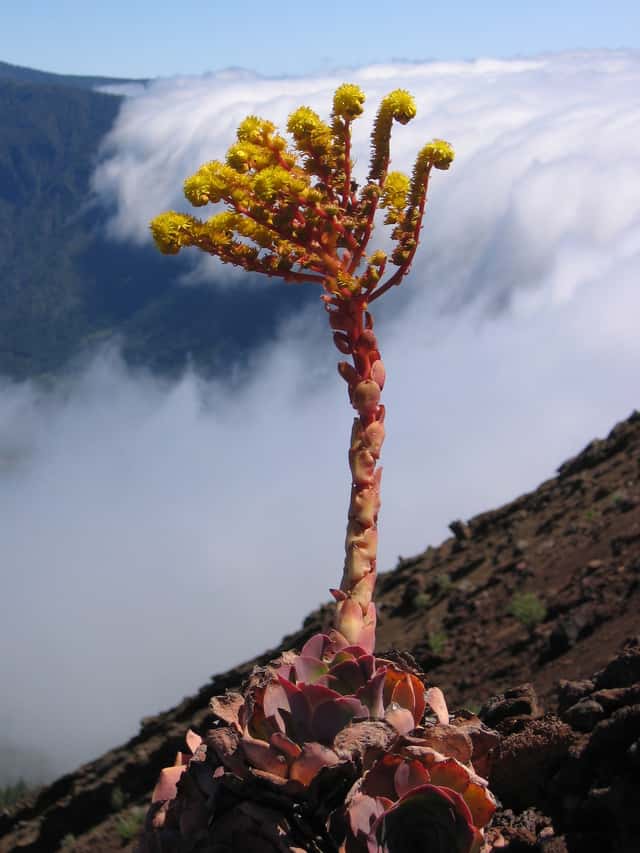
Aeonium aureum, commonly known as the Canary Island Rose, is a striking rosette-forming succulent native to the volcanic slopes of Tenerife in the Canary Islands. Its tightly packed, spoon-shaped leaves form a perfectly symmetrical, rose-like rosette in shades of blue-green to golden-green, giving the plant its species name "aureum" (golden). Unlike many succulents, this species follows a winter-growing, summer-dormant cycle: it grows actively through the cool, damp months of autumn, winter and spring, then closes its rosette tightly and rests through the hot, dry summer to conserve moisture. After several years of growth, mature rosettes may send up a tall, golden-yellow flower spike, a rare and spectacular event, though the flowering rosette dies afterward, leaving offsets behind to continue the plant.
How to Propagate Canary Island Rose?
Offset (pup) division
Propagate during the active growing season (fall to spring) for the best success rate; avoid propagating during summer dormancy.
- 1 Wait until an offset growing at the base of the mother rosette reaches at least 2-3 cm across.
- 2 Gently twist or cut the offset away from the mother plant with a clean, sharp knife.
- 3 Let the cut surface callus over in a dry, shaded spot for 1-2 days.
- 4 Place the callused offset on top of well-draining succulent soil and mist lightly until roots form.
Materials needed:
Leaf cutting
Not every leaf will root; take several leaves at once to improve your odds.
- 1 Gently twist off a healthy, plump leaf from the rosette, keeping the base intact.
- 2 Let the leaf dry and callus in a shaded spot for 1-2 days.
- 3 Lay the leaf on top of well-draining soil without burying the cut end.
- 4 Mist lightly every few days until tiny roots and a new rosette appear at the base.
Materials needed:
Seed propagation
Seeds are only produced after the rare flowering event, since the flowering rosette is monocarpic.
- 1 Sow fine seeds on the surface of a well-draining, pH-neutral substrate.
- 2 Keep the substrate lightly moist and in bright, indirect light until germination.
- 3 Thin and pot up seedlings once they develop their first true rosette leaves.
Materials needed:
How Big Does Canary Island Rose Grow?
TLDR: Canary Island Rose can reach up to 30cm tall with Slow growth rate.
Max height
30cm
Spread
30cm
Growth rate
Slow
Foliage
Evergreen
Plant Uses
Ornamental
Great for decoration
Is your plant showing symptoms?
Click on the symptom to discover possible causes:
What Diseases Commonly Affect Canary Island Rose?
TLDR: Canary Island Rose is susceptible to 5 known diseases. Monitor regularly for early detection.
Root Rot
Root rot is a serious fungal disease that affects the root system of plants, causing them to decay and die. It is primarily caused by overwatering, poor drainage, or soil-borne fungi such as Pythium, Phytophthora, Rhizoctonia, and Fusarium. The disease thrives in waterlogged conditions where roots are deprived of oxygen, making them susceptible to fungal infection.
Overwatering
Overwatering occurs when plants receive too much water, depriving roots of oxygen and causing root rot. This environmental stress is one of the most common causes of houseplant death, as waterlogged soil prevents roots from breathing and functioning properly.
Mealybugs
Mealybugs are small, soft-bodied insects covered with a white, waxy, cottony material. They are common pests of houseplants and outdoor plants in mild climates. These sap-sucking insects feed on plant tissue, causing damage, stunted growth, and can lead to plant death if left untreated. They produce sticky honeydew which attracts sooty mold.
Aphids
Aphids are small, soft-bodied, pear-shaped insects (1/16 to 1/8 inch long) that feed by sucking nutrient-rich sap from plants. They reproduce rapidly and can quickly weaken plants, causing distorted growth and transmitting plant viruses. Aphids come in various colors including green, black, red, yellow, brown, and gray. They secrete honeydew, a sticky substance that attracts ants and encourages sooty mold growth.
Meaning & Symbolism
The perfectly symmetrical, rose-shaped rosette of the Canary Island Rose has made it a symbol of natural geometry, resilience, and quiet beauty, thriving in harsh volcanic terrain by conserving resources rather than fighting the elements.
Fun Facts
The species name "aureum" means golden in Latin, referring to its yellow flowers and golden-green leaf tones.
Its rosette closes tightly during summer dormancy, resembling an unopened rose bud, hence the nickname "Green Rose Buds".
Each flowering rosette is monocarpic: it blooms only once in its life and then dies, but leaves behind offsets to continue the colony.
It was formerly classified in its own genus, Greenovia, before botanists merged it into Aeonium.
Frequently asked questions
How often should I water my Canary Island Rose?
Is Aeonium aureum toxic to pets?
Why is my Aeonium aureum rosette closing up?
Why does my plant not flower?
Can I grow Aeonium aureum indoors?
Compare with similar plants
| Attribute | Difficulty | Light | Watering | Pet Safe |
|---|---|---|---|---|
| Dark Fieldcap | Medium | Low light | 2d | ⚠️ |
| Azalea | Medium | Partial shade | 3d | ⚠️ |
| Muriel's Bamboo | Medium | Partial shade | 3d | ✓ |
| Bougainvillea | Medium | Direct sun | 7d | ⚠️ |




