Asteraceae
Creeping Thistle: Edible Plant
Cirsium arvense
Creeping thistle is an extremely hardy and self-sufficient plant that thrives in full sun. It requires no irrigation, fertilization, or special soil cultivation once established. Regular pruning (every 30 days during the growing season) is the most important care task to keep growth under control. The plant is hardy down to -30 °C and tolerates most soil types from sandy to clayey.
Every 14 days
Direct sun
-30° - 35°C
30% - 70%
Categories
What is Creeping Thistle?
Creeping Thistle (Cirsium arvense) is a easy-care plant from the Asteraceae family. Creeping Thistle (Cirsium arvense) is a perennial herbaceous plant known as one of the world's most persistent weed species. It forms dense colonies thanks to a deep and widely branched underground root system that can reach several meters into the soil. The stems are upright, 30–150 cm tall, and be...
Creeping Thistle grows up to 1.5m, spread of 100cm, watering every 14 days, -30°C – 35°C, 30–70% humidity. It is not suitable for indoor environments and safe for pets.
Unlike many tropical plants, Creeping Thistle tolerates watering mistakes. Best for beginners. Unlike many popular species, Creeping Thistle is safe to keep around pets.
How to Care for Creeping Thistle?
TLDR: Creeping Thistle needs Direct sun, watering every 14 days, and temperatures between -30-35°C with 30-70% humidity.
How Often Should You Water Creeping Thistle?
Creeping thistle is drought-tolerant and can manage without watering under normal conditions. In dry summer heat, watering every 14 days can promote growth, but avoid standing water around the roots.
How Much Light Does Creeping Thistle Need?
Requires full sun and does not thrive in shade. Choose an open, sunny location with at least 6 hours of direct sunlight per day for best flowering and growth.
What Is the Best Soil for Creeping Thistle?
Tolerates most soil types — sandy, loamy, or clay soil — with a pH between 5.5 and 7.5. Prefers moist, well-aerated soil but can also tolerate drier conditions. No additional fertilization is needed.
What Is Creeping Thistle and Where Does It Come From?
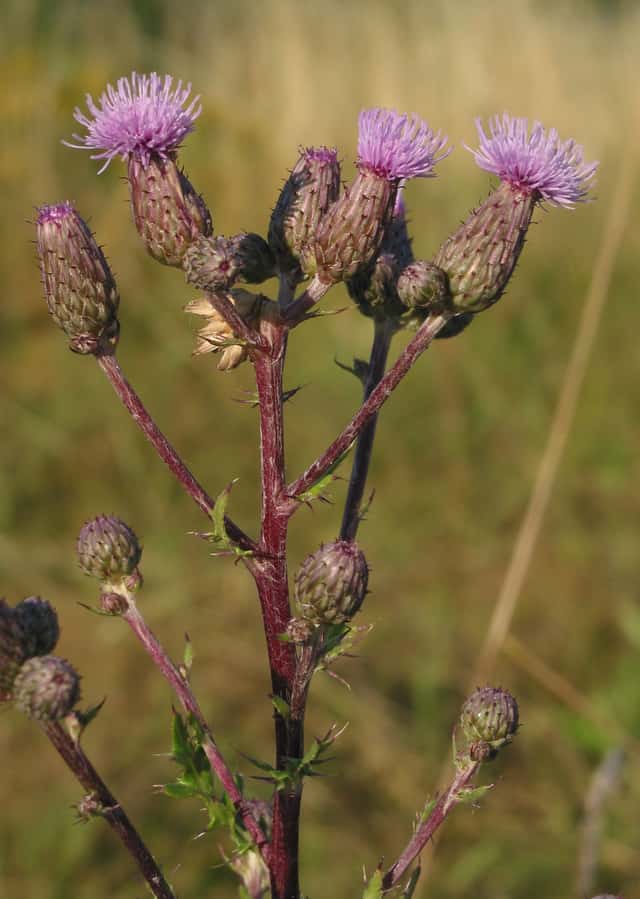
Creeping Thistle (Cirsium arvense) is a perennial herbaceous plant known as one of the world's most persistent weed species. It forms dense colonies thanks to a deep and widely branched underground root system that can reach several meters into the soil. The stems are upright, 30–150 cm tall, and bear deeply lobed, heavily spiny leaves. During the summer months, abundant, fragrant flower heads in purple to pink shades are produced, providing an important nectar source for bees, butterflies, and other pollinators — indeed, one of the most nectar-producing wild herbs in the UK. Despite its status as a troublesome agricultural weed, creeping thistle has a long tradition in folk medicine and is edible.
How to Propagate Creeping Thistle?
How Big Does Creeping Thistle Grow?
TLDR: Creeping Thistle can reach up to 1.5m tall with Fast growth rate.
Max height
1.5m
Spread
1.0m
Growth rate
Fast
Foliage
Deciduous
Plant Uses
Ornamental
Great for decoration
Medicinal
Medicinal properties
Edible
Can be consumed
Medicinal Uses
- The root is traditionally used as a tonic, diuretic, and astringent.
- The leaves have antiphlogistic (anti-inflammatory) properties and have been used for fever and bleeding.
- The entire plant has been used in folk medicine for hemorrhoids, toothache, and intestinal worms in children.
- Modern studies show antimicrobial and antioxidant potential.
Culinary Uses
- Young stems can be peeled and cooked like asparagus or rhubarb — the taste is mild and slightly sweet, similar to celery.
- The leaves are edible but require careful removal of the spines; can be cooked like spinach.
- Roots from first-year plants can be eaten raw or cooked, but are quite bland.
- The seeds contain about 22% oil that can be pressed out.
- Creeping thistle is one of 22 botanical ingredients in the Scottish gin "The Botanist" from Bruichladdich.
Is your plant showing symptoms?
Click on the symptom to discover possible causes:
What Diseases Commonly Affect Creeping Thistle?
TLDR: Creeping Thistle is susceptible to 5 known diseases. Monitor regularly for early detection.
Powdery Mildew
Powdery mildew is a common fungal disease caused by various fungi species including Erysiphe, Podosphaera, Oïdium, and Leveillula. It affects over 10,000 plant species worldwide. The disease thrives in warm, dry climates with high humidity and appears as a distinctive white powdery coating on plant surfaces.
Rust
Rust is a common fungal disease caused by fungi in the order Pucciniales that affects a wide variety of plants. The disease gets its name from the characteristic orange, yellow, or reddish-brown pustules that appear on leaves, resembling metal rust. This obligate fungal parasite requires living plants to survive and can cause significant economic losses in agricultural crops.
Aphids
Aphids are small, soft-bodied, pear-shaped insects (1/16 to 1/8 inch long) that feed by sucking nutrient-rich sap from plants. They reproduce rapidly and can quickly weaken plants, causing distorted growth and transmitting plant viruses. Aphids come in various colors including green, black, red, yellow, brown, and gray. They secrete honeydew, a sticky substance that attracts ants and encourages sooty mold growth.
Downy Mildew
Downy mildew is a fungal-like disease caused by oomycetes (water molds) that thrives in cool, wet conditions. It affects a wide range of plants, causing yellowing leaves with fuzzy white-gray growth underneath, leading to defoliation and reduced yields if left untreated.
Meaning & Symbolism
The thistle is an ancient symbol of endurance, courage, and resilience — qualities that reflect the plant's tenacity. In Celtic and Norse folklore tradition, the thistle was believed to protect against evil spirits. Creeping thistle also symbolizes nature's biodiversity and the importance of wild pollinator-friendly plants in the cultural landscape.
Compare with similar plants
| Attribute | Difficulty | Light | Watering | Pet Safe |
|---|---|---|---|---|
| Field Maple | Easy | Bright indirect | 14d | ✓ |
| Silver Birch | Easy | Direct sun | 14d | ✓ |
| Cushion Bush | Easy | Direct sun | 14d | ✓ |
| Wild Lettuce | Medium | Direct sun | 7d | ⚠️ |





