Rosaceae
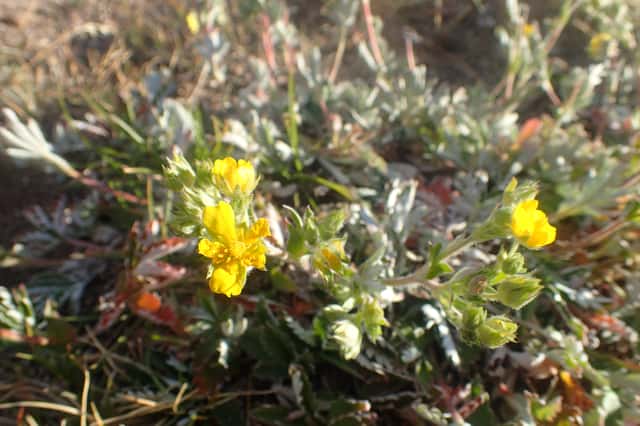
Beautiful Cinquefoil (Potentilla pulcherrima)
Potentilla pulcherrima
Easy to grow once established. Provide full sun, well-drained soil, and occasional watering during dry spells. Minimal fertilization and pruning needed.
Every 12 days
Bright indirect
-40° - 35°C
30% - 60%
Categories
What is Beautiful Cinquefoil?
Beautiful Cinquefoil (Potentilla pulcherrima) is a easy-care plant from the Rosaceae family. Potentilla pulcherrima, commonly known as Beautiful Cinquefoil, is a native North American perennial wildflower in the rose family (Rosaceae). It produces cheerful yellow five-petalled flowers from spring through fall and features distinctive silvery-white leaf undersides. Highly cold-hardy and drou...
Beautiful Cinquefoil grows up to 76cm, spread of 60cm, watering every 12 days, -40°C – 35°C, 30–60% humidity. It is not suitable for indoor environments and safe for pets.
Unlike many tropical plants, Beautiful Cinquefoil tolerates watering mistakes. Best for beginners. Unlike many popular species, Beautiful Cinquefoil is safe to keep around pets.
How to Care for Beautiful Cinquefoil?
TLDR: Beautiful Cinquefoil needs Bright indirect, watering every 12 days, and temperatures between -40-35°C with 30-60% humidity.
How Often Should You Water Beautiful Cinquefoil?
Water every 10–14 days once established; during the first season water weekly to help roots settle. Avoid waterlogging — this plant is drought-tolerant and dislikes soggy roots.
How Much Light Does Beautiful Cinquefoil Need?
Prefers full sun (6–8 hours daily). Tolerates partial shade, especially in hot climates, which helps prolong the flowering period.
What Is the Best Soil for Beautiful Cinquefoil?
Thrives in well-drained, moderately fertile soil. Tolerates poor, rocky, clay, or alkaline soils. Soil pH between 5.0 and 7.0.
What Pot Should You Use for Beautiful Cinquefoil?
Terra cotta or stone pots with good drainage holes work well. Avoid pots that retain excessive moisture.
Care Schedule
Fertilize
Every 90 days
What Is Beautiful Cinquefoil and Where Does It Come From?
Potentilla pulcherrima, commonly known as Beautiful Cinquefoil, is a native North American perennial wildflower in the rose family (Rosaceae). It produces cheerful yellow five-petalled flowers from spring through fall and features distinctive silvery-white leaf undersides. Highly cold-hardy and drought-tolerant once established, it thrives in rocky meadows, alpine slopes, and open woodlands across Canada and the western United States.
How to Propagate Beautiful Cinquefoil?
Seed Propagation
Cold stratification significantly improves germination rates. Seeds can also be direct-sown outdoors in fall.
- 1 Collect seeds in late summer after flowering
- 2 Stratify seeds in moist sand in the refrigerator for 4-6 weeks
- 3 Sow seeds in well-drained potting mix in early spring
- 4 Keep moist and in bright indirect light until germination
- 5 Transplant seedlings outdoors after last frost
Materials needed:
How Big Does Beautiful Cinquefoil Grow?
TLDR: Beautiful Cinquefoil can reach up to 76cm tall with Medium growth rate.
Max height
76cm
Spread
60cm
Growth rate
Medium
Foliage
Deciduous
Plant Uses
Ornamental
Great for decoration
Ground Cover
Soil coverage
Medicinal Uses
- Astringent herb historically used in traditional medicine for digestive ailments and wound healing
Is your plant showing symptoms?
Click on the symptom to discover possible causes:
What Diseases Commonly Affect Beautiful Cinquefoil?
TLDR: Beautiful Cinquefoil is susceptible to 7 known diseases. Monitor regularly for early detection.
Powdery Mildew
Powdery mildew is a common fungal disease caused by various fungi species including Erysiphe, Podosphaera, Oïdium, and Leveillula. It affects over 10,000 plant species worldwide. The disease thrives in warm, dry climates with high humidity and appears as a distinctive white powdery coating on plant surfaces.
Rust
Rust is a common fungal disease caused by fungi in the order Pucciniales that affects a wide variety of plants. The disease gets its name from the characteristic orange, yellow, or reddish-brown pustules that appear on leaves, resembling metal rust. This obligate fungal parasite requires living plants to survive and can cause significant economic losses in agricultural crops.
Aphids
Aphids are small, soft-bodied, pear-shaped insects (1/16 to 1/8 inch long) that feed by sucking nutrient-rich sap from plants. They reproduce rapidly and can quickly weaken plants, causing distorted growth and transmitting plant viruses. Aphids come in various colors including green, black, red, yellow, brown, and gray. They secrete honeydew, a sticky substance that attracts ants and encourages sooty mold growth.
Spider Mites
Spider mites are tiny arachnids (less than 1/20 inch long) related to spiders and ticks that feed on plant sap. They thrive in hot, dry conditions and can cause significant damage to ornamental and vegetable plants. During severe infestations, crop losses can reach 14% or higher as these pests disrupt vital plant processes including photosynthesis, carbon dioxide absorption, and transpiration.
Meaning & Symbolism
Symbolises resilience and beauty in adversity, thriving in harsh mountain environments where few other plants can survive.
Fun Facts
Its silvery leaf undersides are so reflective they can shine like mirrors in sunlight, earning it the name 'whiteleaf cinquefoil'.
This wildflower blooms from spring all the way through fall — one of the longest flowering seasons of any native perennial.
It can survive temperatures as low as -40°C, making it one of the most cold-hardy flowering perennials in North America.
Native Americans historically used cinquefoil species as astringent medicine for digestive complaints.
Frequently asked questions
How often should I water Beautiful Cinquefoil?
Is Beautiful Cinquefoil toxic to pets?
When does Beautiful Cinquefoil bloom?
What hardiness zones does it grow in?
Can I grow it in poor soil?
Compare with similar plants
| Attribute | Difficulty | Light | Watering | Pet Safe |
|---|---|---|---|---|
| Small Scabious | Easy | Direct sun | 7d | ✓ |
| Field Maple | Easy | Bright indirect | 14d | ✓ |
| Silver Birch | Easy | Direct sun | 14d | ✓ |
| Red valerian | Easy | Direct sun | 10d | ✓ |


