Rutaceae
Lemon: Aromatic Plant
Citrus limon
The lemon tree prefers full sun (6-8 hours per day), well-drained soil with a pH between 6 and 7.5, and moderate watering every 3-5 days during hot weather. Fertilize every 30 days during spring and summer. It is sensitive to cold and requires protection when temperatures drop below 4°C (40°F).
Every 4 days
Direct sun
4° - 38°C
50% - 70%
Categories
What is Lemon?
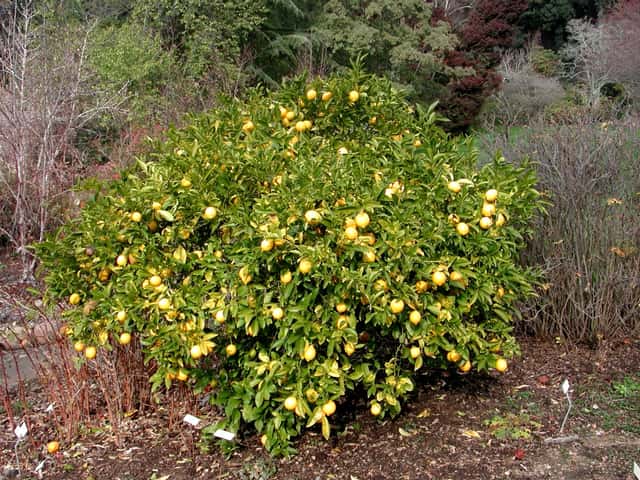
Lemon (Citrus limon) is a medium-care plant from the Rutaceae family. The lemon (Citrus limon) is a small evergreen tree in the Rutaceae family, native to the subtropical regions of South Asia. Recognized for its aromatic yellow oval fruits, pinkish-white flowers, and bright green foliage, it is one of the most widely cultivated citrus fruits in the world. It produces...
Lemon grows up to 6.0m, spread of 400cm, watering every 4 days, 4°C – 38°C, 50–70% humidity. It is suitable for indoor environments and safe for pets.
Unlike many popular species, Lemon is safe to keep around pets. Without adequate drainage, root rot can develop within 8 days.
How to Care for Lemon?
TLDR: Lemon needs Direct sun, watering every 4 days, and temperatures between 4-38°C with 50-70% humidity.
How Often Should You Water Lemon?
Water thoroughly every 3-5 days in summer and reduce to once a week in winter. Avoid waterlogging. Prefer chlorine-free water or let tap water sit for 24 hours before watering.
How Much Light Does Lemon Need?
Requires at least 6 to 8 hours of direct sunlight per day. Indoors, place near a south-facing window or use full-spectrum artificial lighting.
What Is the Best Soil for Lemon?
Use a well-drained substrate specific for citrus or prepare a mix of peat moss, potting soil, humus, and sand (2:1:1:1). Ensure the pot has adequate drainage holes. Ideal pH between 6.0 and 7.5.
What Pot Should You Use for Lemon?
Clay or ceramic pot with drainage holes at least 40-50 cm in diameter. The porous material helps regulate moisture and prevents root rot.
Care Schedule
Fertilize
Every 30 days
Rotate
Every 14 days
Repot
Every 730 days
What Is Lemon and Where Does It Come From?
The lemon (Citrus limon) is a small evergreen tree in the Rutaceae family, native to the subtropical regions of South Asia. Recognized for its aromatic yellow oval fruits, pinkish-white flowers, and bright green foliage, it is one of the most widely cultivated citrus fruits in the world. It produces fruit with high vitamin C and citric acid content, being extensively used in cooking, folk medicine, and perfumery.
How to Propagate Lemon?
Stem cutting
Use sterilized tools to prevent disease. Check for rooting after 6 weeks by gently pulling on the branch.
- 1 Cut a healthy semi-woody branch 15-20 cm long
- 2 Remove lower leaves, leaving 2-3 at the top
- 3 Apply rooting hormone to the base of the cut
- 4 Plant in moist, well-drained substrate
- 5 Cover with a plastic bag to maintain humidity
- 6 Keep in a warm spot with indirect light
Materials needed:
Grafting
Grafting ensures plants with greater vigor, earlier fruiting, and resistance to soil diseases. Preferably perform in spring.
- 1 Select a vigorous and healthy rootstock
- 2 Prepare the scion (bud or graft) from the desired variety
- 3 Make a T-cut in the rootstock
- 4 Insert the bud and wrap with grafting tape
- 5 Monitor for successful take in 2-3 weeks
Materials needed:
How Big Does Lemon Grow?
TLDR: Lemon can reach up to 6.0m tall with Medium growth rate.
Max height
6.0m
Spread
4.0m
Growth rate
Medium
Foliage
Evergreen
Plant Uses
Edible
Can be consumed
Ornamental
Great for decoration
Medicinal
Medicinal properties
Aromatic
Pleasant fragrance
Medicinal Uses
- Rich in vitamin C, helps strengthen the immune system
- Antibacterial and antifungal properties of lemon essential oil
- Traditional use to relieve nausea and improve digestion
- Lemon juice is used as a natural expectorant
Culinary Uses
- Lemon juice for lemonades, drinks, and seasonings
- Lemon zest in baking (cakes, pies, creams)
- Sauces and marinades for meat and fish
- Preserves, jams, and limoncello
- Seasoning for salads, seafood, and risotto
- Flavoring in teas and infusions
Is your plant showing symptoms?
Click on the symptom to discover possible causes:
What Diseases Commonly Affect Lemon?
TLDR: Lemon is susceptible to 16 known diseases. Monitor regularly for early detection.
Canker
Canker is a disease caused by various fungi and bacteria that create necrotic, sunken areas on bark of branches, stems, and trunks. Pathogens enter through wounds and natural openings, especially when plants are stressed. Canker can gradually weaken or kill branches by disrupting water and nutrient flow.
Bacterial Canker
Serious bacterial disease affecting stone fruits and tomatoes caused by Pseudomonas syringae or Clavibacter michiganensis. Creates sunken lesions that ooze sap.
Aphids
Aphids are small, soft-bodied, pear-shaped insects (1/16 to 1/8 inch long) that feed by sucking nutrient-rich sap from plants. They reproduce rapidly and can quickly weaken plants, causing distorted growth and transmitting plant viruses. Aphids come in various colors including green, black, red, yellow, brown, and gray. They secrete honeydew, a sticky substance that attracts ants and encourages sooty mold growth.
Scale Insects
Scale insects are small sap-sucking pests that appear as brown, shell-like bumps on plant stems and leaves. There are over 25 species, divided into armored (hard) and unarmored (soft) scales. They feed by piercing plant tissue and extracting sap, which weakens the plant and can lead to yellowing, stunted growth, and even death if left untreated. They also excrete honeydew, which attracts ants and promotes sooty mold growth.
Meaning & Symbolism
The lemon tree symbolizes purity, optimism, energy, and friendship. In many cultures, it represents renewal and abundance. In Mediterranean tradition, the lemon is associated with happiness and prosperity.
Compare with similar plants
| Attribute | Difficulty | Light | Watering | Pet Safe |
|---|---|---|---|---|
| Azalea | Medium | Partial shade | 3d | ⚠️ |
| Wild Lettuce | Medium | Direct sun | 7d | ⚠️ |
| Cape Primrose | Medium | Partial shade | 7d | ✓ |
| Honey Locust | Medium | Direct sun | 14d | ✓ |