Plantaginaceae
Climbing Snapdragon: Fast Growing
Lophospermum erubescens
Thrives in full sun to light shade, with evenly moist but well-drained, sandy-loam soil. It is not frost-hardy and should be overwintered indoors or grown as an annual. Fertilize monthly during the growing season and prune after flowering to keep the plant compact.
Every 4 days
Bright indirect
10° - 29°C
50% - 70%
Categories
What is Climbing Snapdragon?
Climbing Snapdragon (Lophospermum erubescens) is a medium-care plant from the Plantaginaceae family. Lophospermum erubescens, also known as climbing snapdragon or Mexican twist, is a tender perennial climber native to the mountainous regions of Mexico, often grown as an annual in colder climates. Related to snapdragons (Antirrhinum), the plant features heart- to triangular-shaped, hairy leaves and...
Climbing Snapdragon grows up to 2.5m, spread of 100cm, watering every 4 days, 10°C – 29°C, 50–70% humidity. It is suitable for indoor environments and safe for pets.
Unlike many popular species, Climbing Snapdragon is safe to keep around pets. Without adequate drainage, root rot can develop within 8 days.
How to Care for Climbing Snapdragon?
TLDR: Climbing Snapdragon needs Bright indirect, watering every 4 days, and temperatures between 10-29°C with 50-70% humidity.
How Often Should You Water Climbing Snapdragon?
Keep the soil evenly moist, but allow the top layer of soil to dry slightly between waterings. Water at the base to avoid fungal diseases on the leaves, and ensure the soil does not become waterlogged, as this increases the risk of root rot.
How Much Light Does Climbing Snapdragon Need?
Prefers full sun but also does well in light shade, especially in warmer climates. Indoors, the plant should be placed near a bright window to receive enough light for vigorous growth and abundant flowering.
What Is the Best Soil for Climbing Snapdragon?
Choose a sandy, nutrient-rich, and well-draining soil. The plant tolerates a wide pH range from slightly acidic to alkaline but thrives best in slightly acidic to neutral soil.
What Pot Should You Use for Climbing Snapdragon?
Well-suited for hanging baskets or pots with good drainage holes, preferably with a trellis, as the plant climbs using its twining leaf stalks.
Care Schedule
Fertilize
Every 30 days
Repot
Every 365 days
What Is Climbing Snapdragon and Where Does It Come From?
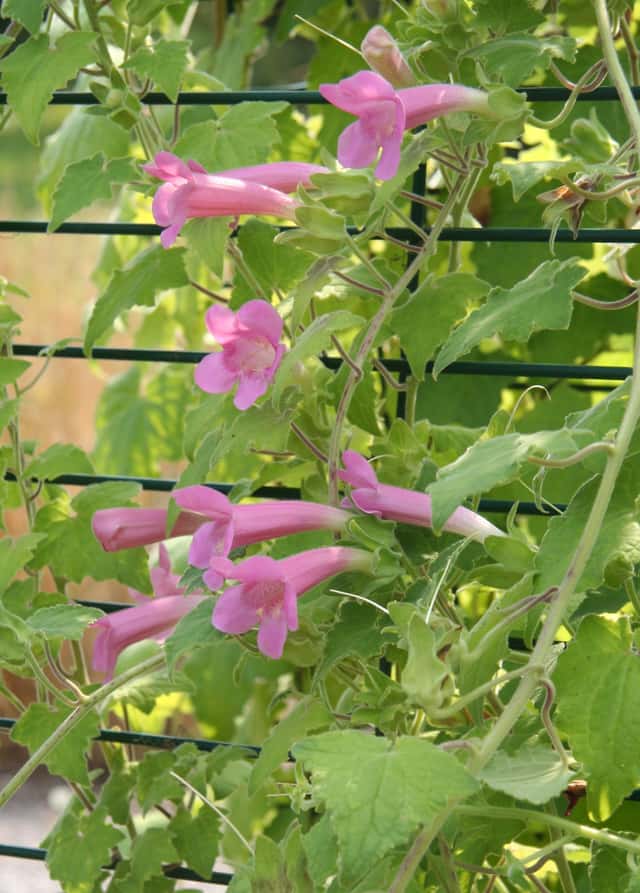
Lophospermum erubescens, also known as climbing snapdragon or Mexican twist, is a tender perennial climber native to the mountainous regions of Mexico, often grown as an annual in colder climates. Related to snapdragons (Antirrhinum), the plant features heart- to triangular-shaped, hairy leaves and large, pink to white trumpet-shaped flowers that bloom from spring to fall and attract hummingbirds. Its twining leaf stalks make the plant well-suited for trellises, hanging baskets, and training along fences and lattices.
How to Propagate Climbing Snapdragon?
How Big Does Climbing Snapdragon Grow?
TLDR: Climbing Snapdragon can reach up to 2.5m tall with Fast growth rate.
Max height
2.5m
Spread
1.0m
Growth rate
Fast
Foliage
Evergreen
Plant Uses
Ornamental
Great for decoration
Is your plant showing symptoms?
Click on the symptom to discover possible causes:
What Diseases Commonly Affect Climbing Snapdragon?
TLDR: Climbing Snapdragon is susceptible to 6 known diseases. Monitor regularly for early detection.
Powdery Mildew
Powdery mildew is a common fungal disease caused by various fungi species including Erysiphe, Podosphaera, Oïdium, and Leveillula. It affects over 10,000 plant species worldwide. The disease thrives in warm, dry climates with high humidity and appears as a distinctive white powdery coating on plant surfaces.
Root Rot
Root rot is a serious fungal disease that affects the root system of plants, causing them to decay and die. It is primarily caused by overwatering, poor drainage, or soil-borne fungi such as Pythium, Phytophthora, Rhizoctonia, and Fusarium. The disease thrives in waterlogged conditions where roots are deprived of oxygen, making them susceptible to fungal infection.
Whiteflies
Whiteflies are small, soft-bodied, winged insects closely related to aphids and mealybugs. They are moth-like in appearance, about 1/16 inch long, triangular in shape, and gray-white in color. These sap-sucking pests feed on plant tissue, causing yellowing, stunted growth, and wilting. They also excrete honeydew, which attracts ants and promotes sooty mold growth. Whiteflies can transmit serious plant viruses.
Aphids
Aphids are small, soft-bodied, pear-shaped insects (1/16 to 1/8 inch long) that feed by sucking nutrient-rich sap from plants. They reproduce rapidly and can quickly weaken plants, causing distorted growth and transmitting plant viruses. Aphids come in various colors including green, black, red, yellow, brown, and gray. They secrete honeydew, a sticky substance that attracts ants and encourages sooty mold growth.
Meaning & Symbolism
As a relative of the snapdragon, the plant symbolizes strength and endurance, while its trumpet-shaped flowers and climbing habit are associated with warmth and the joy of life.
Compare with similar plants
| Attribute | Difficulty | Light | Watering | Pet Safe |
|---|---|---|---|---|
| Dark Fieldcap | Medium | Low light | 2d | ⚠️ |
| Azalea | Medium | Partial shade | 3d | ⚠️ |
| Muriel's Bamboo | Medium | Partial shade | 3d | ✓ |
| Bougainvillea | Medium | Direct sun | 7d | ⚠️ |




