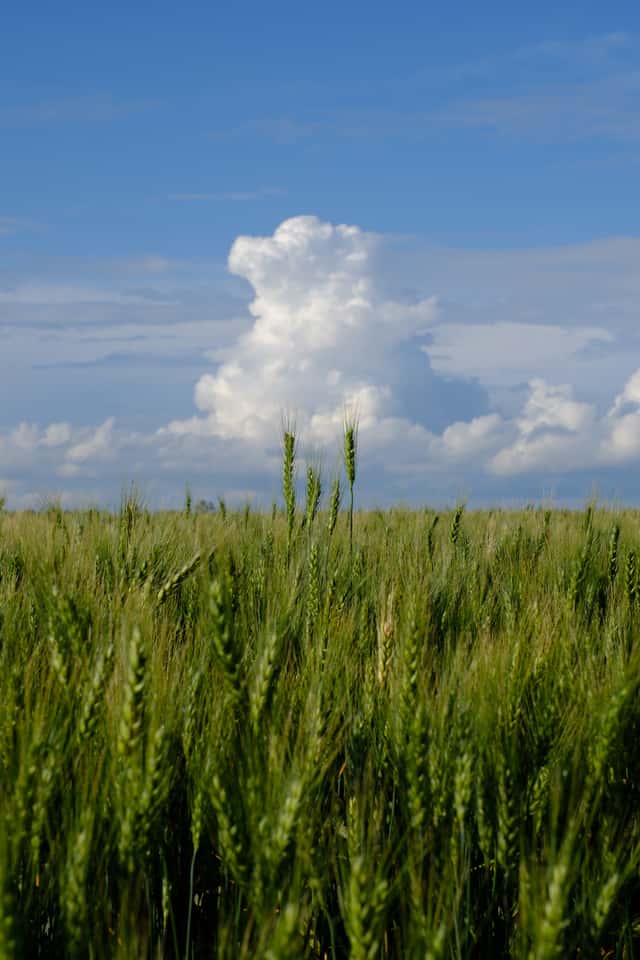
Poaceae
Common wheat: Edible Plant
Triticum aestivum
Common wheat requires a full-sun location and regular, consistent watering. The soil should be nutrient-rich, loose, and well-drained to avoid waterlogging. Balanced phosphorus fertilization during critical growth phases—tillering, jointing, and heading—is crucial for high yields. Sowing occurs either in autumn (winter wheat) or in spring (spring wheat).
Every 7 days
Direct sun
3° - 32°C
40% - 70%
Categories
What is Common wheat?
Common wheat (Triticum aestivum) is a medium-care plant from the Poaceae family. Common wheat (Triticum aestivum) is the most widely cultivated cereal grain in the world and is among humanity's oldest cultivated plants. Domesticated over 9,000 years ago in the Near East, it is now grown on every continent. This annual grass reaches a height of up to 120 cm and forms characterist...
Common wheat grows up to 1.2m, spread of 15cm, watering every 7 days, 3°C – 32°C, 40–70% humidity. It is not suitable for indoor environments and safe for pets.
Unlike many popular species, Common wheat is safe to keep around pets.
How to Care for Common wheat?
TLDR: Common wheat needs Direct sun, watering every 7 days, and temperatures between 3-32°C with 40-70% humidity.
How Often Should You Water Common wheat?
Water regularly on a weekly basis so that the soil remains evenly moist. Avoid waterlogging at all costs, as it promotes root diseases. During dry periods, especially during heading, additional irrigation is important.
How Much Light Does Common wheat Need?
Full sun exposure is absolutely essential. An open, sunny location promotes optimal growth, strong stalks, and good grain development.
What Is the Best Soil for Common wheat?
Prefers loamy, nutrient-rich, and well-drained soil with a pH value between 6.0 and 7.5. Heavy soils prone to waterlogging are unsuitable. A good soil structure significantly improves root growth.
What Pot Should You Use for Common wheat?
Suitable for cultivation in gardens or fields. In containers, it is only possible in very large, deep vessels with good drainage; it is not well-suited for indoor cultivation.
Care Schedule
Fertilize
Every 30 days
What Is Common wheat and Where Does It Come From?
Common wheat (Triticum aestivum) is the most widely cultivated cereal grain in the world and is among humanity's oldest cultivated plants. Domesticated over 9,000 years ago in the Near East, it is now grown on every continent. This annual grass reaches a height of up to 120 cm and forms characteristic spikes that ripen in summer. Its grains are the foundation for bread, flour, pasta, and a variety of other foods. Common wheat has relatively high demands for soil, water, and climate, preferring sunny locations with nutrient-rich, well-drained soils.
How to Propagate Common wheat?
How Big Does Common wheat Grow?
TLDR: Common wheat can reach up to 1.2m tall with Fast growth rate.
Max height
1.2m
Spread
15cm
Growth rate
Fast
Foliage
Deciduous
Plant Uses
Edible
Can be consumed
Medicinal
Medicinal properties
Medicinal Uses
- Wheat germ oil rich in Vitamin E is used for skin care
- Wheatgrass (young plants) as a dietary supplement with high chlorophyll content
- Traditionally used as a strengthening food for exhaustion
Culinary Uses
- Basic ingredient for bread, rolls, and all kinds of baked goods
- Production of wheat flour (types 405 to 1050) for kitchen and bakery use
- Pasta, couscous, bulgur, and other grain products
- Beer and whiskey production from wheat malt
- Wheat semolina for desserts, porridge, and purees
Is your plant showing symptoms?
Click on the symptom to discover possible causes:
What Diseases Commonly Affect Common wheat?
TLDR: Common wheat is susceptible to 6 known diseases. Monitor regularly for early detection.
Powdery Mildew
Powdery mildew is a common fungal disease caused by various fungi species including Erysiphe, Podosphaera, Oïdium, and Leveillula. It affects over 10,000 plant species worldwide. The disease thrives in warm, dry climates with high humidity and appears as a distinctive white powdery coating on plant surfaces.
Rust
Rust is a common fungal disease caused by fungi in the order Pucciniales that affects a wide variety of plants. The disease gets its name from the characteristic orange, yellow, or reddish-brown pustules that appear on leaves, resembling metal rust. This obligate fungal parasite requires living plants to survive and can cause significant economic losses in agricultural crops.
Fusarium Wilt
Fusarium wilt is a serious fungal disease caused by the soil-borne fungus Fusarium oxysporum. The fungus invades roots and blocks the water-conducting vessels (xylem) of the plant, causing progressive wilting and eventual death. Host-specific forms of the pathogen exist that attack different plant species.
Root Rot
Root rot is a serious fungal disease that affects the root system of plants, causing them to decay and die. It is primarily caused by overwatering, poor drainage, or soil-borne fungi such as Pythium, Phytophthora, Rhizoctonia, and Fusarium. The disease thrives in waterlogged conditions where roots are deprived of oxygen, making them susceptible to fungal infection.
Meaning & Symbolism
For thousands of years, wheat has been considered a symbol of fertility, prosperity, and life. It represents the connection between humanity and nature as well as the cycle of the seasons.
Compare with similar plants
| Attribute | Difficulty | Light | Watering | Pet Safe |
|---|---|---|---|---|
| Dark Fieldcap | Medium | Low light | 2d | ⚠️ |
| Azalea | Medium | Partial shade | 3d | ⚠️ |
| Muriel's Bamboo | Medium | Partial shade | 3d | ✓ |
| Bougainvillea | Medium | Direct sun | 7d | ⚠️ |




