Salicaceae
Dappled Willow 'Hakuro Nishiki': Fast Growing
Salix integra 'Hakuro Nishiki'
Plant in a sunny or partially shaded location in fertile, well-drained, and consistently moist soil. Water regularly, especially during summer and for container-grown plants, as this willow does not tolerate drying out. Fertilize from April to July. Prune 1-2 times a year (ideally in early spring) to maintain a compact shape and stimulate the growth of intensely colored new shoots. It is frost-hardy and withstands cold winters well.
Every 3 days
Bright indirect
-20° - 35°C
% - %
Categories
What is Dappled Willow 'Hakuro Nishiki'?
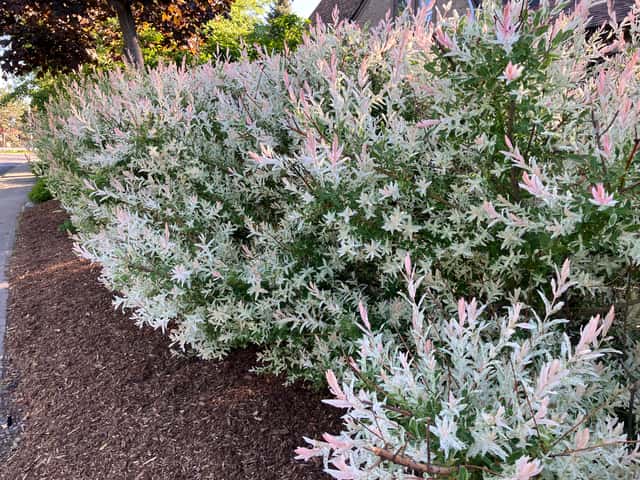
Dappled Willow 'Hakuro Nishiki' (Salix integra 'Hakuro Nishiki') is a medium-care plant from the Salicaceae family. The Dappled Willow 'Hakuro Nishiki' (Salix integra) is an ornamental deciduous shrub from the Salicaceae family, renowned for its striking variegated foliage in shades of pink, white, and green. These colors are most vibrant on new growth during spring and early summer. In spring, it produces small,...
Dappled Willow 'Hakuro Nishiki' grows up to 2.5m, spread of 200cm, watering every 3 days, -20°C – 35°C. It is not suitable for indoor environments and safe for pets.
Unlike many popular species, Dappled Willow 'Hakuro Nishiki' is safe to keep around pets.
How to Care for Dappled Willow 'Hakuro Nishiki'?
TLDR: Dappled Willow 'Hakuro Nishiki' needs Bright indirect, watering every 3 days, and temperatures between -20-35°C with 40-70% humidity.
How Often Should You Water Dappled Willow 'Hakuro Nishiki'?
Keep the soil consistently moist—this willow does not tolerate drought, which can cause leaf scorch and curling. During hot, dry summer periods, water generously; container plants may require daily watering. It also tolerates occasionally waterlogged sites well.
How Much Light Does Dappled Willow 'Hakuro Nishiki' Need?
It grows best in full sun, which intensifies the pink and white variegation of the leaves; it also tolerates light partial shade, though the coloring will be less vivid. In very hot regions, some light afternoon shade is beneficial.
What Is the Best Soil for Dappled Willow 'Hakuro Nishiki'?
Prefers fertile, humus-rich, and well-drained soil with a slightly acidic to neutral pH (5.5-7.5) that remains consistently moist. It handles clay and heavy soils well, provided there is adequate drainage.
What Pot Should You Use for Dappled Willow 'Hakuro Nishiki'?
When growing in a pot (such as standard 'lollipop' forms), choose a large, stable container with multiple drainage holes. The root system grows vigorously, and the plant requires frequent watering. A universal potting mix enriched with compost works best.
Care Schedule
Fertilize
Every 30 days
What Is Dappled Willow 'Hakuro Nishiki' and Where Does It Come From?
The Dappled Willow 'Hakuro Nishiki' (Salix integra) is an ornamental deciduous shrub from the Salicaceae family, renowned for its striking variegated foliage in shades of pink, white, and green. These colors are most vibrant on new growth during spring and early summer. In spring, it produces small, inconspicuous yellow-green catkins. It is a fast-growing plant, often pruned into a low shrub or grafted onto a trunk to create a 'standard' or 'lollipop' form. It is popular in gardens as a specimen plant or in mixed borders, particularly near water features, as it thrives in moist conditions.
How to Propagate Dappled Willow 'Hakuro Nishiki'?
Hardwood cuttings
- Willows root exceptionally easily, even just in water—they naturally contain rooting hormones.
- 1 Taking the cutting
Cut a dormant hardwood stem 20-30 cm long during the plant's winter dormancy.
- 2 Planting
Place the cutting in moist, well-drained soil or a container of water.
- 3 Rooting
Keep in a bright spot without direct sunlight until roots have developed.
Materials needed:
How Big Does Dappled Willow 'Hakuro Nishiki' Grow?
TLDR: Dappled Willow 'Hakuro Nishiki' can reach up to 2.5m tall with Fast growth rate.
Max height
2.5m
Spread
2.0m
Growth rate
Fast
Foliage
Deciduous
Plant Uses
Ornamental
Great for decoration
Air Purifying
Improves air quality
Is your plant showing symptoms?
Click on the symptom to discover possible causes:
What Diseases Commonly Affect Dappled Willow 'Hakuro Nishiki'?
TLDR: Dappled Willow 'Hakuro Nishiki' is susceptible to 10 known diseases. Monitor regularly for early detection.
Powdery Mildew
Powdery mildew is a common fungal disease caused by various fungi species including Erysiphe, Podosphaera, Oïdium, and Leveillula. It affects over 10,000 plant species worldwide. The disease thrives in warm, dry climates with high humidity and appears as a distinctive white powdery coating on plant surfaces.
Anthracnose
Anthracnose is a fungal disease caused by fungi in the genus Colletotrichum that affects many plants, including vegetables, fruits, and trees. The disease thrives in cool, wet conditions, causing dark, sunken lesions on leaves, stems, flowers, and fruits.
Rust
Rust is a common fungal disease caused by fungi in the order Pucciniales that affects a wide variety of plants. The disease gets its name from the characteristic orange, yellow, or reddish-brown pustules that appear on leaves, resembling metal rust. This obligate fungal parasite requires living plants to survive and can cause significant economic losses in agricultural crops.
Leaf Spot
Leaf spot is a common fungal disease caused by various pathogens including Alternaria, Ascochyta, Colletotrichum, Septoria, and Venturia. It primarily affects leaves, causing discolored spots that can lead to premature leaf drop if left untreated.
Meaning & Symbolism
In garden tradition, willows symbolize flexibility, resilience, and renewal—their supple branches bend in the wind but do not break. In Japan, where this variety originates, the willow is associated with grace and delicacy.
Compare with similar plants
| Attribute | Difficulty | Light | Watering | Pet Safe |
|---|---|---|---|---|
| Dark Fieldcap | Medium | Low light | 2d | ⚠️ |
| Azalea | Medium | Partial shade | 3d | ⚠️ |
| Muriel's Bamboo | Medium | Partial shade | 3d | ✓ |
| Bougainvillea | Medium | Direct sun | 7d | ⚠️ |




