Crassulaceae
Greene's Liveforever: Complete Care Guide for Dudleya greenei
Dudleya greenei
Greene's Liveforever thrives in full sun and very well-draining rocky or sandy soil. Water deeply but infrequently, allowing complete drying between waterings. It is extremely drought-tolerant and very sensitive to overwatering. Avoid humidity and misting. Fertilize lightly once in spring. Repot every 2 years or when root-bound.
Every 21 days
Direct sun
-4° - 35°C
20% - 50%
Categories
What is Greene's Liveforever?
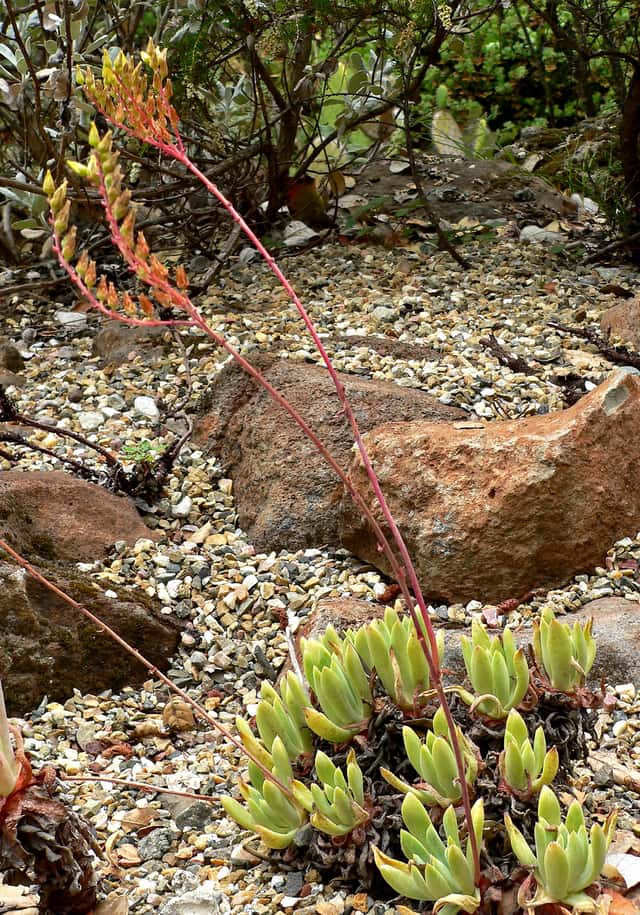
Greene's Liveforever (Dudleya greenei) is a medium-care plant from the Crassulaceae family. Dudleya greenei, commonly known as Greene's Liveforever or Greene's Dudleya, is a rare succulent endemic to the Channel Islands of California. It forms striking silvery-white powdery rosettes that grow close to the ground, giving it the nickname "chalk lettuce." This slow-growing evergreen is threat...
Greene's Liveforever grows up to 15cm, spread of 30cm, watering every 21 days, -4°C – 35°C, 20–50% humidity. It is suitable for indoor environments and safe for pets.
Unlike many popular species, Greene's Liveforever is safe to keep around pets. Without adequate drainage, root rot can develop within 42 days.
How to Care for Greene's Liveforever?
TLDR: Greene's Liveforever needs Direct sun, watering every 21 days, and temperatures between -4-35°C with 20-50% humidity.
How Often Should You Water Greene's Liveforever?
Use the soak-and-dry method: water thoroughly, then wait until the soil is completely dry before watering again — typically every 2-3 weeks in summer, much less in winter. Never let it sit in standing water.
How Much Light Does Greene's Liveforever Need?
Place in the brightest spot possible — ideally direct sun for at least 6 hours per day. Outdoors it thrives in full coastal sun. Indoors, a south or west-facing window is best.
What Is the Best Soil for Greene's Liveforever?
Use a gritty, fast-draining mix with at least 50% mineral content: combine cactus mix with perlite or pumice. Avoid standard potting soil. Good drainage is the single most important factor.
What Pot Should You Use for Greene's Liveforever?
Terra cotta or unglazed clay pots are ideal — they allow excess moisture to evaporate through the walls. Ensure the pot has drainage holes. Avoid glazed ceramic or plastic pots that retain moisture.
Care Schedule
Fertilize
Every 60 days
Repot
Every 730 days
What Is Greene's Liveforever and Where Does It Come From?
Dudleya greenei, commonly known as Greene's Liveforever or Greene's Dudleya, is a rare succulent endemic to the Channel Islands of California. It forms striking silvery-white powdery rosettes that grow close to the ground, giving it the nickname "chalk lettuce." This slow-growing evergreen is threatened in the wild due to habitat loss and illegal collection, making it a protected species. Its fleshy, glaucous leaves are coated in a natural white powder (farina) that reflects harsh sunlight and helps retain moisture.
How to Propagate Greene's Liveforever?
Offset Division
Handle the powdery farina coating gently — avoid touching the leaves unnecessarily as fingerprints permanently damage the coating.
- 1 Wait until offsets are at least 1/3 the size of the mother plant
- 2 Gently separate offset from the base with a clean knife
- 3 Allow the cut to callous for 2-3 days
- 4 Plant in dry, well-draining succulent mix
- 5 Wait 1 week before watering lightly
Materials needed:
Seed Propagation
Seed propagation is slow and difficult. Offsets are far more reliable for this species.
- 1 Sow seeds on the surface of moist, gritty mix
- 2 Do not cover seeds — they need light to germinate
- 3 Keep in a warm bright spot at 18-24°C
- 4 Mist lightly to maintain surface moisture until germination
- 5 Thin seedlings and pot individually once 2cm tall
Materials needed:
How Big Does Greene's Liveforever Grow?
TLDR: Greene's Liveforever can reach up to 15cm tall with Slow growth rate.
Max height
15cm
Spread
30cm
Growth rate
Slow
Foliage
Evergreen
Plant Uses
Ornamental
Great for decoration
Is your plant showing symptoms?
Click on the symptom to discover possible causes:
What Diseases Commonly Affect Greene's Liveforever?
TLDR: Greene's Liveforever is susceptible to 10 known diseases. Monitor regularly for early detection.
Root Rot
Root rot is a serious fungal disease that affects the root system of plants, causing them to decay and die. It is primarily caused by overwatering, poor drainage, or soil-borne fungi such as Pythium, Phytophthora, Rhizoctonia, and Fusarium. The disease thrives in waterlogged conditions where roots are deprived of oxygen, making them susceptible to fungal infection.
Overwatering
Overwatering occurs when plants receive too much water, depriving roots of oxygen and causing root rot. This environmental stress is one of the most common causes of houseplant death, as waterlogged soil prevents roots from breathing and functioning properly.
Powdery Mildew
Powdery mildew is a common fungal disease caused by various fungi species including Erysiphe, Podosphaera, Oïdium, and Leveillula. It affects over 10,000 plant species worldwide. The disease thrives in warm, dry climates with high humidity and appears as a distinctive white powdery coating on plant surfaces.
Rust
Rust is a common fungal disease caused by fungi in the order Pucciniales that affects a wide variety of plants. The disease gets its name from the characteristic orange, yellow, or reddish-brown pustules that appear on leaves, resembling metal rust. This obligate fungal parasite requires living plants to survive and can cause significant economic losses in agricultural crops.
Meaning & Symbolism
Symbol of resilience and endurance — this rare succulent has survived thousands of years on the windswept Channel Islands, embodying the spirit of hardy coastal California flora.
Fun Facts
Dudleya greenei is endemic to just a few islands off the California coast, making it one of the rarest succulents in North America
The silvery farina coating on its leaves acts like natural sunscreen, reflecting intense coastal sunlight
It is listed as a threatened species — collecting it from the wild is illegal in California
Dudleya plants can live for decades, hence the name "Liveforever"
Frequently asked questions
How often should I water Greene's Liveforever?
Is Dudleya greenei toxic to pets?
Can I grow Greene's Dudleya indoors?
Why does my Dudleya greenei have a white powder on its leaves?
How do I propagate Dudleya greenei?
Compare with similar plants
| Attribute | Difficulty | Light | Watering | Pet Safe |
|---|---|---|---|---|
| Dark Fieldcap | Medium | Low light | 2d | ⚠️ |
| Azalea | Medium | Partial shade | 3d | ⚠️ |
| Bougainvillea | Medium | Direct sun | 7d | ⚠️ |
| Wild Lettuce | Medium | Direct sun | 7d | ⚠️ |



