Araliaceae
False Aralia Care Guide
Plerandra elegantissima
False Aralia thrives in bright, indirect light with consistently moist but well-draining soil. Keep humidity above 50% and temperatures between 15-29°C. Water when the top 2-3 cm of soil feels dry, and mist regularly to prevent leaf drop. This slow grower prefers stable conditions and dislikes being moved.
Every 7 days
Partial shade
15° - 29°C
50% - 80%
Categories
What is False Aralia?
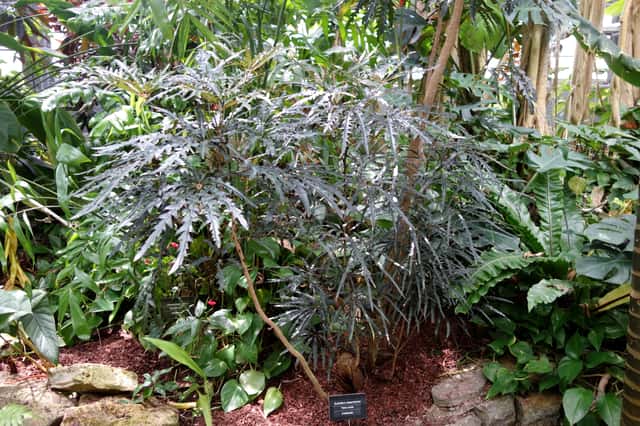
False Aralia (Plerandra elegantissima) is a medium-care plant from the Araliaceae family. Plerandra elegantissima, commonly known as False Aralia, is an elegant evergreen shrub native to the rainforests of New Caledonia. Prized for its finely divided, dark green to coppery leaves with serrated edges, this tropical plant brings a sophisticated, feathery texture to any indoor space. While...
False Aralia grows up to 2.2m, with spread of 150cm, watering every 7 days, 15°C – 29°C, 50–80% humidity. It is suitable for indoor environments and safe for pets.
Unlike many popular species, False Aralia is safe to keep around pets. Without adequate drainage, root rot can develop within 14 days.
How to Care for False Aralia?
TLDR: False Aralia needs Partial shade, watering every 7 days, and temperatures between 15-29°C with 50-80% humidity.
How Often Should You Water False Aralia?
Allow the top 2-3 cm of soil to dry between waterings. Water thoroughly until it drains from the bottom, then discard excess. Reduce watering frequency in winter. Overwatering leads to root rot; underwatering causes yellowing lower leaves.
How Much Light Does False Aralia Need?
Place in bright, indirect light near an east or north-facing window. Avoid direct sunlight, which can scorch the delicate leaves. Some morning sun in winter is tolerable. The plant may drop leaves if moved to a significantly different light level.
What Is the Best Soil for False Aralia?
Use a well-draining, peat-based potting mix amended with perlite or orchid bark. The soil should retain some moisture but never become waterlogged. A slightly acidic pH between 5.5 and 6.5 is ideal.
What Pot Should You Use for False Aralia?
Use a pot with drainage holes. Terracotta or ceramic pots work well as they allow some moisture evaporation, helping prevent root rot. Choose a pot only slightly larger than the root ball, as False Aralia prefers being slightly root-bound.
Care Schedule
Fertilize
Every 14 days
Misting
Every 3 days
Rotate
Every 14 days
Repot
Every 730 days
What Is False Aralia and Where Does It Come From?
Plerandra elegantissima, commonly known as False Aralia, is an elegant evergreen shrub native to the rainforests of New Caledonia. Prized for its finely divided, dark green to coppery leaves with serrated edges, this tropical plant brings a sophisticated, feathery texture to any indoor space. While it can grow up to 15 meters tall in its native habitat, indoors it typically stays between 1.5 and 2 meters, making it a striking yet manageable houseplant.
How to Propagate False Aralia?
Stem cutting
Stem cuttings of False Aralia are notoriously difficult to root. Bottom heat and high humidity are essential. Be patient, as rooting can take up to 8 weeks.
- 1 Select a healthy stem tip cutting about 10-15 cm long with several leaves
- 2 Remove the lower leaves, keeping 2-3 at the top
- 3 Dip the cut end in rooting hormone powder
- 4 Plant in a moist mix of perlite and peat moss
- 5 Cover with a plastic bag or place in a propagator to maintain high humidity
- 6 Provide bottom heat above 18°C for best results
- 7 Keep the soil consistently moist but not soggy
Materials needed:
Seed propagation
Seeds must be fresh for reasonable germination rates. This method requires patience as germination is slow and inconsistent.
- 1 Obtain fresh seeds from a reliable source
- 2 Soak seeds in warm water for 24 hours
- 3 Sow on the surface of moist seed-starting mix
- 4 Cover lightly with vermiculite
- 5 Maintain temperature around 24°C
- 6 Keep consistently moist and in bright indirect light
Materials needed:
How Big Does False Aralia Grow?
TLDR: False Aralia can reach up to 2.2m tall with Slow growth rate.
Max height
2.2m
Spread
1.5m
Growth rate
Slow
Foliage
Evergreen
Plant Uses
Ornamental
Great for decoration
Is your plant showing symptoms?
Click on the symptom to discover possible causes:
What Diseases Commonly Affect False Aralia?
TLDR: False Aralia is susceptible to 11 known diseases. Monitor regularly for early detection.
Root Rot
Root rot is a serious fungal disease that affects the root system of plants, causing them to decay and die. It is primarily caused by overwatering, poor drainage, or soil-borne fungi such as Pythium, Phytophthora, Rhizoctonia, and Fusarium. The disease thrives in waterlogged conditions where roots are deprived of oxygen, making them susceptible to fungal infection.
Leaf Spot
Leaf spot is a common fungal disease caused by various pathogens including Alternaria, Ascochyta, Colletotrichum, Septoria, and Venturia. It primarily affects leaves, causing discolored spots that can lead to premature leaf drop if left untreated.
Gray Mold (Botrytis Blight)
Gray mold, caused by the fungus Botrytis cinerea, is one of the most common fungal diseases in plants. It affects over 200 plant species, including ornamentals, vegetables, fruits, and houseplants. The disease thrives in cool, humid conditions with poor air circulation, causing grayish spots and soft rot on infected tissues.
Powdery Mildew
Powdery mildew is a common fungal disease caused by various fungi species including Erysiphe, Podosphaera, Oïdium, and Leveillula. It affects over 10,000 plant species worldwide. The disease thrives in warm, dry climates with high humidity and appears as a distinctive white powdery coating on plant surfaces.
Meaning & Symbolism
Elegance, sophistication, and tropical refinement
Fun Facts
In its native New Caledonia, False Aralia can grow into a tree reaching up to 15 meters tall
The plant has been reclassified multiple times — from Dizygotheca to Schefflera to its current genus Plerandra
Young plants have narrow, serrated leaves that become broader and more rounded as the plant matures
False Aralia belongs to the same family (Araliaceae) as ivy and ginseng
Frequently asked questions
Why is my False Aralia dropping leaves?
How often should I water my False Aralia?
Is False Aralia toxic to pets?
How can I increase humidity for my False Aralia?
Compare with similar plants
| Attribute | Difficulty | Light | Watering | Pet Safe |
|---|---|---|---|---|
| Flamingo Flower | Medium | Partial shade | 5d | ⚠️ |
| Prayer Plant | Medium | Partial shade | 3d | ✓ |
| Dwarf Umbrella Tree | Easy | Partial shade | 7d | ⚠️ |
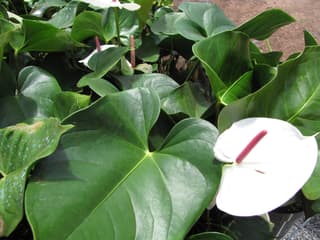
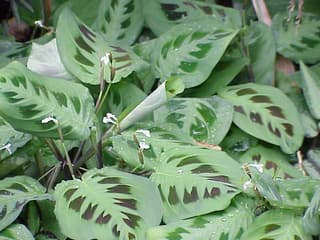
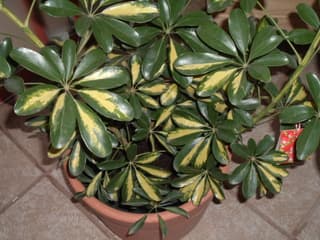
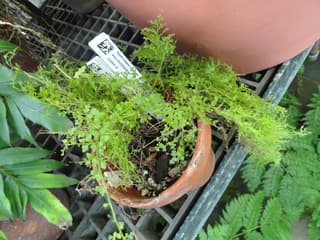
| Boston Fern | Medium | Partial shade | 3d | ✓ |