Rosaceae
Field Rose (Rosa arvensis) Care Guide
Rosa arvensis
Field Rose is a hardy, low-maintenance wild rose that thrives outdoors in full sun to partial shade. It prefers well-draining soil and benefits from deep, infrequent watering. Prune annually after flowering to maintain shape. Feed every 4-6 weeks during the growing season.
Every 9 days
Direct sun
-23° - 35°C
40% - 70%
Categories
What is Field Rose?
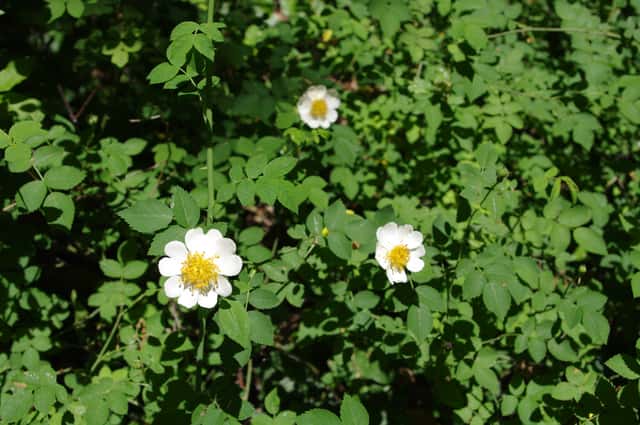
Field Rose (Rosa arvensis) is a medium-care plant from the Rosaceae family. Rosa arvensis, commonly known as the Field Rose, is a vigorous deciduous wild rose native to Western, Central, and Southern Europe. It produces clusters of delicate white flowers with golden stamens throughout summer, followed by small oval orange-red hips. Its arching, thorny stems make it an excel...
Field Rose grows up to 2.0m, spread of 200cm, watering every 9 days, -23°C – 35°C, 40–70% humidity. It is not suitable for indoor environments and safe for pets.
Unlike many popular species, Field Rose is safe to keep around pets.
How to Care for Field Rose?
TLDR: Field Rose needs Direct sun, watering every 9 days, and temperatures between -23-35°C with 40-70% humidity.
How Often Should You Water Field Rose?
Water deeply every 7-10 days, soaking around the base of the plant. Avoid wetting foliage to reduce disease risk. Water in the morning and ensure soil drains freely.
How Much Light Does Field Rose Need?
Place in a location receiving at least 6 hours of direct sunlight per day. Field Rose tolerates dappled shade but flowers most abundantly in full sun.
What Is the Best Soil for Field Rose?
Use well-draining, loamy soil enriched with compost. Optimal pH is 6.0-7.5. Avoid heavy clay soils that remain waterlogged. Mulch around the base to retain moisture.
What Pot Should You Use for Field Rose?
Large outdoor container or open garden bed with ample space for spreading stems
Care Schedule
Fertilize
Every 35 days
Misting
Every 3 days
Rotate
Every 7 days
Repot
Every 365 days
What Is Field Rose and Where Does It Come From?
Rosa arvensis, commonly known as the Field Rose, is a vigorous deciduous wild rose native to Western, Central, and Southern Europe. It produces clusters of delicate white flowers with golden stamens throughout summer, followed by small oval orange-red hips. Its arching, thorny stems make it an excellent hedgerow and ground-cover plant.
How Big Does Field Rose Grow?
TLDR: Field Rose can reach up to 2.0m tall with Medium growth rate.
Max height
2.0m
Spread
2.0m
Growth rate
Medium
Foliage
Deciduous
Plant Uses
Ornamental
Great for decoration
Medicinal
Medicinal properties
Aromatic
Pleasant fragrance
Medicinal Uses
- Rose hip tea traditionally used to boost vitamin C and immune function
- Hip extracts used in folk medicine for joint pain and inflammation
Culinary Uses
- Rose hips used in jams, syrups, jellies and herbal teas
- Petals edible and used as garnish or to infuse syrups
Is your plant showing symptoms?
Click on the symptom to discover possible causes:
What Diseases Commonly Affect Field Rose?
TLDR: Field Rose is susceptible to 10 known diseases. Monitor regularly for early detection.
Black Spot
Black spot is the most serious fungal disease affecting roses, caused by the fungus Diplocarpon rosae. It is characterized by dark circular spots on leaves that progress to yellowing and premature leaf drop. The disease thrives in humid and cool conditions, especially early in the growing season.
Powdery Mildew
Powdery mildew is a common fungal disease caused by various fungi species including Erysiphe, Podosphaera, Oïdium, and Leveillula. It affects over 10,000 plant species worldwide. The disease thrives in warm, dry climates with high humidity and appears as a distinctive white powdery coating on plant surfaces.
Rust
Rust is a common fungal disease caused by fungi in the order Pucciniales that affects a wide variety of plants. The disease gets its name from the characteristic orange, yellow, or reddish-brown pustules that appear on leaves, resembling metal rust. This obligate fungal parasite requires living plants to survive and can cause significant economic losses in agricultural crops.
Aphids
Aphids are small, soft-bodied, pear-shaped insects (1/16 to 1/8 inch long) that feed by sucking nutrient-rich sap from plants. They reproduce rapidly and can quickly weaken plants, causing distorted growth and transmitting plant viruses. Aphids come in various colors including green, black, red, yellow, brown, and gray. They secrete honeydew, a sticky substance that attracts ants and encourages sooty mold growth.
Meaning & Symbolism
In the Victorian language of flowers, Field Rose symbolizes charm and simplicity — the quiet elegance of nature unmarked by artifice.
Fun Facts
Rosa arvensis is one of the parents of the Ayrshire climbing roses, developed in Scotland in the early 19th century.
Its hips are rich in vitamin C — historically important before modern nutrition science.
The flowers have a delicate musky fragrance that gave rise to the alternative name Musk Rose.
Field Rose can ramble and trail for over 2 metres, making it ideal for covering banks and fences naturally.
Compare with similar plants
| Attribute | Difficulty | Light | Watering | Pet Safe |
|---|---|---|---|---|
| Dark Fieldcap | Medium | Low light | 2d | ⚠️ |
| Azalea | Medium | Partial shade | 3d | ⚠️ |
| Bougainvillea | Medium | Direct sun | 7d | ⚠️ |
| Wild Lettuce | Medium | Direct sun | 7d | ⚠️ |



