Ranunculaceae
Clematis flammula (Fragrant Clematis)
Clematis flammula
Grow in full sun with the roots shaded and cool, in moisture-retentive but well-drained soil. Water regularly while establishing, then only during dry spells once mature. Prune hard in late winter (pruning group 3) to keep growth compact and flowering strong.
Every 7 days
Bright indirect
-15° - °C
% - %
Categories
What is Fragrant Clematis?
Fragrant Clematis (Clematis flammula) is a medium-care plant from the Ranunculaceae family. Clematis flammula, commonly called Fragrant Clematis, is a vigorous deciduous climber in the buttercup family (Ranunculaceae), native to the Mediterranean region and North Africa. From midsummer into autumn it produces masses of small, star-shaped, sweetly almond-scented white flowers, followed by d...
Fragrant Clematis grows up to 4.0m, spread of 150cm, watering every 7 days. It is not suitable for indoor environments and not safe for pets.
Without precautions, ingestion can cause irritation in pets. Keep out of reach of cats and dogs.
How to Care for Fragrant Clematis?
TLDR: Fragrant Clematis needs Bright indirect, watering every 7 days, and temperatures between -15-30°C with 40-70% humidity.
How Often Should You Water Fragrant Clematis?
Water deeply and regularly during the first growing season; afterwards, water only when the top layer of soil dries out, as established plants tolerate drought well.
How Much Light Does Fragrant Clematis Need?
Provide full sun for at least 6 hours a day for the best flowering, but keep the base of the plant and root zone shaded with mulch or low underplanting.
What Is the Best Soil for Fragrant Clematis?
Plant in fertile, moisture-retentive, well-drained soil; it tolerates a wide pH range from acidic to alkaline, so ordinary garden soil enriched with compost works well.
What Pot Should You Use for Fragrant Clematis?
Best planted directly in the ground next to a sturdy support; if grown in a container, choose a large, deep pot (at least 40-50 cm) with excellent drainage and space for a trellis.
What Is Fragrant Clematis and Where Does It Come From?
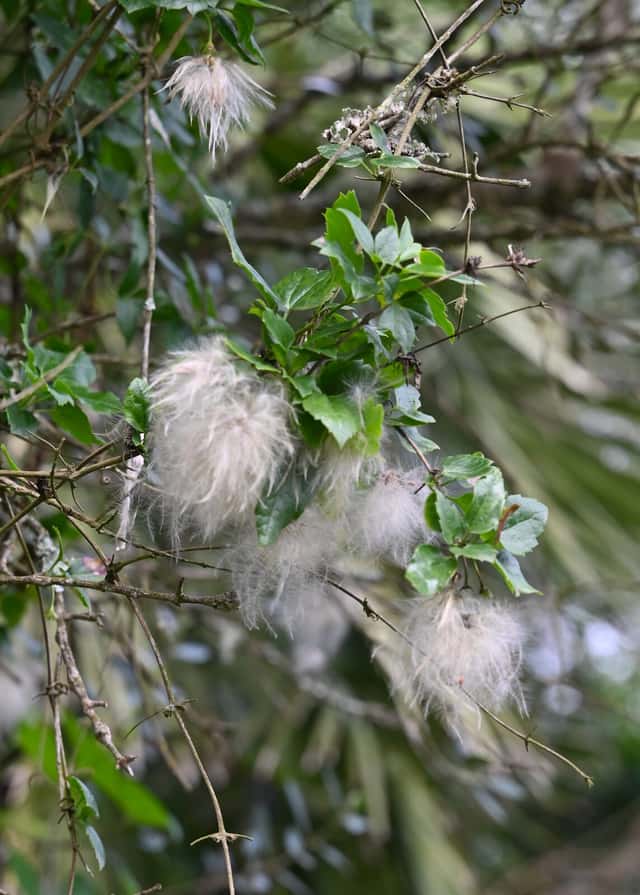
Clematis flammula, commonly called Fragrant Clematis, is a vigorous deciduous climber in the buttercup family (Ranunculaceae), native to the Mediterranean region and North Africa. From midsummer into autumn it produces masses of small, star-shaped, sweetly almond-scented white flowers, followed by decorative fluffy seed heads. Left to scramble, it forms a dense tangled mound, but with a trellis, fence or pergola it climbs readily to 3-4 m or more.
How to Propagate Fragrant Clematis?
Softwood stem cuttings
Take cuttings early in the morning when stems are fully hydrated, and keep the propagation tray covered to maintain humidity.
- 1 Take a 10-15 cm softwood cutting with at least one leaf node in late spring
- 2 Cut just below a node and remove lower leaves
- 3 Dip the cut end in rooting hormone
- 4 Insert into a moist mix of perlite and peat-free compost
- 5 Keep in bright, indirect light under high humidity until roots form
Materials needed:
Simple layering
Layering is more reliable than cuttings for clematis because the stem stays fed by the parent plant while rooting.
- 1 Select a low, flexible stem still attached to the parent plant
- 2 Wound the stem lightly where it will touch the soil
- 3 Peg the wounded section into a shallow trench and cover with soil
- 4 Keep the buried section consistently moist
- 5 Once rooted, sever from the parent plant and transplant
Materials needed:
How Big Does Fragrant Clematis Grow?
TLDR: Fragrant Clematis can reach up to 4.0m tall with Fast growth rate.
Max height
4.0m
Spread
1.5m
Growth rate
Fast
Foliage
Deciduous
Warning: Toxic Plant
This plant can be toxic if ingested. Keep out of reach of:
Plant Uses
Ornamental
Great for decoration
Aromatic
Pleasant fragrance
Is your plant showing symptoms?
Click on the symptom to discover possible causes:
What Diseases Commonly Affect Fragrant Clematis?
TLDR: Fragrant Clematis is susceptible to 4 known diseases. Monitor regularly for early detection.
Leaf Spot
Leaf spot is a common fungal disease caused by various pathogens including Alternaria, Ascochyta, Colletotrichum, Septoria, and Venturia. It primarily affects leaves, causing discolored spots that can lead to premature leaf drop if left untreated.
Powdery Mildew
Powdery mildew is a common fungal disease caused by various fungi species including Erysiphe, Podosphaera, Oïdium, and Leveillula. It affects over 10,000 plant species worldwide. The disease thrives in warm, dry climates with high humidity and appears as a distinctive white powdery coating on plant surfaces.
Aphids
Aphids are small, soft-bodied, pear-shaped insects (1/16 to 1/8 inch long) that feed by sucking nutrient-rich sap from plants. They reproduce rapidly and can quickly weaken plants, causing distorted growth and transmitting plant viruses. Aphids come in various colors including green, black, red, yellow, brown, and gray. They secrete honeydew, a sticky substance that attracts ants and encourages sooty mold growth.
Slugs and Snails
Slugs and snails are mollusks that feed on plant tissue, causing irregular holes in leaves and damage to young seedlings. They are most active at night and in moist conditions, leaving characteristic silvery slime trails. These pests can quickly devastate gardens, especially during wet seasons.
Meaning & Symbolism
In Victorian flower language clematis broadly symbolizes mental beauty, ingenuity and artifice; the fragrant white blooms of Clematis flammula echo the "traveller's joy" folklore shared across the genus, associated with safe journeys and protection for travelers.
Fun Facts
Newly opened flowers release a strong, sweet almond-like fragrance that gives the plant its common name.
Left unsupported, it grows into a dense tangled mound rather than a tidy climber.
Its feathery, fluffy seed heads persist into winter and are as ornamental as the flowers.
Fresh sap can irritate skin, but the toxic compounds break down once the plant is dried.
Frequently asked questions
How often should I water Clematis flammula?
Is Clematis flammula toxic to pets?
When should I prune Clematis flammula?
Does Clematis flammula need full sun?
What diseases affect Clematis flammula?
Compare with similar plants
| Attribute | Difficulty | Light | Watering | Pet Safe |
|---|---|---|---|---|
| Dark Fieldcap | Medium | Low light | 2d | ⚠️ |
| Azalea | Medium | Partial shade | 3d | ⚠️ |
| Muriel's Bamboo | Medium | Partial shade | 3d | ✓ |
| Bougainvillea | Medium | Direct sun | 7d | ⚠️ |
Choose & Compare
Sources & References
- Clematis flammula | RHS
- Clematis flammula - Wikipedia
- Clematis Flammula plant care guide & info
- Clematis flammula: Complete care and characteristics guide
- Clematis Diseases | Plant Addicts
- Fragrant Clematis (Clematis flammula) | U.S. Fish & Wildlife Service
- La hierba de los pordioseros, Clematis flammula




