Brassicaceae
Wallflower (Erysimum) Complete Care Guide
Erysimum
Wallflowers thrive in full sun and well-drained soil. Water sparingly — they are drought-tolerant once established. Deadhead regularly to prolong flowering. Trim lightly after the main flush of blooms to encourage fresh growth.
Every 12 days
Direct sun
-12° - 35°C
30% - 60%
Categories
What is Wallflower?
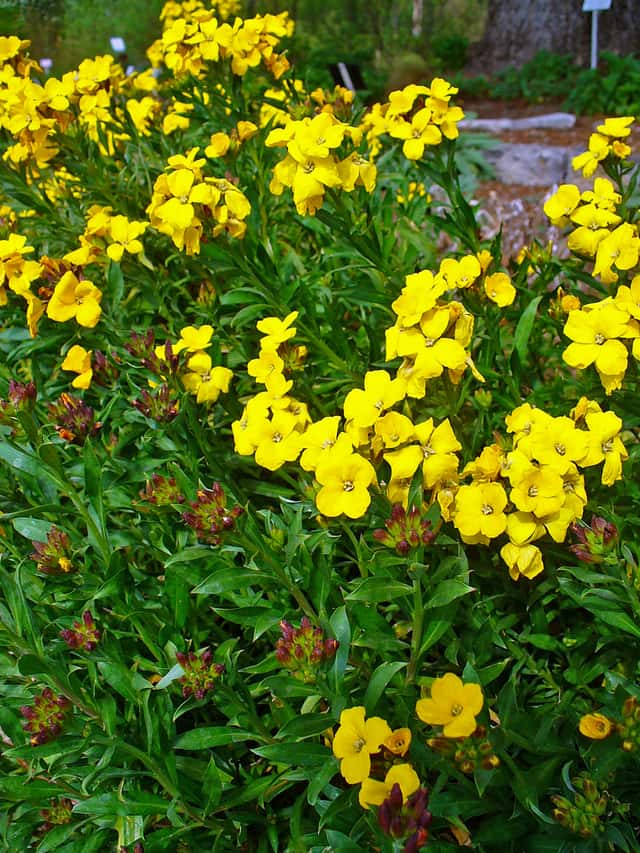
Wallflower (Erysimum) is a easy-care plant from the Brassicaceae family. Erysimum, commonly known as Wallflower, is a diverse genus of over 150 species in the family Brassicaceae. These cheerful, fragrant flowering plants are popular ornamentals grown in cottage gardens, borders, and rock gardens. They produce clusters of four-petaled flowers in a stunning range of color...
Wallflower grows up to 90cm, spread of 60cm, watering every 12 days, -12°C – 35°C, 30–60% humidity. It is not suitable for indoor environments and not safe for pets.
Unlike many tropical plants, Wallflower tolerates watering mistakes. Best for beginners. Without precautions, ingestion can cause irritation in pets. Keep out of reach of cats and dogs.
How to Care for Wallflower?
TLDR: Wallflower needs Direct sun, watering every 12 days, and temperatures between -12-35°C with 30-60% humidity.
How Often Should You Water Wallflower?
Water only when the top inch of soil feels dry. Established plants are drought-tolerant and can survive on rainfall alone in most climates. Avoid waterlogging, which leads to root rot.
How Much Light Does Wallflower Need?
Wallflowers demand full sun — at least 6 hours of direct sunlight daily. In hot climates, afternoon shade prevents stress. More sun equals more flowers.
What Is the Best Soil for Wallflower?
Use well-draining, gritty or chalky soil with a neutral to slightly alkaline pH (6.5–7.5). Avoid heavy clay or poorly draining substrates. Wallflowers actually thrive in poor, stony soils.
What Pot Should You Use for Wallflower?
Terracotta pot with drainage holes — ideal for mimicking the dry, well-drained conditions wallflowers prefer. Avoid glazed or plastic pots that retain moisture.
Care Schedule
Fertilize
Every 60 days
Misting
Every 3 days
Rotate
Every 7 days
Repot
Every 365 days
What Is Wallflower and Where Does It Come From?
Erysimum, commonly known as Wallflower, is a diverse genus of over 150 species in the family Brassicaceae. These cheerful, fragrant flowering plants are popular ornamentals grown in cottage gardens, borders, and rock gardens. They produce clusters of four-petaled flowers in a stunning range of colors including yellow, orange, red, purple, pink, and mauve. Notable cultivars include Erysimum cheiri and the beloved perennial 'Bowles's Mauve', which can bloom almost year-round.
How Big Does Wallflower Grow?
TLDR: Wallflower can reach up to 90cm tall with Fast growth rate.
Max height
90cm
Spread
60cm
Growth rate
Fast
Foliage
Semi-evergreen
Warning: Toxic Plant
This plant can be toxic if ingested. Keep out of reach of:
Plant Uses
Ornamental
Great for decoration
Aromatic
Pleasant fragrance
Is your plant showing symptoms?
Click on the symptom to discover possible causes:
What Diseases Commonly Affect Wallflower?
TLDR: Wallflower is susceptible to 8 known diseases. Monitor regularly for early detection.
Slugs and Snails
Slugs and snails are mollusks that feed on plant tissue, causing irregular holes in leaves and damage to young seedlings. They are most active at night and in moist conditions, leaving characteristic silvery slime trails. These pests can quickly devastate gardens, especially during wet seasons.
Powdery Mildew
Powdery mildew is a common fungal disease caused by various fungi species including Erysiphe, Podosphaera, Oïdium, and Leveillula. It affects over 10,000 plant species worldwide. The disease thrives in warm, dry climates with high humidity and appears as a distinctive white powdery coating on plant surfaces.
Downy Mildew
Downy mildew is a fungal-like disease caused by oomycetes (water molds) that thrives in cool, wet conditions. It affects a wide range of plants, causing yellowing leaves with fuzzy white-gray growth underneath, leading to defoliation and reduced yields if left untreated.
Aphids
Aphids are small, soft-bodied, pear-shaped insects (1/16 to 1/8 inch long) that feed by sucking nutrient-rich sap from plants. They reproduce rapidly and can quickly weaken plants, causing distorted growth and transmitting plant viruses. Aphids come in various colors including green, black, red, yellow, brown, and gray. They secrete honeydew, a sticky substance that attracts ants and encourages sooty mold growth.
Meaning & Symbolism
Wallflowers symbolize endurance, fidelity, and undying love. In the Victorian language of flowers, they represented devotion in adversity — blooming steadfastly on old walls and rocky cliff faces.
Fun Facts
Erysimum 'Bowles's Mauve' holds the RHS Award of Garden Merit and can bloom for 10 months of the year.
Wallflowers belong to the Brassicaceae (mustard) family and share relatives with cabbages, broccoli, and mustard.
The genus includes over 150 species, ranging from compact rock garden plants to tall border perennials.
Erysimum flowers are highly attractive to bees, butterflies, and other pollinators, making them excellent for wildlife gardens.
Historically, wallflowers were used in traditional herbal medicine, though their glucosinolate content makes them mildly toxic if ingested in quantity.
Compare with similar plants
| Attribute | Difficulty | Light | Watering | Pet Safe |
|---|---|---|---|---|
| Small Scabious | Easy | Direct sun | 7d | ✓ |
| Field Maple | Easy | Bright indirect | 14d | ✓ |
| Silver Birch | Easy | Direct sun | 14d | ✓ |
| Red valerian | Easy | Direct sun | 10d | ✓ |


