Amaryllidaceae
Haemanthus (Blood Lily): Complete Care Guide
Haemanthus
Give Haemanthus bright, indirect light, a well-draining sandy or loamy mix, and let the soil dry out between waterings. Reduce water drastically during dormancy, avoid wetting the foliage and flowers, and keep the bulb slightly potbound for the best flowering.
Every 12 days
Partial shade
6° - 25°C
40% - 60%
Categories
What is Blood Lily?
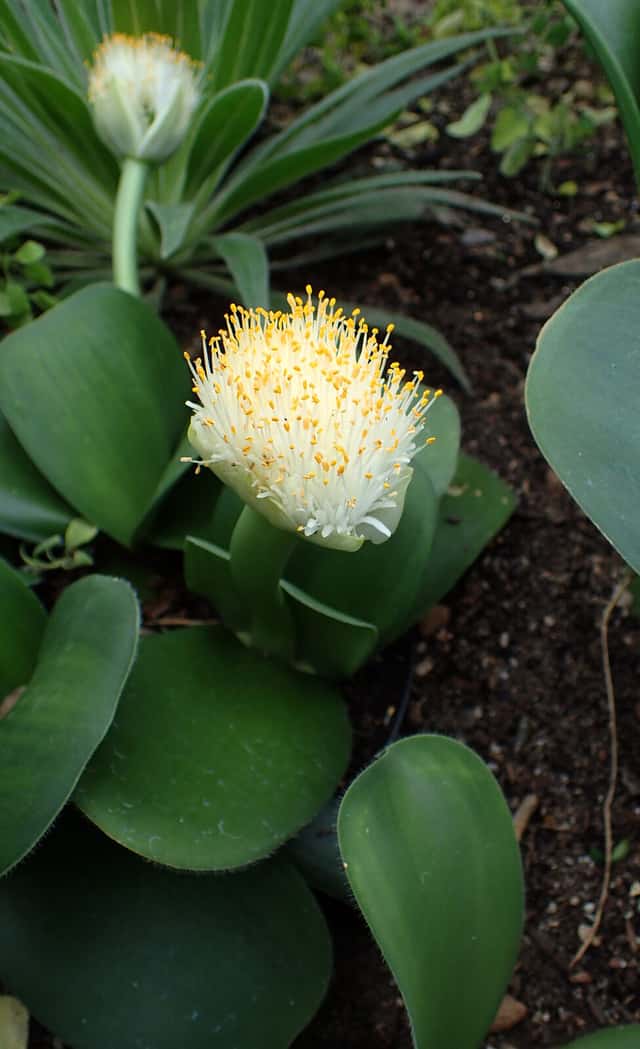
Blood Lily (Haemanthus) is a medium-care plant from the Amaryllidaceae family. Haemanthus is a genus of bulbous perennials native to southern Africa, prized for its bold, brush-like flowerheads and thick, paddle-shaped leaves. Sometimes called the Blood Lily for the vivid scarlet blooms of species like H. coccineus, or the Paintbrush Lily for the softer white tufts of the popu...
Blood Lily grows up to 30cm, spread of 30cm, watering every 12 days, 6°C – 25°C, 40–60% humidity. It is suitable for indoor environments and not safe for pets.
Without precautions, ingestion can cause irritation in pets. Keep out of reach of cats and dogs. Without adequate drainage, root rot can develop within 24 days.
How to Care for Blood Lily?
TLDR: Blood Lily needs Partial shade, watering every 12 days, and temperatures between 6-25°C with 40-60% humidity.
How Often Should You Water Blood Lily?
Water thoroughly during active growth once the top few centimeters of soil have dried, then cut back sharply when the plant enters dormancy so the bulb never sits in soggy soil.
How Much Light Does Blood Lily Need?
Place in bright, indirect light or morning sun; deep shade weakens flowering while harsh midday sun scorches the fleshy leaves.
What Is the Best Soil for Blood Lily?
Pot in a fast-draining mix of loam, coarse sand and well-rotted compost (or a cactus and succulent blend with added perlite) so excess water never lingers around the bulb.
What Pot Should You Use for Blood Lily?
A shallow, slightly undersized terracotta or unglazed clay pot with generous drainage holes; keeping the bulb snug encourages flowering and the porous walls help excess moisture evaporate.
Care Schedule
Fertilize
Every 30 days
Repot
Every 1275 days
What Is Blood Lily and Where Does It Come From?
Haemanthus is a genus of bulbous perennials native to southern Africa, prized for its bold, brush-like flowerheads and thick, paddle-shaped leaves. Sometimes called the Blood Lily for the vivid scarlet blooms of species like H. coccineus, or the Paintbrush Lily for the softer white tufts of the popular houseplant H. albiflos, the genus stores water and nutrients in a large fleshy bulb that lets it survive long, dry dormant seasons. Depending on the species, foliage may be evergreen or fully deciduous, dying back after flowering before regrowing with the rains. Because of this dormancy cycle, care should follow the plant's natural rhythm rather than a fixed calendar.
How to Propagate Blood Lily?
Offset Division
Handle bulbs gently to avoid bruising, and let any cut surfaces callus for a day before potting to reduce rot risk.
- 1 Remove the plant from its pot once offsets (bulblets) reach about a quarter of the size of the parent bulb and have their own roots
- 2 Gently separate the offset from the parent bulb by hand or with a clean knife
- 3 Pot the offset in a well-draining mix with the neck of the bulb sitting just above the soil line
- 4 Water lightly and keep in bright, indirect light until new growth appears
Materials needed:
Seed Propagation
Fresh seed germinates far better than stored seed, and seedlings can take three seasons or more to reach flowering size.
- 1 Collect ripe berries once they turn soft and colorful and extract the seeds
- 2 Sow seeds fresh on the surface of a well-draining seed mix, barely covering them
- 3 Keep the mix consistently moist and warm in bright, indirect light
- 4 Transplant seedlings once they develop their first true leaf and a small bulb
Materials needed:
How Big Does Blood Lily Grow?
TLDR: Blood Lily can reach up to 30cm tall with Slow growth rate.
Max height
30cm
Spread
30cm
Growth rate
Slow
Warning: Toxic Plant
This plant can be toxic if ingested. Keep out of reach of:
Plant Uses
Ornamental
Great for decoration
Is your plant showing symptoms?
Click on the symptom to discover possible causes:
What Diseases Commonly Affect Blood Lily?
TLDR: Blood Lily is susceptible to 9 known diseases. Monitor regularly for early detection.
Root Rot
Root rot is a serious fungal disease that affects the root system of plants, causing them to decay and die. It is primarily caused by overwatering, poor drainage, or soil-borne fungi such as Pythium, Phytophthora, Rhizoctonia, and Fusarium. The disease thrives in waterlogged conditions where roots are deprived of oxygen, making them susceptible to fungal infection.
Powdery Mildew
Powdery mildew is a common fungal disease caused by various fungi species including Erysiphe, Podosphaera, Oïdium, and Leveillula. It affects over 10,000 plant species worldwide. The disease thrives in warm, dry climates with high humidity and appears as a distinctive white powdery coating on plant surfaces.
Leaf Spot
Leaf spot is a common fungal disease caused by various pathogens including Alternaria, Ascochyta, Colletotrichum, Septoria, and Venturia. It primarily affects leaves, causing discolored spots that can lead to premature leaf drop if left untreated.
Gray Mold (Botrytis Blight)
Gray mold, caused by the fungus Botrytis cinerea, is one of the most common fungal diseases in plants. It affects over 200 plant species, including ornamentals, vegetables, fruits, and houseplants. The disease thrives in cool, humid conditions with poor air circulation, causing grayish spots and soft rot on infected tissues.
Meaning & Symbolism
Known as the Blood Lily or Paintbrush Lily, Haemanthus bears dense, brush-like inflorescences that in African folklore symbolize vitality, resilience and protection, echoing the plant's ability to survive long dry dormancy periods stored in its fleshy bulb.
Fun Facts
The brush-like flowerhead of Haemanthus coccineus, one of the best-known species, gives the genus its common name Blood Lily.
Haemanthus bulbs can remain dormant and leafless for months, drawing on stored reserves until the rains return.
The genus name comes from the Greek haima (blood) and anthos (flower), a nod to the scarlet blooms of several species.
Some Haemanthus species flower before their leaves even emerge, producing a striking naked flowerhead straight from the bare bulb.
Frequently asked questions
Is Haemanthus toxic to cats and dogs?
How often should I water my Haemanthus?
Why is my Haemanthus not flowering?
Does Haemanthus lose its leaves?
What is the best soil for Haemanthus?
Compare with similar plants
| Attribute | Difficulty | Light | Watering | Pet Safe |
|---|---|---|---|---|
| Dark Fieldcap | Medium | Low light | 2d | ⚠️ |
| Azalea | Medium | Partial shade | 3d | ⚠️ |
| Muriel's Bamboo | Medium | Partial shade | 3d | ✓ |
| Bougainvillea | Medium | Direct sun | 7d | ⚠️ |




