Convolvulaceae
Silver Falls Dichondra (Dichondra argentea): Complete Care Guide
Dichondra argentea
Very easy to grow. Provide full sun to partial shade, allow soil to dry between waterings, and use a well-draining growing medium. Highly heat and drought tolerant once established. Fertilize every 30 days during the growing season.
Every 7 days
Direct sun
5° - 38°C
30% - 50%
Categories
What is Silver Falls?
Silver Falls (Dichondra argentea) is a easy-care plant from the Convolvulaceae family. Dichondra argentea, commonly known as Silver Falls or Silver Ponysfoot, is a trailing and cascading ornamental plant in the Convolvulaceae family, native to the southwestern United States and northern Mexico. Its small, fan-shaped leaves coated in fine silver hairs create stunning metallic cascades...
Silver Falls grows up to 10cm, spread of 120cm, watering every 7 days, 5°C – 38°C, 30–50% humidity. It is suitable for indoor environments and safe for pets.
Unlike many tropical plants, Silver Falls tolerates watering mistakes. Best for beginners. Unlike many popular species, Silver Falls is safe to keep around pets. Without adequate drainage, root rot can develop within 14 days.
How to Care for Silver Falls?
TLDR: Silver Falls needs Direct sun, watering every 7 days, and temperatures between 5-38°C with 30-50% humidity.
How Often Should You Water Silver Falls?
Water approximately once a week, allowing the top inch of soil to dry completely between waterings. Reduce watering significantly in winter. Overwatering is the most common cause of problems; root rot sets in quickly in soggy soil.
How Much Light Does Silver Falls Need?
Prefers full sun with 6 or more hours of direct sunlight daily. More light produces a denser, more intensely silver foliage. Tolerates partial shade but may lose some silvery colour.
What Is the Best Soil for Silver Falls?
Use well-draining soil: a mix of standard potting soil with 30% perlite or coarse sand works well. Avoid heavy clay soils. Optimal pH: 6.0–7.5.
What Pot Should You Use for Silver Falls?
Hanging basket, container, or window box with excellent drainage holes. Terra cotta or plastic pots work well; avoid saucers that retain standing water.
Care Schedule
Fertilize
Every 30 days
Rotate
Every 7 days
Repot
Every 365 days
What Is Silver Falls and Where Does It Come From?
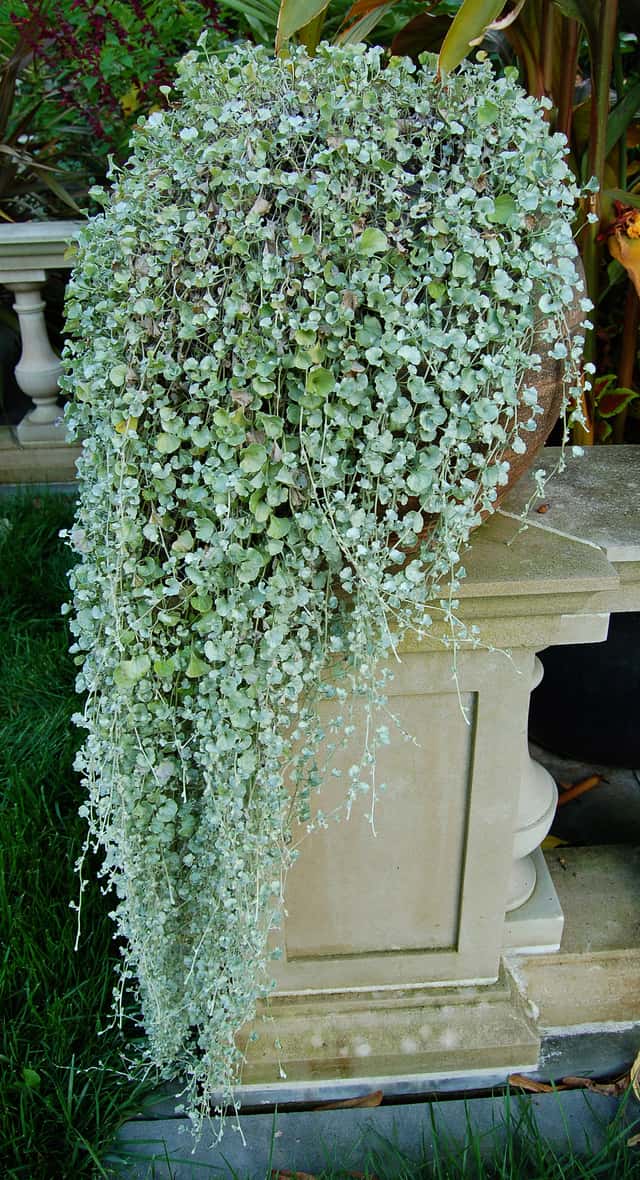
Dichondra argentea, commonly known as Silver Falls or Silver Ponysfoot, is a trailing and cascading ornamental plant in the Convolvulaceae family, native to the southwestern United States and northern Mexico. Its small, fan-shaped leaves coated in fine silver hairs create stunning metallic cascades up to 120 cm long, making it a favourite for hanging baskets, window boxes, and container gardens. The evergreen silvery foliage remains attractive throughout the growing season.
How Big Does Silver Falls Grow?
TLDR: Silver Falls can reach up to 10cm tall with Fast growth rate.
Max height
10cm
Spread
1.2m
Growth rate
Fast
Foliage
Evergreen
Warning: Toxic Plant
This plant can be toxic if ingested. Keep out of reach of:
Plant Uses
Ornamental
Great for decoration
Ground Cover
Soil coverage
Is your plant showing symptoms?
Click on the symptom to discover possible causes:
What Diseases Commonly Affect Silver Falls?
TLDR: Silver Falls is susceptible to 9 known diseases. Monitor regularly for early detection.
Root Rot
Root rot is a serious fungal disease that affects the root system of plants, causing them to decay and die. It is primarily caused by overwatering, poor drainage, or soil-borne fungi such as Pythium, Phytophthora, Rhizoctonia, and Fusarium. The disease thrives in waterlogged conditions where roots are deprived of oxygen, making them susceptible to fungal infection.
Overwatering
Overwatering occurs when plants receive too much water, depriving roots of oxygen and causing root rot. This environmental stress is one of the most common causes of houseplant death, as waterlogged soil prevents roots from breathing and functioning properly.
Slugs and Snails
Slugs and snails are mollusks that feed on plant tissue, causing irregular holes in leaves and damage to young seedlings. They are most active at night and in moist conditions, leaving characteristic silvery slime trails. These pests can quickly devastate gardens, especially during wet seasons.
Aphids
Aphids are small, soft-bodied, pear-shaped insects (1/16 to 1/8 inch long) that feed by sucking nutrient-rich sap from plants. They reproduce rapidly and can quickly weaken plants, causing distorted growth and transmitting plant viruses. Aphids come in various colors including green, black, red, yellow, brown, and gray. They secrete honeydew, a sticky substance that attracts ants and encourages sooty mold growth.
Fun Facts
The silvery hairs on the leaves reflect sunlight, creating a striking mirror-like shimmer effect in the garden.
A single plant can cascade up to 120 cm in just one growing season.
Despite belonging to the same family as sweet potato (Convolvulaceae), its flowers are tiny and insignificant — all the beauty lies in its foliage.
Frequently asked questions
How much sun does Silver Falls Dichondra need?
How often should I water Dichondra argentea?
Is Silver Falls Dichondra frost hardy?
Is Dichondra argentea toxic to pets?
Compare with similar plants
| Attribute | Difficulty | Light | Watering | Pet Safe |
|---|---|---|---|---|
| Small Scabious | Easy | Direct sun | 7d | ✓ |
| Field Maple | Easy | Bright indirect | 14d | ✓ |
| Silver Birch | Easy | Direct sun | 14d | ✓ |
| Red valerian | Easy | Direct sun | 10d | ✓ |


