Pinaceae
Japanese Larch (Larix kaempferi)
Larix kaempferi
Thrives in full sun and rich, acidic-to-neutral, well-drained soil kept evenly moist. Does not tolerate deep shade, waterlogged soils, or heavy urban pollution.
Every 7 days
Direct sun
° - °C
% - %
Categories
What is Japanese Larch?
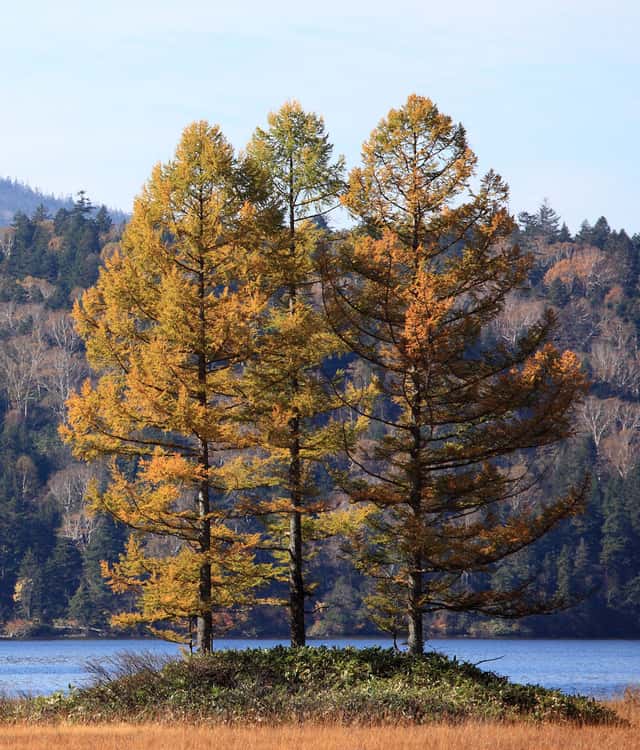
Japanese Larch (Larix kaempferi) is a medium-care plant from the Pinaceae family. The Japanese larch is a deciduous conifer native to the mountains of central Honshu, Japan. Unlike most conifers, it sheds its soft, light-green needles each autumn, first turning a striking golden-yellow to orange-red. It grows into a pyramidal tree, reaching large size in landscape cultivation, an...
Japanese Larch grows up to 27.0m, spread of 1200cm, watering every 7 days. It is not suitable for indoor environments and safe for pets.
Unlike many popular species, Japanese Larch is safe to keep around pets.
How to Care for Japanese Larch?
TLDR: Japanese Larch needs Direct sun, watering every 7 days, and temperatures between 15-30°C with 40-70% humidity.
How Often Should You Water Japanese Larch?
Keep the soil evenly moist and avoid letting it dry out completely. Avoid waterlogging: overwatering and poor drainage are the most common causes of root rot in this species.
How Much Light Does Japanese Larch Need?
Needs full sun, at least 6 hours of direct light daily. Tolerates light partial shade but performs poorly in full shade.
What Is the Best Soil for Japanese Larch?
Adapts to sandy, loamy, or clay soils as long as they are well-drained. Prefers acidic to neutral pH (mildly alkaline is tolerated) and soil rich in organic matter.
What Pot Should You Use for Japanese Larch?
In landscaping, plant directly in the ground with ample room to grow. For bonsai, use a shallow, wide pot with excellent drainage.
What Is Japanese Larch and Where Does It Come From?
The Japanese larch is a deciduous conifer native to the mountains of central Honshu, Japan. Unlike most conifers, it sheds its soft, light-green needles each autumn, first turning a striking golden-yellow to orange-red. It grows into a pyramidal tree, reaching large size in landscape cultivation, and is also a popular subject for bonsai.
How to Propagate Japanese Larch?
Seed propagation
Seed viability lasts about 3 years when properly stored. Growth is slow for the first 2-3 years, then becomes vigorous.
- 1 Collect mature cones and extract the seeds.
- 2 Cold-stratify the seeds for about 1 month to break dormancy.
- 3 Sow in well-drained substrate in early spring.
- 4 Keep seedlings in light shade during their first year of growth.
Materials needed:
Grafting
Mainly used to propagate ornamental cultivars, such as the weeping form (Pendula), which do not come true from seed.
- 1 Select a vigorous rootstock of the same species.
- 2 Collect scions from selected cultivars, such as weeping forms.
- 3 Perform grafting in late winter, before bud break.
- 4 Keep in a protected environment until the graft takes.
Materials needed:
How Big Does Japanese Larch Grow?
TLDR: Japanese Larch can reach up to 27.0m tall with Fast growth rate.
Max height
27.0m
Spread
12.0m
Growth rate
Fast
Foliage
Deciduous
Plant Uses
Ornamental
Great for decoration
Is your plant showing symptoms?
Click on the symptom to discover possible causes:
What Diseases Commonly Affect Japanese Larch?
TLDR: Japanese Larch is susceptible to 5 known diseases. Monitor regularly for early detection.
Canker
Canker is a disease caused by various fungi and bacteria that create necrotic, sunken areas on bark of branches, stems, and trunks. Pathogens enter through wounds and natural openings, especially when plants are stressed. Canker can gradually weaken or kill branches by disrupting water and nutrient flow.
Rust
Rust is a common fungal disease caused by fungi in the order Pucciniales that affects a wide variety of plants. The disease gets its name from the characteristic orange, yellow, or reddish-brown pustules that appear on leaves, resembling metal rust. This obligate fungal parasite requires living plants to survive and can cause significant economic losses in agricultural crops.
Phytophthora Root Rot
Disease caused by fungus-like organisms (oomycetes) that live in soil and can survive for years. It affects roots, stem, and crown of plants, being especially severe in waterlogged or poorly drained soils. It is the second most common cause of root rot in trees and shrubs.
Aphids
Aphids are small, soft-bodied, pear-shaped insects (1/16 to 1/8 inch long) that feed by sucking nutrient-rich sap from plants. They reproduce rapidly and can quickly weaken plants, causing distorted growth and transmitting plant viruses. Aphids come in various colors including green, black, red, yellow, brown, and gray. They secrete honeydew, a sticky substance that attracts ants and encourages sooty mold growth.
Fun Facts
It is one of the few conifers in the world that sheds its needles in autumn, behaving like a deciduous tree.
Native exclusively to the mountains of Honshu, central Japan.
Widely planted for forestry in Northern Europe in addition to ornamental use.
One of the most popular conifer species used for bonsai.
Frequently asked questions
Does the Japanese Larch lose its leaves in winter?
What is the ideal light exposure?
Is Japanese Larch toxic to cats and dogs?
What problems most commonly affect this tree?
Compare with similar plants
| Attribute | Difficulty | Light | Watering | Pet Safe |
|---|---|---|---|---|
| Dark Fieldcap | Medium | Low light | 2d | ⚠️ |
| Azalea | Medium | Partial shade | 3d | ⚠️ |
| Muriel's Bamboo | Medium | Partial shade | 3d | ✓ |
| Bougainvillea | Medium | Direct sun | 7d | ⚠️ |
Choose & Compare
Sources & References
- NC State Extension Gardener Plant Toolbox - Larix kaempferi
- The Morton Arboretum - Japanese Larch
- Plants For A Future - Larix kaempferi
- Greg App - Japanese Larch Care
- UMass CAFE Insect & Mite Guide - Adelges laricis
- USDA APHIS - European Larch Canker
- Wikipedia ES - Alerce del Japón
- Queridas Plantas - Larício-japonês




