Cactaceae
Leuenbergeria (Leaf Cactus) Care Guide
Leuenbergeria
Grow Leuenbergeria in bright, filtered light with protection from the harshest midday sun and keep the soil evenly moist but well drained, since this genus tolerates far more water than a typical desert cactus. Warm, humid, frost-free conditions mirror its tropical forest origin, and a loamy, organically rich mix with excellent drainage keeps the fleshy leaves healthy while preventing root rot.
Every 6 days
Bright indirect
15° - 32°C
50% - 80%
Categories
What is Leaf Cactus?
Leaf Cactus (Leuenbergeria) is a medium-care plant from the Cactaceae family. Leuenbergeria is a small genus of leafy, tree-like cacti native to the Caribbean basin, Central America and northern South America. Unlike most cacti, Leuenbergeria species keep true leaves and develop woody, bark-covered stems while young, so at first glance they look more like a spiny shrub than a...
Leaf Cactus grows up to 8.0m, watering every 6 days, 15°C – 32°C, 50–80% humidity. It is suitable for indoor environments and safe for pets.
Unlike many popular species, Leaf Cactus is safe to keep around pets. Without adequate drainage, root rot can develop within 12 days.
How to Care for Leaf Cactus?
TLDR: Leaf Cactus needs Bright indirect, watering every 6 days, and temperatures between 15-32°C with 50-80% humidity.
How Often Should You Water Leaf Cactus?
Water when the top two to three centimeters of soil have dried out, keeping the substrate lightly moist through the growing season and cutting back in cooler months; unlike desert cacti, Leuenbergeria can suffer from underwatering as much as from soggy roots.
How Much Light Does Leaf Cactus Need?
Provide several hours of bright, indirect or filtered light daily; a spot with morning sun and afternoon shade works well, since intense all-day direct sun can scorch the leaves in dry climates.
What Is the Best Soil for Leaf Cactus?
Use a loamy, well-draining potting mix enriched with organic matter, similar to a general tropical-plant blend rather than a lean cactus mix, and keep the pH close to neutral, around 6 to 7.5.
What Pot Should You Use for Leaf Cactus?
A wide terracotta or unglazed clay pot with generous drainage holes, sized only slightly larger than the root ball
Care Schedule
Fertilize
Every 42 days
Repot
Every 900 days
What Is Leaf Cactus and Where Does It Come From?
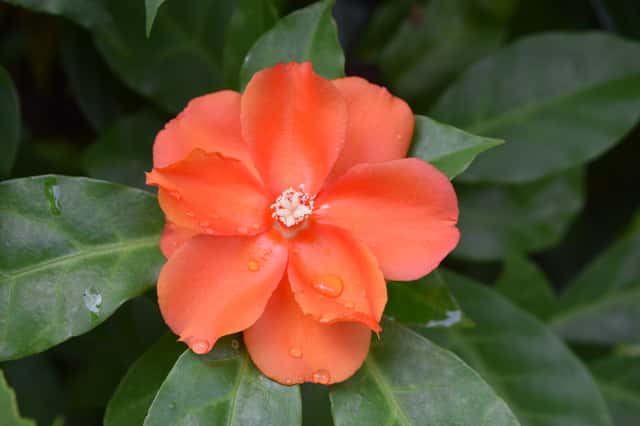
Leuenbergeria is a small genus of leafy, tree-like cacti native to the Caribbean basin, Central America and northern South America. Unlike most cacti, Leuenbergeria species keep true leaves and develop woody, bark-covered stems while young, so at first glance they look more like a spiny shrub than a classic cactus. The genus was split from the broader Pereskia group in 2012 and now forms its own subfamily, Leuenbergerioideae, considered the most primitive lineage within Cactaceae. The best documented species, Leuenbergeria bleo (Rose Cactus), grows as a spiny shrub or small tree up to 8 meters tall along riverbanks and in secondary forest, producing showy orange to pink rose-like flowers followed by edible yellow fruit. Leaves, fruit and bark have a long history of traditional medicinal use across Central America and Southeast Asia.
How to Propagate Leaf Cactus?
Stem cutting
Avoid overwatering fresh cuttings since the exposed wound is prone to rot before roots form; letting the cut callus over fully is the single most important step.
- 1 Select a semi-woody, healthy stem section about 15 to 20 centimeters long
- 2 Cut just below a leaf node with clean, sharp shears
- 3 Let the cutting dry and callus in a shaded, airy spot for 3 to 5 days
- 4 Insert the callused end into a well-draining mix and keep lightly moist
- 5 Place in bright, indirect light until new growth confirms rooting
Materials needed:
Seed propagation
Fresh seed germinates fastest, though seed can remain about half viable for up to five years if stored dry and cool.
- 1 Extract seeds from ripe yellow fruit and rinse off the pulp
- 2 Sow seeds shallowly in moist, well-draining soil
- 3 Keep the tray warm and consistently humid until germination
- 4 Transplant seedlings once they have a few true leaves
Materials needed:
How Big Does Leaf Cactus Grow?
TLDR: Leaf Cactus can reach up to 8.0m tall with Medium growth rate.
Max height
8.0m
Growth rate
Medium
Foliage
Deciduous
Plant Uses
Ornamental
Great for decoration
Edible
Can be consumed
Medicinal
Medicinal properties
Medicinal Uses
- Traditional treatment for hypertension and diabetes
- Used for rheumatic and inflammatory conditions
- Applied for gastric pain and ulcers
- Investigated for anti-cancer compounds in leaf extracts
Culinary Uses
- Young leaves cooked as a leafy green vegetable
- Leaves eaten raw in salads
- Ripe yellow fruit eaten fresh, sour flavor
Is your plant showing symptoms?
Click on the symptom to discover possible causes:
What Diseases Commonly Affect Leaf Cactus?
TLDR: Leaf Cactus is susceptible to 3 known diseases. Monitor regularly for early detection.
Root Rot
Root rot is a serious fungal disease that affects the root system of plants, causing them to decay and die. It is primarily caused by overwatering, poor drainage, or soil-borne fungi such as Pythium, Phytophthora, Rhizoctonia, and Fusarium. The disease thrives in waterlogged conditions where roots are deprived of oxygen, making them susceptible to fungal infection.
Mealybugs
Mealybugs are small, soft-bodied insects covered with a white, waxy, cottony material. They are common pests of houseplants and outdoor plants in mild climates. These sap-sucking insects feed on plant tissue, causing damage, stunted growth, and can lead to plant death if left untreated. They produce sticky honeydew which attracts sooty mold.
Scale Insects
Scale insects are small sap-sucking pests that appear as brown, shell-like bumps on plant stems and leaves. There are over 25 species, divided into armored (hard) and unarmored (soft) scales. They feed by piercing plant tissue and extracting sap, which weakens the plant and can lead to yellowing, stunted growth, and even death if left untreated. They also excrete honeydew, which attracts ants and promotes sooty mold growth.
Meaning & Symbolism
Because it defies the classic cactus silhouette by keeping broad green leaves, Leuenbergeria is often associated with adaptability and unconventional resilience, a plant that thrives by breaking the mold rather than conforming to it.
Fun Facts
Leuenbergeria was only separated from the genus Pereskia in 2012 and is now considered the most primitive living lineage in the entire cactus family
Its stems form bark and lose the ability to photosynthesize while still young, a trait almost unique among cacti
The rose-like orange flowers and edible yellow fruit of Leuenbergeria bleo have earned it the common name Rose Cactus
Frequently asked questions
Is Leuenbergeria really a cactus if it has leaves?
How often should I water my Leuenbergeria?
Does Leuenbergeria need full sun?
Is Leuenbergeria toxic to pets or humans?
Compare with similar plants
| Attribute | Difficulty | Light | Watering | Pet Safe |
|---|---|---|---|---|
| Dark Fieldcap | Medium | Low light | 2d | ⚠️ |
| Azalea | Medium | Partial shade | 3d | ⚠️ |
| Muriel's Bamboo | Medium | Partial shade | 3d | ✓ |
| Bougainvillea | Medium | Direct sun | 7d | ⚠️ |




