Poaceae
Little lovegrass: Ground Cover Plant
Eragrostis minor
An extremely low-maintenance, drought-tolerant weed that prefers sunny locations and well-drained, even poor sandy soils. It is a fast-growing annual that reaches flowering and seeding maturity within 60-90 days from seed.
Every 14 days
Bright indirect
10° - 35°C
% - %
Categories
What is Little lovegrass?
Little lovegrass (Eragrostis minor) is a easy-care plant from the Poaceae family. Eragrostis minor, commonly known as little lovegrass, is an annual C4 metabolism grass species native to Europe that has since become a widespread weed globally. It is frequently found on disturbed, sandy, or gravelly soils, roadsides, railway embankments, and fallow lands. The plant grows 15-60 cm...
Little lovegrass grows up to 60cm, spread of 45cm, watering every 14 days, 10°C – 35°C. It is not suitable for indoor environments and safe for pets.
Unlike many tropical plants, Little lovegrass tolerates watering mistakes. Best for beginners. Unlike many popular species, Little lovegrass is safe to keep around pets.
How to Care for Little lovegrass?
TLDR: Little lovegrass needs Bright indirect, watering every 14 days, and temperatures between 10-35°C with 40-70% humidity.
How Often Should You Water Little lovegrass?
Keep the soil consistently moist until germination and the establishment of young plants; thereafter, only water during prolonged droughts. Avoid waterlogged conditions.
How Much Light Does Little lovegrass Need?
It achieves its best form in full sun (6-8 hours daily); it can tolerate partial shade, but will become leggy and produce fewer flowers in full shade.
What Is the Best Soil for Little lovegrass?
Poor, sandy, or gravelly soil with excellent drainage is ideal; it develops poorly in overly nutrient-rich or heavy, compacted soils.
What Pot Should You Use for Little lovegrass?
Not typically grown as a potted plant; if kept for ornamental purposes, plant it in outdoor rock gardens or wide, shallow, well-ventilated containers.
What Is Little lovegrass and Where Does It Come From?
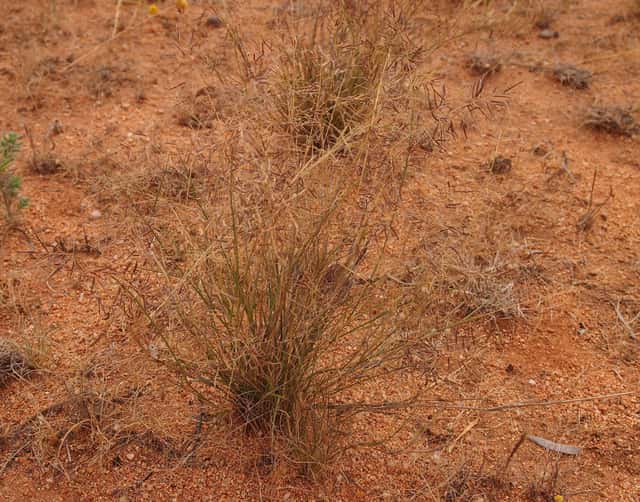
Eragrostis minor, commonly known as little lovegrass, is an annual C4 metabolism grass species native to Europe that has since become a widespread weed globally. It is frequently found on disturbed, sandy, or gravelly soils, roadsides, railway embankments, and fallow lands. The plant grows 15-60 cm tall, forming loose tufts or small clumps. Its panicle inflorescence is 5-20 cm long, featuring flattened spikelets ranging from grayish-green to purplish-red, which fade to straw-yellow upon maturity. It blooms from mid-summer to early autumn, with seeds ripening from September through late November.
How to Propagate Little lovegrass?
Sowing seeds
- Water regularly until germination, then reduce water supply.
- It is a self-pollinating and self-seeding species that will re-establish itself in favorable locations.
- 1 Seed preparation
Collect ripe seeds from the panicles in late summer or early autumn, or purchase commercial seeds.
- 2 Sowing
Scatter the seeds directly into their final location in sunny, well-drained soil after the spring frosts have passed.
- 3 Covering
Cover only with a thin layer of soil, as light aids in germination.
Materials needed:
How Big Does Little lovegrass Grow?
TLDR: Little lovegrass can reach up to 60cm tall with Fast growth rate.
Max height
60cm
Spread
45cm
Growth rate
Fast
Foliage
Deciduous
Plant Uses
Ground Cover
Soil coverage
Is your plant showing symptoms?
Click on the symptom to discover possible causes:
What Diseases Commonly Affect Little lovegrass?
TLDR: Little lovegrass is susceptible to 2 known diseases. Monitor regularly for early detection.
Powdery Mildew
Powdery mildew is a common fungal disease caused by various fungi species including Erysiphe, Podosphaera, Oïdium, and Leveillula. It affects over 10,000 plant species worldwide. The disease thrives in warm, dry climates with high humidity and appears as a distinctive white powdery coating on plant surfaces.
Rust
Rust is a common fungal disease caused by fungi in the order Pucciniales that affects a wide variety of plants. The disease gets its name from the characteristic orange, yellow, or reddish-brown pustules that appear on leaves, resembling metal rust. This obligate fungal parasite requires living plants to survive and can cause significant economic losses in agricultural crops.
Meaning & Symbolism
It symbolizes resilience and the ability to survive under harsh conditions—as a pioneer species, it is among the first to colonize disturbed, barren areas.
Compare with similar plants
| Attribute | Difficulty | Light | Watering | Pet Safe |
|---|---|---|---|---|
| Field Maple | Easy | Bright indirect | 14d | ✓ |
| Muriel's Bamboo | Medium | Partial shade | 3d | ✓ |
| Silver Birch | Easy | Direct sun | 14d | ✓ |
| Common Blanketflower | Easy | Direct sun | 10d | ✓ |





