Sapotaceae
Miracle Berry: Edible Plant
Synsepalum dulcificum
Requires strictly acidic soil, constant high humidity, and protection from temperatures below 65°F (18°C). Prefers filtered light and mineral-free water.
Every 6 days
Partial shade
15° - 32°C
50% - 80%
Categories
What is Miracle Berry?
Miracle Berry (Synsepalum dulcificum) is a medium-care plant from the Sapotaceae family. Synsepalum dulcificum, known as the Miracle Berry, is an evergreen shrub native to West Africa. Its most notable feature is the production of small red berries containing miraculin. This glycoprotein temporarily alters taste buds, causing sour or bitter foods to be perceived as extremely sweet. The...
Miracle Berry grows up to 4.5m, spread of 150cm, watering every 6 days, 15°C – 32°C, 50–80% humidity. It is suitable for indoor environments and safe for pets.
Unlike many popular species, Miracle Berry is safe to keep around pets. Without adequate drainage, root rot can develop within 12 days.
How to Care for Miracle Berry?
TLDR: Miracle Berry needs Partial shade, watering every 6 days, and temperatures between 15-32°C with 50-80% humidity.
How Often Should You Water Miracle Berry?
Never allow the soil to dry out completely. Use rainwater or reverse osmosis water, as chlorine and fluoride in tap water cause toxicity.
How Much Light Does Miracle Berry Need?
Prefers bright indirect light. Avoid strong direct midday sun, which can burn the leaf tips.
What Is the Best Soil for Miracle Berry?
Use a mixture of sphagnum peat moss and perlite (50/50). Avoid common garden soils containing lime or high pH.
What Pot Should You Use for Miracle Berry?
Plastic or glazed ceramic pots that retain moisture, always with drainage holes.
Care Schedule
Fertilize
Every 30 days
Misting
Every 5 days
Rotate
Every 15 days
Repot
Every 730 days
What Is Miracle Berry and Where Does It Come From?
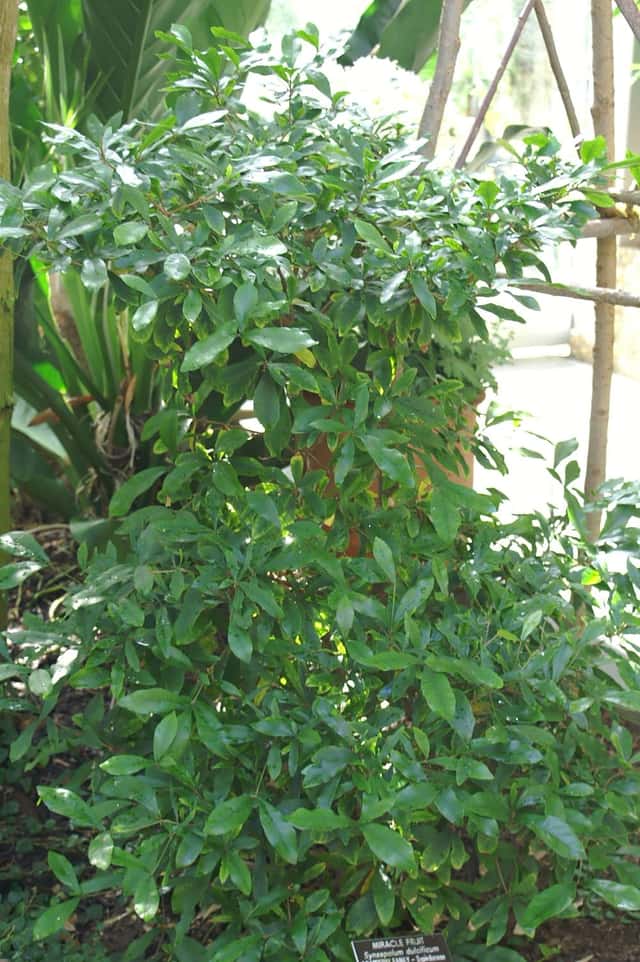
Synsepalum dulcificum, known as the Miracle Berry, is an evergreen shrub native to West Africa. Its most notable feature is the production of small red berries containing miraculin. This glycoprotein temporarily alters taste buds, causing sour or bitter foods to be perceived as extremely sweet. The plant has glossy dark green leaves and exhibits slow, elegant growth.
How to Propagate Miracle Berry?
Sowing
- Dried seeds rarely germinate.
- Use distilled water to keep the substrate moist.
- 1 Harvesting and Cleaning
Remove the red pulp from the fresh seed immediately after harvesting.
- 2 Immediate Planting
Plant the seed in an acidic substrate (pH 5.0) without letting it dry out, as they lose viability within a few days.
- 3 Germination Environment
Keep the pot in a warm location (77-86°F / 25-30°C) with high humidity, covering with plastic if necessary.
Materials needed:
Air Layering
- This method is slow but produces a more mature plant than seeds.
- Keep the moss constantly moist by injecting water with a syringe if necessary.
- 1 Incision
Girdle a healthy, woody branch.
- 2 Hormone Application
Apply rooting hormone to the debarked area.
- 3 Wrapping
Wrap with moist sphagnum moss and seal with black plastic to maintain moisture and darkness.
Materials needed:
How Big Does Miracle Berry Grow?
TLDR: Miracle Berry can reach up to 4.5m tall with Slow growth rate.
Max height
4.5m
Spread
1.5m
Growth rate
Slow
Foliage
Evergreen
Plant Uses
Edible
Can be consumed
Ornamental
Great for decoration
Medicinal
Medicinal properties
Medicinal Uses
- Assisting chemotherapy patients with nutrition by combating metallic taste
- Sugar intake control for diabetics
Culinary Uses
- Fresh consumption for taste modification
- Temporary natural sweetener for acidic desserts
- Sensory gastronomic experiences
Is your plant showing symptoms?
Click on the symptom to discover possible causes:
What Diseases Commonly Affect Miracle Berry?
TLDR: Miracle Berry is susceptible to 9 known diseases. Monitor regularly for early detection.
Root Rot
Root rot is a serious fungal disease that affects the root system of plants, causing them to decay and die. It is primarily caused by overwatering, poor drainage, or soil-borne fungi such as Pythium, Phytophthora, Rhizoctonia, and Fusarium. The disease thrives in waterlogged conditions where roots are deprived of oxygen, making them susceptible to fungal infection.
Overwatering
Overwatering occurs when plants receive too much water, depriving roots of oxygen and causing root rot. This environmental stress is one of the most common causes of houseplant death, as waterlogged soil prevents roots from breathing and functioning properly.
Mealybugs
Mealybugs are small, soft-bodied insects covered with a white, waxy, cottony material. They are common pests of houseplants and outdoor plants in mild climates. These sap-sucking insects feed on plant tissue, causing damage, stunted growth, and can lead to plant death if left untreated. They produce sticky honeydew which attracts sooty mold.
Scale Insects
Scale insects are small sap-sucking pests that appear as brown, shell-like bumps on plant stems and leaves. There are over 25 species, divided into armored (hard) and unarmored (soft) scales. They feed by piercing plant tissue and extracting sap, which weakens the plant and can lead to yellowing, stunted growth, and even death if left untreated. They also excrete honeydew, which attracts ants and promotes sooty mold growth.
Meaning & Symbolism
Represents the ability to find sweetness in adversity and sensory transformation.
Compare with similar plants
| Attribute | Difficulty | Light | Watering | Pet Safe |
|---|---|---|---|---|
| Dark Fieldcap | Medium | Low light | 2d | ⚠️ |
| Azalea | Medium | Partial shade | 3d | ⚠️ |
| Muriel's Bamboo | Medium | Partial shade | 3d | ✓ |
| Bougainvillea | Medium | Direct sun | 7d | ⚠️ |
Choose & Compare
Sources & References
- How to Grow Miracle Fruit Plants (Synsepalum dulcificum) - Gardeners Path
- Growing the Miracle Berry from Seed - Care & Culture of Synsepalum dulcificum
- Miracle Berry (Synsepalum dulcificum) Growing Guide - Aussie Green Thumb
- How to Grow and Care for Miracle Berries - Biology Insights
- Miracle Berry Growing - Gardening Know How




