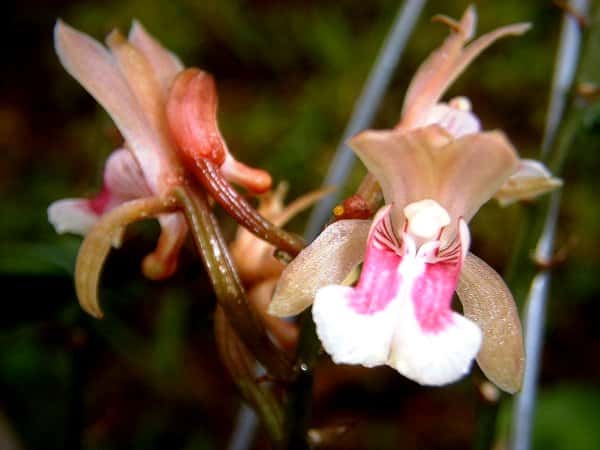
Orchidaceae
Monk Orchid: Pet-Safe Plant
Oeceoclades maculata
A hardy, low-maintenance terrestrial orchid that thrives in part sun to part shade with good air movement. Let the growing medium dry slightly between waterings, keep humidity moderate to high, and pot in a fast-draining, bark-based mix. Feed lightly every third or fourth watering during the growing season and repot roughly every two years.
Every 7 days
Partial shade
15° - 29°C
50% - 70%
Categories
What is Monk Orchid?
Monk Orchid (Oeceoclades maculata) is a medium-care plant from the Orchidaceae family. Oeceoclades maculata, commonly known as the monk orchid or African spotted orchid, is a terrestrial orchid in the family Orchidaceae native to tropical Africa and Madagascar. It grows from small, clustered pseudobulbs, each topped with a single mottled, dark-green leaf marked with pale spots. In spr...
Monk Orchid grows up to 40cm, spread of 30cm, watering every 7 days, 15°C – 29°C, 50–70% humidity. It is suitable for indoor environments and safe for pets.
Unlike many popular species, Monk Orchid is safe to keep around pets. Without adequate drainage, root rot can develop within 14 days.
How to Care for Monk Orchid?
TLDR: Monk Orchid needs Partial shade, watering every 7 days, and temperatures between 15-29°C with 50-70% humidity.
How Often Should You Water Monk Orchid?
Water every 4-9 days, letting the top of the medium dry out before watering again -- the roots are sensitive to constantly wet soil and prone to rot if overwatered.
How Much Light Does Monk Orchid Need?
Place in bright, filtered light -- part sun to part shade is ideal. An east- or west-facing window works well indoors; avoid harsh direct sun, which can scorch the leaves, and deep shade, which reduces flowering.
What Is the Best Soil for Monk Orchid?
Use a light, fast-draining orchid mix with a bark top-dressing, or a well-draining terrestrial orchid blend, in a container with ample drainage holes.
What Pot Should You Use for Monk Orchid?
A pot with generous drainage holes -- terracotta or a slotted orchid pot -- suits this species best; repot only every couple of years, or when the plant clearly outgrows its container.
Care Schedule
Fertilize
Every 30 days
Misting
Every 3 days
Rotate
Every 15 days
Repot
Every 730 days
What Is Monk Orchid and Where Does It Come From?
Oeceoclades maculata, commonly known as the monk orchid or African spotted orchid, is a terrestrial orchid in the family Orchidaceae native to tropical Africa and Madagascar. It grows from small, clustered pseudobulbs, each topped with a single mottled, dark-green leaf marked with pale spots. In spring it sends up slender flower spikes bearing small white-and-pink blooms. Remarkably adaptable, the species has naturalized widely across the Neotropics -- from Brazil and the Caribbean to Florida -- since the 19th century, and is now considered one of the most successful invasive orchids outside its native range.
How to Propagate Monk Orchid?
Pseudobulb division
Divide only well-established plants with several pseudobulbs, and avoid dividing right after flowering when the plant is under stress.
- 1 Remove the plant from its pot and gently rinse the roots clean of old medium
- 2 Identify natural clumps of pseudobulbs, each with healthy roots and at least one leaf
- 3 Use a sterilized knife to separate the clump into sections of 2-3 pseudobulbs each
- 4 Dust cut surfaces with cinnamon or a fungicide to prevent infection
- 5 Pot each division in fresh, well-draining orchid mix and keep lightly moist until new growth appears
Materials needed:
Seed propagation
This method is mainly used by specialist growers and labs; division is far more practical for home cultivation.
- 1 Collect ripe seed capsules from pollinated flowers
- 2 Sow seeds in vitro on sterile nutrient agar, as they lack the food reserves to germinate without a symbiotic fungus
- 3 Maintain sterile, controlled conditions until seedlings develop enough to be deflasked
- 4 Acclimatize seedlings gradually to normal humidity and light before potting
Materials needed:
How Big Does Monk Orchid Grow?
TLDR: Monk Orchid can reach up to 40cm tall with Medium growth rate.
Max height
40cm
Spread
30cm
Growth rate
Medium
Foliage
Evergreen
Plant Uses
Ornamental
Great for decoration
Is your plant showing symptoms?
Click on the symptom to discover possible causes:
What Diseases Commonly Affect Monk Orchid?
TLDR: Monk Orchid is susceptible to 7 known diseases. Monitor regularly for early detection.
Root Rot
Root rot is a serious fungal disease that affects the root system of plants, causing them to decay and die. It is primarily caused by overwatering, poor drainage, or soil-borne fungi such as Pythium, Phytophthora, Rhizoctonia, and Fusarium. The disease thrives in waterlogged conditions where roots are deprived of oxygen, making them susceptible to fungal infection.
Overwatering
Overwatering occurs when plants receive too much water, depriving roots of oxygen and causing root rot. This environmental stress is one of the most common causes of houseplant death, as waterlogged soil prevents roots from breathing and functioning properly.
Spider Mites
Spider mites are tiny arachnids (less than 1/20 inch long) related to spiders and ticks that feed on plant sap. They thrive in hot, dry conditions and can cause significant damage to ornamental and vegetable plants. During severe infestations, crop losses can reach 14% or higher as these pests disrupt vital plant processes including photosynthesis, carbon dioxide absorption, and transpiration.
Thrips
Thrips are tiny cigar-shaped insects (1/25-inch long) that damage plants by sucking plant juices and scraping at fruits, flowers, and leaves. With over 6,000 species and rapid reproduction (lifecycle as short as 14 days), they can quickly infest plants and transmit viruses like tomato spotted wilt virus.
Meaning & Symbolism
The Monk Orchid takes its common name from its subdued, understated blooms and low, ground-hugging growth habit, evoking the humility and simplicity of monastic life. More broadly, orchids symbolize resilience, refinement and quiet beauty -- fitting for a plant that has proven remarkably adaptable, naturalizing far beyond its native African range.
Compare with similar plants
| Attribute | Difficulty | Light | Watering | Pet Safe |
|---|---|---|---|---|
| Dark Fieldcap | Medium | Low light | 2d | ⚠️ |
| Azalea | Medium | Partial shade | 3d | ⚠️ |
| Muriel's Bamboo | Medium | Partial shade | 3d | ✓ |
| Bougainvillea | Medium | Direct sun | 7d | ⚠️ |




