Solanaceae
American Black Nightshade (Solanum americanum)
Solanum americanum
American black nightshade is a hardy plant that grows with minimal care in outdoor environments. It tolerates moderate drought, adapts to various soil types, and thrives in full sun with at least 6 hours of direct daily light. It requires no frequent fertilization and reproduces easily by seed. In controlled cultivation, water when soil is partially dry and ensure good drainage.
Every 7 days
Bright indirect
5° - 35°C
40% - 80%
Categories
What is American Black Nightshade?
American Black Nightshade (Solanum americanum) is a easy-care plant from the Solanaceae family. American black nightshade (Solanum americanum) is an annual or short-lived perennial herbaceous plant in the Solanaceae family, widely distributed across tropical and subtropical regions worldwide. Native to the Americas, it has become a cosmopolitan weed found in disturbed soils, roadsides, gardens...
American Black Nightshade grows up to 1.2m, spread of 60cm, watering every 7 days, 5°C – 35°C, 40–80% humidity. It is not suitable for indoor environments and not safe for pets.
Unlike many tropical plants, American Black Nightshade tolerates watering mistakes. Best for beginners. Without precautions, ingestion can cause irritation in pets. Keep out of reach of cats and dogs.
How to Care for American Black Nightshade?
TLDR: American Black Nightshade needs Bright indirect, watering every 7 days, and temperatures between 5-35°C with 40-80% humidity.
How Often Should You Water American Black Nightshade?
Water moderately, only when the soil feels partially dry to the touch. The plant tolerates short drought periods. Avoid waterlogging, as it is susceptible to root rot in saturated soils.
How Much Light Does American Black Nightshade Need?
Prefers full sun with at least 6 hours of direct daily sunlight. In outdoor settings, sunny locations encourage vigorous growth, flowering, and fruiting.
What Is the Best Soil for American Black Nightshade?
Adapts to clay, sandy, and loamy soils. Prefers well-drained, slightly acidic to neutral soil (pH 5.5–8.0). Does not require nutrient-rich soil.
What Is American Black Nightshade and Where Does It Come From?
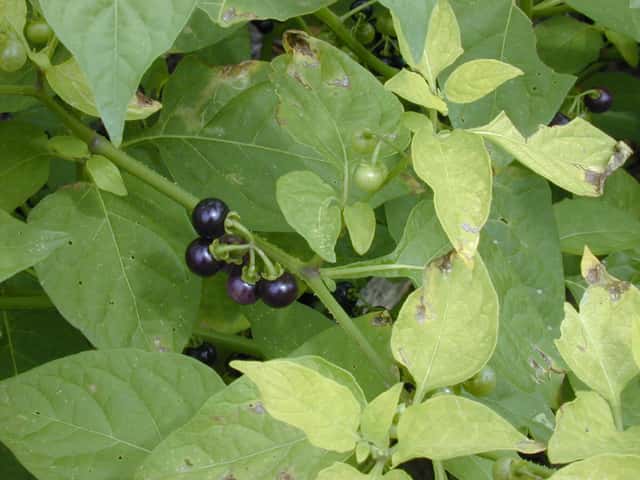
American black nightshade (Solanum americanum) is an annual or short-lived perennial herbaceous plant in the Solanaceae family, widely distributed across tropical and subtropical regions worldwide. Native to the Americas, it has become a cosmopolitan weed found in disturbed soils, roadsides, gardens, and waste ground. It produces small white star-shaped flowers and round berries (5–10 mm) that ripen from green to glossy black. All parts are considered severely toxic — particularly the green parts and unripe berries, which contain solanine, chaconine, and solamargine — though the plant has traditional medicinal uses across Africa, Asia, and the Americas.
How to Propagate American Black Nightshade?
Seed Propagation
Seeds germinate easily without special treatment. The plant self-seeds prolifically under favorable conditions and is naturally dispersed by birds consuming the berries.
- 1 Collect seeds from ripe berries and wash thoroughly
- 2 Sow directly in the ground or in seed trays
- 3 Cover lightly with substrate and keep moist until germination
- 4 Transplant seedlings when they reach 5–10 cm in height
Materials needed:
How Big Does American Black Nightshade Grow?
TLDR: American Black Nightshade can reach up to 1.2m tall with Fast growth rate.
Max height
1.2m
Spread
60cm
Growth rate
Fast
Foliage
Deciduous
Warning: Toxic Plant
This plant can be toxic if ingested. Keep out of reach of:
Plant Uses
Medicinal
Medicinal properties
Medicinal Uses
- topical treatment of skin inflammations
- folk medicine for muscle pain relief
- traditional leaf poultice in African and Asian medicine
Is your plant showing symptoms?
Click on the symptom to discover possible causes:
What Diseases Commonly Affect American Black Nightshade?
TLDR: American Black Nightshade is susceptible to 8 known diseases. Monitor regularly for early detection.
Powdery Mildew
Powdery mildew is a common fungal disease caused by various fungi species including Erysiphe, Podosphaera, Oïdium, and Leveillula. It affects over 10,000 plant species worldwide. The disease thrives in warm, dry climates with high humidity and appears as a distinctive white powdery coating on plant surfaces.
Rust
Rust is a common fungal disease caused by fungi in the order Pucciniales that affects a wide variety of plants. The disease gets its name from the characteristic orange, yellow, or reddish-brown pustules that appear on leaves, resembling metal rust. This obligate fungal parasite requires living plants to survive and can cause significant economic losses in agricultural crops.
Leaf Spot
Leaf spot is a common fungal disease caused by various pathogens including Alternaria, Ascochyta, Colletotrichum, Septoria, and Venturia. It primarily affects leaves, causing discolored spots that can lead to premature leaf drop if left untreated.
Aphids
Aphids are small, soft-bodied, pear-shaped insects (1/16 to 1/8 inch long) that feed by sucking nutrient-rich sap from plants. They reproduce rapidly and can quickly weaken plants, causing distorted growth and transmitting plant viruses. Aphids come in various colors including green, black, red, yellow, brown, and gray. They secrete honeydew, a sticky substance that attracts ants and encourages sooty mold growth.
Fun Facts
Solanine from this plant has been studied as a potential anti-tumor compound in scientific research
American black nightshade is often confused with European black nightshade (Solanum nigrum) — they are distinct species despite belonging to the same genus
Despite being classified as a weed in many countries, it plays an important ecological role as a food source for wild birds
Frequently asked questions
Is American black nightshade toxic?
Does American black nightshade have medicinal uses?
How do I identify American black nightshade?
How do I remove American black nightshade from my garden?
Compare with similar plants
| Attribute | Difficulty | Light | Watering | Pet Safe |
|---|---|---|---|---|
| Small Scabious | Easy | Direct sun | 7d | ✓ |
| Field Maple | Easy | Bright indirect | 14d | ✓ |
| Silver Birch | Easy | Direct sun | 14d | ✓ |
| Red valerian | Easy | Direct sun | 10d | ✓ |


