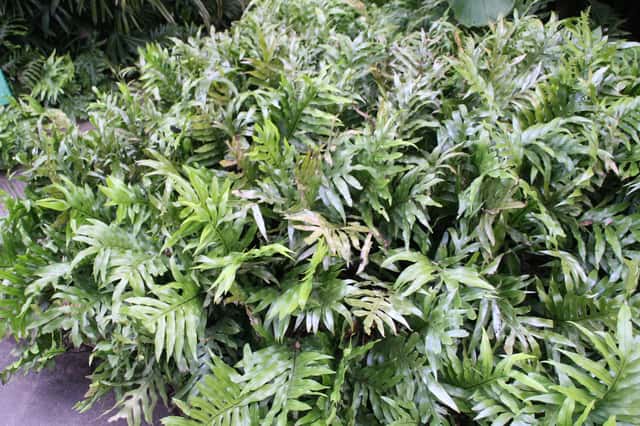
Polypodiaceae
Wart Fern: Ground Cover Plant
Phymatosorus scolopendria
The Wart Fern is a relatively easy-care plant that thrives in humid, shaded environments. Keep the substrate lightly moist without waterlogging, provide high humidity (60–80%), temperatures between 13 °C and 27 °C (55–80 °F), and indirect or filtered light. Avoid direct sun exposure, which burns the fronds. Fertilize every 3 weeks in spring and summer. Repot every 2 years into a slightly larger pot.
Every 4 days
Low light
13° - 27°C
60% - 80%
Categories
What is Wart Fern?
Wart Fern (Phymatosorus scolopendria) is a easy-care plant from the Polypodiaceae family. Phymatosorus scolopendria, popularly known as the Wart Fern, is a perennial, rhizomatous fern native to the tropical regions of Africa, Asia, and Oceania. Its fronds are leathery, bright green, and deeply lobed, reaching up to 90 cm (35 inches) in height. A striking feature is its sori (reproductive...
Wart Fern grows up to 90cm, spread of 90cm, watering every 4 days, 13°C – 27°C, 60–80% humidity. It is suitable for indoor environments and safe for pets.
Unlike many tropical plants, Wart Fern tolerates watering mistakes. Best for beginners. Unlike many popular species, Wart Fern is safe to keep around pets. Without adequate drainage, root rot can develop within 8 days.
How to Care for Wart Fern?
TLDR: Wart Fern needs Low light, watering every 4 days, and temperatures between 13-27°C with 60-80% humidity.
How Often Should You Water Wart Fern?
Water when the top layer (2–3 cm or 1 inch) of the substrate begins to dry, generally every 3–5 days in summer and less frequently in winter. Use room temperature water and avoid wetting the fronds directly to prevent fungal diseases. Never leave the pot waterlogged — excess water is the main cause of root rot.
How Much Light Does Wart Fern Need?
Prefers bright indirect light or partial shade. Thrives near north-facing windows or several feet away from south-facing windows. Avoid direct sun, especially during the hottest parts of the day, as it burns the leathery fronds. In gardens, plant under the shade of trees or structures that filter light.
What Is the Best Soil for Wart Fern?
Use an organic-rich, well-draining, and slightly acidic substrate, with a pH between 5.5 and 6.5. A mix of peat, pine bark, perlite, and sphagnum moss is ideal. Ensure that the rhizomes remain on the surface of the substrate, not buried, to ensure good oxygenation and prevent rot.
What Pot Should You Use for Wart Fern?
Prefer terracotta or unglazed ceramic pots, which allow for greater gas exchange and prevent excessive moisture buildup. Always use pots with drainage holes. Moss-lined wire baskets are excellent for hanging pots, as they combine efficient drainage with the humidity the plant appreciates.
Care Schedule
Fertilize
Every 21 days
Misting
Every 3 days
Rotate
Every 30 days
Repot
Every 730 days
What Is Wart Fern and Where Does It Come From?
Phymatosorus scolopendria, popularly known as the Wart Fern, is a perennial, rhizomatous fern native to the tropical regions of Africa, Asia, and Oceania. Its fronds are leathery, bright green, and deeply lobed, reaching up to 90 cm (35 inches) in height. A striking feature is its sori (reproductive organs) which form rounded protuberances on the upper surface of the leaves, resembling small warts, hence its common name 'wart fern'. Extremely versatile, it can grow as an epiphyte on trees, as ground cover in tropical gardens, or as an indoor ornamental plant in environments with good humidity. It adapts well to shade and partial shade conditions, making it ideal for interiors, well-lit bathrooms, and shaded gardens.
How to Propagate Wart Fern?
How Big Does Wart Fern Grow?
TLDR: Wart Fern can reach up to 90cm tall with Medium growth rate.
Max height
90cm
Spread
90cm
Growth rate
Medium
Foliage
Evergreen
Plant Uses
Ornamental
Great for decoration
Ground Cover
Soil coverage
Medicinal Uses
- Traditional medicinal use in tropical cultures of Asia and Oceania
- Used in Hawaiian and Polynesian folk medicine to treat inflammation and wounds
- Fronds used in tea preparations for joint pain relief in some Pacific cultures
Is your plant showing symptoms?
Click on the symptom to discover possible causes:
What Diseases Commonly Affect Wart Fern?
TLDR: Wart Fern is susceptible to 11 known diseases. Monitor regularly for early detection.
Root Rot
Root rot is a serious fungal disease that affects the root system of plants, causing them to decay and die. It is primarily caused by overwatering, poor drainage, or soil-borne fungi such as Pythium, Phytophthora, Rhizoctonia, and Fusarium. The disease thrives in waterlogged conditions where roots are deprived of oxygen, making them susceptible to fungal infection.
Leaf Spot
Leaf spot is a common fungal disease caused by various pathogens including Alternaria, Ascochyta, Colletotrichum, Septoria, and Venturia. It primarily affects leaves, causing discolored spots that can lead to premature leaf drop if left untreated.
Bacterial Blight
Bacterial blight is a serious plant disease caused by pathogenic bacteria that enters plants through wounds or natural openings. It spreads rapidly in warm, wet conditions and can cause significant damage to leaves, stems, and flowers. The bacteria are transmitted by water splash, contaminated tools, and insects.
Scale Insects
Scale insects are small sap-sucking pests that appear as brown, shell-like bumps on plant stems and leaves. There are over 25 species, divided into armored (hard) and unarmored (soft) scales. They feed by piercing plant tissue and extracting sap, which weakens the plant and can lead to yellowing, stunted growth, and even death if left untreated. They also excrete honeydew, which attracts ants and promotes sooty mold growth.
Meaning & Symbolism
The Wart Fern symbolizes resilience and adaptability. Its ability to grow in shaded environments, on rocks, and as an epiphyte on trees represents strength in adverse conditions. In Polynesian and Hawaiian cultures, the plant (known as lauʻe) is associated with natural beauty and the lush tropical environment.
Compare with similar plants
| Attribute | Difficulty | Light | Watering | Pet Safe |
|---|---|---|---|---|
| Small Scabious | Easy | Direct sun | 7d | ✓ |
| Field Maple | Easy | Bright indirect | 14d | ✓ |
| Silver Birch | Easy | Direct sun | 14d | ✓ |
| Red valerian | Easy | Direct sun | 10d | ✓ |


